
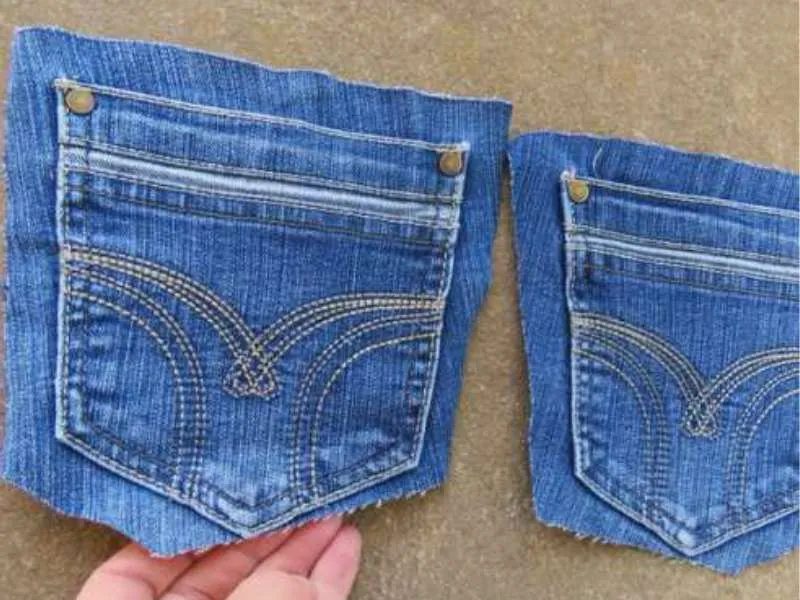
What Does A Denim Laser Cutting Machine Do?
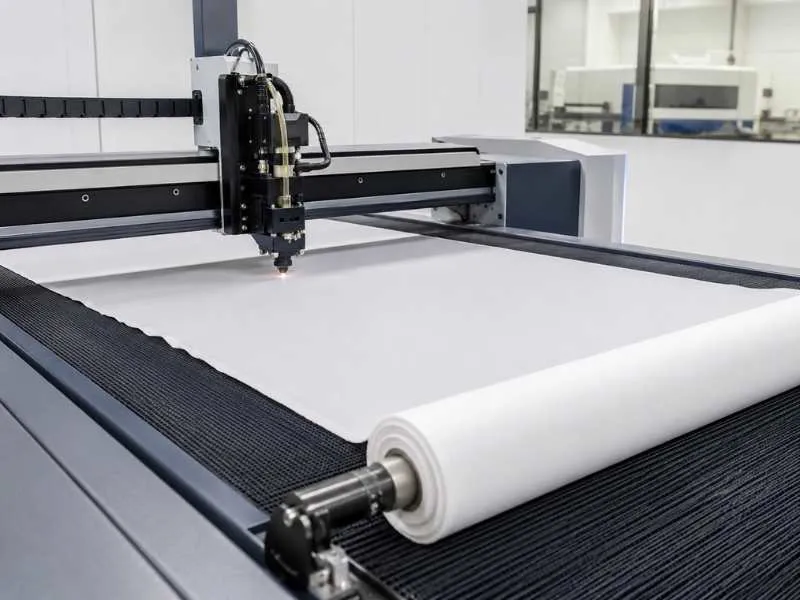
Short answer: A denim laser cutting machine uses a CO₂ laser to cut shapes through a single layer of denim. It suits changing patterns, detailed pocket pieces and short or mixed production runs where a digital file is easier to revise than a physical die. A conveyor can feed a roll; a camera is useful when the cut must follow a printed mark. Neither feature should be specified until the material and cutting file are reviewed.
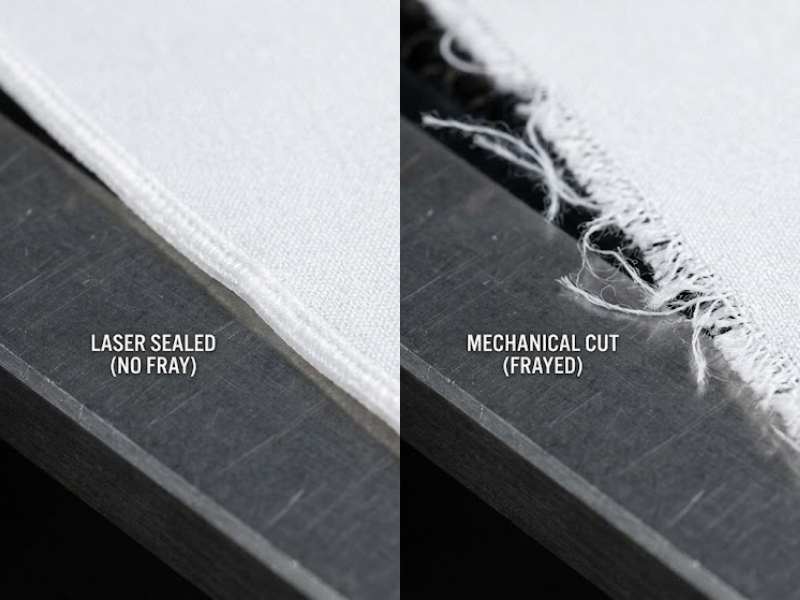
Cotton denim can show a darker or browned cut edge. Stretch content, finishes and backing change the result. Request an edge sample from the same fabric lot and check the front, back and seam allowance before approving production. Read the fabric cutting guide.
Cutting is different from washing or surface marking. This page covers through-cut parts. For whiskers, fading or graphics on finished jeans, use the denim laser engraving guide instead. CottonWorks’ denim manufacturing and finishing resource is useful background on the wider denim workflow.
| Your job | Start with | Validate on your sample |
|---|---|---|
| Plain denim panels from sheets | Flatbed or conveyor CO₂ cutting | Edge color, part dimensions and handling |
| Continuous denim rolls | Conveyor feeding and nesting | Feed stability, roll width and repeatability |
| Printed or pre-marked denim | Camera registration if the mark is reliable | Cut-to-print alignment and fabric movement |
| Fading on finished jeans | Separate marking or washing process | Contrast and fabric strength after washing |
Denim Materials To Test Before Machine Selection
Send the exact fabric you will run. Weight, stretch and finishing determine the edge result and holding method; a catalog photograph cannot establish cut quality.

Rigid Cotton Denim
- Format: Single-layer woven denim sheets or roll goods.
- Check: Inspect edge color and charring on both faces.
- Approve: Cut a representative panel and compare it with your sewing tolerance.

Stretch Denim Blends
- Format: Denim with elastane or other stretch fibers.
- Check: Watch for heat effects, curling and dimensional recovery.
- Approve: Test the cut part after handling, stitching and washing.
Finished Or Backed Denim
- Format: Washed, coated or bonded denim; composition must be known.
- Check: Unknown coatings and adhesives need a material safety review before laser use.
- Approve: Send the fabric specification and test the actual production lot.
Denim Parts And Production Workflows
A laser cutter is most useful when the part shape or job mix changes. Confirm the nesting file, fabric feed and acceptable edge on a trial run.

Jeans Pocket And Panel Parts
- Parts: Pocket outlines, front and back panels, and shaped reinforcements.
- Risk: Shifting fabric changes part dimensions.
- Proof: Check a batch against the approved pattern and sewing allowance.
Denim Patches And Small Shapes
- Parts: Small patches, trims and decorative through-cut shapes.
- Risk: Fine details may brown or become fragile.
- Proof: Check the smallest corner and the finished attachment method.
Roll-Fed Denim Cutting
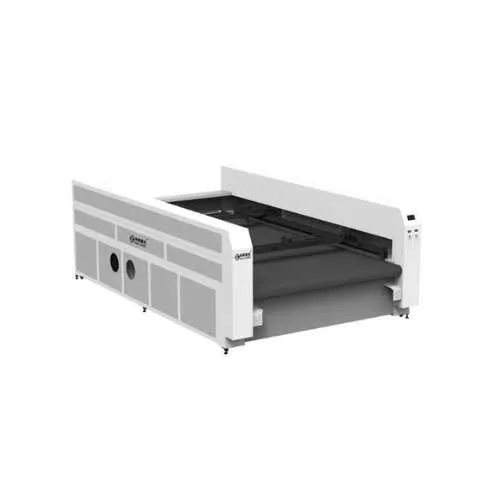
- Parts: Repeat parts cut from a denim roll.
- Risk: Feed tension and fabric skew can shift a long run.
- Proof: Test several feed cycles and compare first and last parts.
Choose A KASU Denim Cutting Configuration
These machines are starting points, not a promised fit for every denim. Send fabric width, pattern file, output target and a sample so KASU can confirm the cutting result.

K1814-SY: Roll-to-Roll Double-Head Cutting
For plain roll-fed denim and repeated panel shapes. Review feed stability, cut-edge color and the available working width on your fabric. View K1814-SY specifications.

KD1814-S2: Double-Head Camera Cutting
For patterns that need registration to a printed or marked reference. A camera helps only when the reference is visible and stable; confirm alignment on your material before specifying this direction. View KD1814-S2 specifications.
What To Verify Before Buying A Denim Laser Cutter
A useful quote starts with the denim and the part, then the machine. These checks help a factory or distributor compare configurations using evidence from its own workflow. For installation planning, review OSHA laser-hazard guidance and the AATCC textile test-method directory; select the tests required by your buyer and local rules.
Approve The Edge On Your Denim
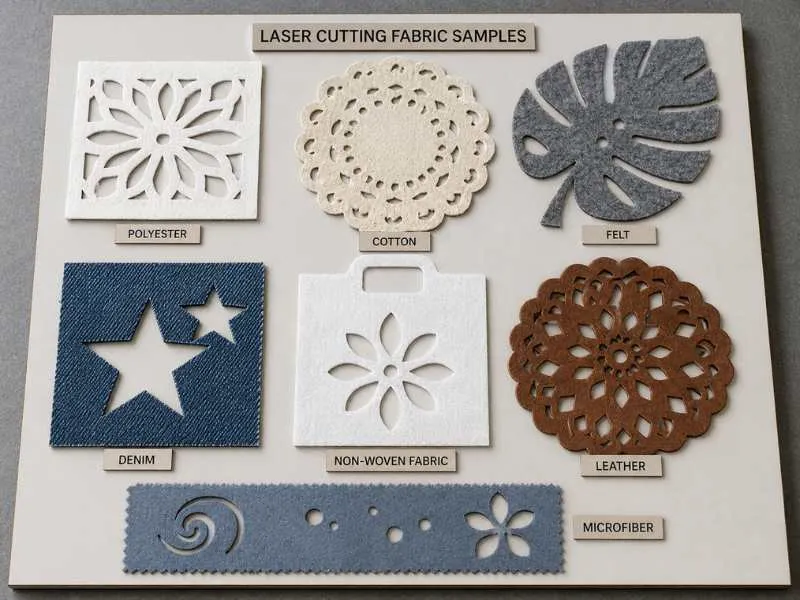
Send a production swatch and a representative cutting file. Compare edge color, the reverse face, part dimensions and sewing allowance before approving the machine direction.
Use the same fabric finish and stretch content as the production order.

Match Feeding And Vision To The Job
A roll-fed line, sheet table and camera system solve different handling problems. Share roll width, part size, reference marks and daily volume so the configuration can be reviewed before quotation.
See how KASU approaches machine production and assembly.

Separate Cutting From Denim Fading
A through-cut edge and a faded surface mark are different acceptance tests. If your buyer needs both, qualify them separately; do not approve a cutting machine based on a marking sample.
Denim Laser Cutting Machine FAQ
Answers for denim factories, garment OEMs and equipment distributors.
Can A CO₂ Laser Cut Cotton Denim?
Yes, a CO₂ laser can cut cotton denim in a single layer. The edge may brown or char, so approve a cut sample from the same fabric lot before setting a production specification.
Can The Same Setting Cut Every Denim Weight?
No. Weight, weave, color, stretch and finishing change the required setting and edge result. Keep a reference recipe, then re-test when the material or supplier changes.
Do I Need A Camera For Denim Cutting?
Use camera registration when a cut must follow a visible printed or pre-marked reference. Plain denim parts cut from a digital pattern may not need it. Send the print and pattern file so the alignment method can be checked.
Will The Cut Edge Be Sealed And Clean?
Do not assume a sealed or color-free edge on cotton denim. The outcome depends on the fiber blend, finish and settings. Inspect the front and back of a sample and test the part through sewing and washing.
Can This Machine Also Create Faded Whiskers On Jeans?
Surface fading is a separate laser-marking process. A cutting setup is selected to cut through denim, while a marking setup is judged by contrast and fabric strength. Qualify each process on its own sample.
How Is A Denim Laser Cutting Machine Priced?
The price depends on working width, feeding method, laser configuration, camera option, exhaust and installation needs. Send the fabric, cutting file and output target for a project quotation; a generic price would not specify the required machine.
What Should I Send For A Sample Test And Quote?
Send the denim specification and swatch, DXF or AI cutting file, largest part size, roll width or sheet size, daily output target, edge requirement and destination voltage. Include any backing or coating information for a material safety review.
What Safety And Extraction Checks Belong In The Purchase Plan?
Confirm enclosure, interlocks, exhaust route, filtration needs and local operating rules before installation. The site plan depends on the equipment and material; see the OSHA laser-safety guidance linked above.
Related KASU Fabric Cutting Applications
Compare adjacent apparel workflows after confirming whether your primary job is denim panels, garment parts or small patches.
-
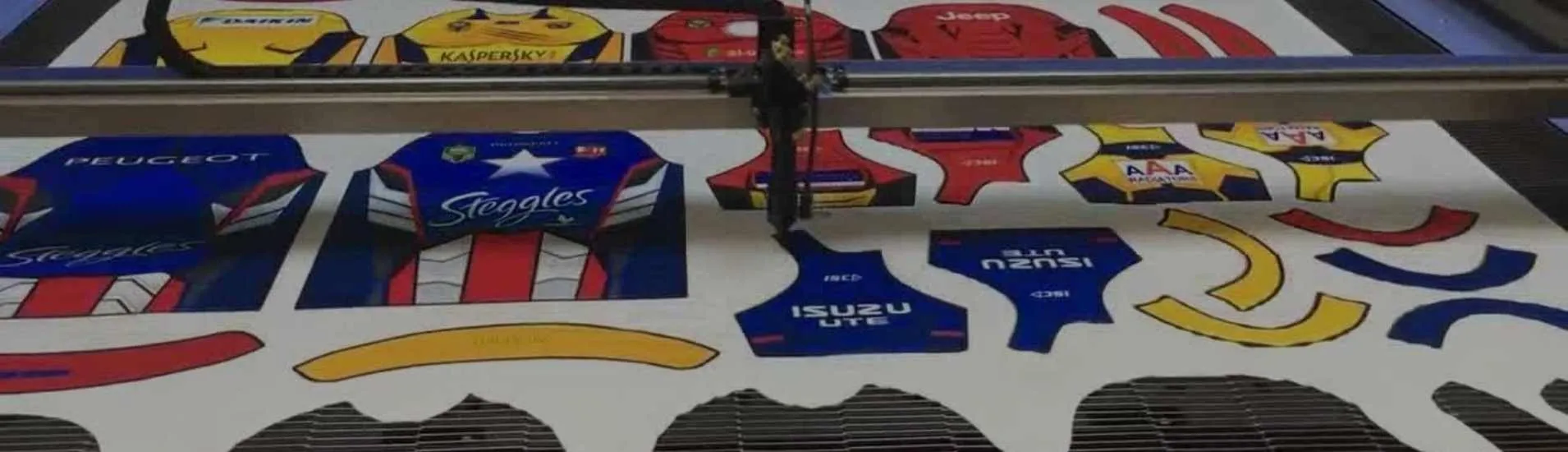
Clothing Laser Cutting Machine
Review clothing panel cutting when denim is one material in an apparel line. -
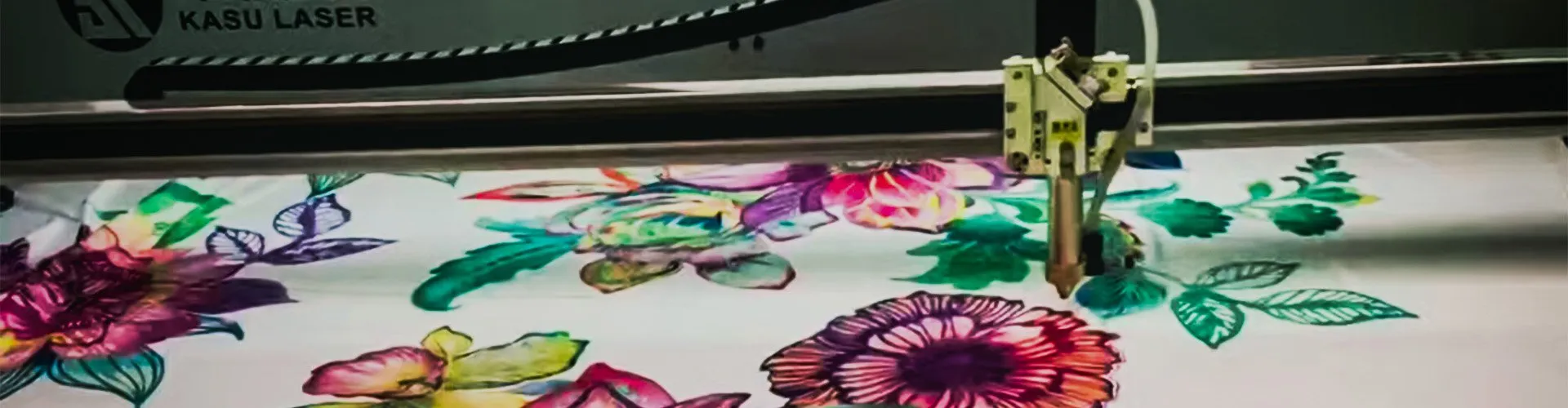
Laser Cut Fashion Machine
Compare fashion cutting applications for changing shapes and smaller runs. -

Laser Cut Patches Machine
Explore small patch and trim cutting when detailed shapes matter more than full garment panels.
Technical Support for Denim Laser Cutting
Use these guides to qualify denim cutting, material safety and the separate process of surface marking.
Send Your Denim Sample For A Cutting Review
Tell KASU your denim fiber blend and finish, roll or sheet width, cutting file, expected edge, daily output and factory location. We can review the process and recommend which machine configuration should be tested.
Address: No. 105, Nanzhangjing Road, Taicang, Suzhou, Jiangsu, China
Email: [email protected]
WhatsApp: +86-18601718317