textile laser cutter

Fabric Laser Cutting Machine Manufacturer In China For Distributors

Kasu builds Fabric Laser Cutting Machine lines for dealers who sell print, sublimation, and sewing workflows. Choose Custom conveyor, vision contour, and perforation-ready options to fit your local market and service team.

  • CE, FDA, ISO certified Fabric Laser Cutting Machine quality

  • Custom vision contour textile laser cutter for printed roll fabrics

  • China manufacturer support for dealer demos and local service setup

Fabric Laser Cutting Machine 101: Core Specs Decoded

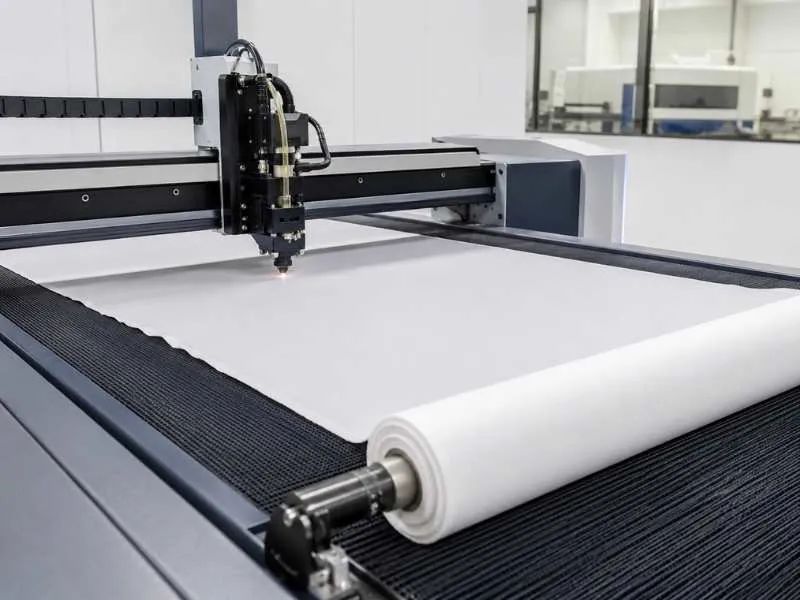
Are you sourcing Fabric Laser Cutting Machine models (also named textile laser cutter) to complete your print-to-cut equipment line? Kasu Fabric Laser Cutting Machine uses CO2 laser processing to cut roll fabrics without blade pressure, so many textiles can stay flatter and keep pattern accuracy during production. Many buyers choose Fabric Laser Cutting Machine systems for roll-to-roll workflows with conveyor feeding, helping factories move from sampling to repeat orders with the same cutting path. Depending on the fabric mix, Fabric Laser Cutting Machine projects often include polyester for sportswear, plush for toys, lace for lingerie, and technical textiles for filtration or upholstery. Laser processing can also create sealed edges on many synthetic fabrics, reducing fraying risk and lowering finishing steps for the sewing line. Share your roll width, fabric list, and daily output target to get the right Fabric Laser Cutting Machine configuration for your distributor market.

Top Applications for Fabric Laser Cutting Machine

Polyester Fabric on Laser Cutting Machine

Fabric Laser Cutting Machine For Polyester

For synthetic fabrics requiring sealed edges and clean contours to prevent fraying.
Typical products: sportswear panels / flags / banners
Common size: 1300×900 to 1800×1300 mm
Factory note: focus on edge sealing + cutting speed

Cotton Fabric on Laser Cutting Machine

Fabric Laser Cutting Machine For Cotton

For natural fabrics where clean outlines and controlled heat input are important.
Typical products: garments / quilting pieces / home textiles
Common size: 1300×900 to 1600×1000 mm
Factory note: focus on power control + minimal scorching

Silk Fabric on Laser Cutting Machine

Fabric Laser Cutting Machine For Silk

For lightweight and delicate silk fabrics requiring smooth edges and precise contours.
Typical products: silk garments / scarves / fashion panels
Common size: 1300×900 to 1600×1000 mm
Factory note: focus on low heat input + cutting accuracy

Composite Plush Fabric on Laser Cutting Machine

Fabric Laser Cutting Machine For Technical & Composite Textiles

For functional fabrics used in industrial and technical applications.
Typical products: composite textiles / technical layers / industrial fabrics
Common size: 1600×1000 to 1800×1300 mm
Factory note: focus on stability + long-time operation

Knitted Lace Fabric on Laser Cutting Machine

Fabric Laser Cutting Machine For Lace & Embroidery

For delicate fabrics with fine patterns and low tolerance for deformation.
Typical products: lace trims / embroidery panels / decorative textiles
Common size: 1300×900 to 1600×1000 mm
Factory note: focus on detail accuracy + non-contact cutting

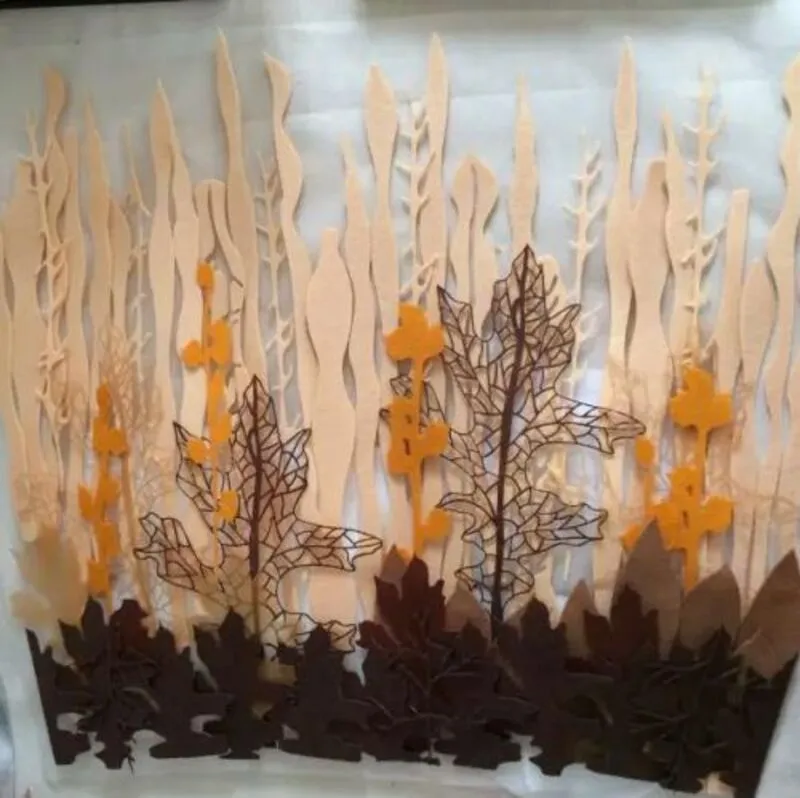
textile laser cutter

Fabric Laser Cutting Machine For Felt

For wool and synthetic felt requiring smooth edges and dimensional stability.
Typical products: craft parts / insulation pieces / packaging inserts
Common size: 1300×900 to 1600×1000 mm
Factory note: focus on edge smoothness + repeatability

PU Leather Fabric on Laser Cutting Machine

Fabric Laser Cutting Machine For PU Leather & Synthetic Fabrics

For coated and artificial textiles requiring sharp edges and consistent shapes.
Typical products: bags / footwear parts / upholstery components
Common size: 1600×1000 to 1800×1300 mm
Factory note: focus on consistency + batch stability

Fabric Laser Cutting Machine Use Cases on the Shop Floor

Garment Laser Cutting Machine

Fabric Laser Cutting Machine For Garment Pattern Cutting

For apparel panels, appliqués, and pattern pieces requiring clean edges and repeatable shapes.
Typical products: garment panels / appliqués / cutting patterns
Common size: 1300×900 to 1600×1000 mm
Factory note: focus on accuracy + stable edge sealing

Cotton Curtain Fabrics Cutting Machine

Fabric Laser Cutting Machine For Upholstery & Furniture

For sofa covers, seat fabrics, and interior textiles with consistent contours and smooth edges.
Typical products: upholstery covers / cushion fabrics / furniture textiles
Common size: 1600×1000 to 1800×1300 mm
Factory note: focus on cutting stability + continuous workflow

Velvet Curtain Fabrics Cutting Machine

Fabric Laser Cutter For Automotive Interior Textiles

For interior fabrics that need uniform cutting quality and tight dimensional control.
Typical products: seat fabrics / door panels / interior linings
Common size: 1600×1000 to 1800×1300 mm
Factory note: focus on repeatability + long duty cycle

Printed Polyvinyl Chloride (PVC) Coated Fabric Laser Cutter

Fabric Laser Cutting Machine For Flags & Banners

For polyester flags and advertising fabrics with sealed edges and sharp outlines.
Typical products: flags / banners / promotional fabrics
Common size: 1600×1000 to 1800×1300 mm
Factory note: focus on edge sealing + cutting speed

Trim Embroidery Fabric on Laser Cutting Machine

Fabric Laser Cutter For Lace & Embroidery

For delicate textiles requiring fine details without pulling or distortion.
Typical products: lace trims / embroidery panels / decorative fabrics
Common size: 1300×900 to 1600×1000 mm
Factory note: focus on detail precision + non-contact cutting

Non Woven Embroidered Fabric Cutting Machine

Fabric Laser Cutting Machine For Industrial Textiles

For functional and technical fabrics used in industrial applications.
Typical products: technical textiles / composite fabrics / insulation layers
Common size: 1600×1000 to 1800×1300 mm
Factory note: focus on consistency + high workload stability

Fabric Laser Cutting Machine Configurations Buyers Should Know

60w laser cutter

60W–80W Fabric Laser Cutting Machine

For light fabrics, sampling work, and short production runs.
Typical products: thin textiles / samples / prototypes
Common size: 900×600 to 1300×900 mm
Factory note: focus on precision + entry-level efficiency

100w laser cutting machine

100W Fabric Laser Cutting Machine

For daily textile cutting with balanced speed and quality.
Typical products: garment panels / cotton and polyester fabrics
Common size: 1300×900 to 1600×1000 mm
Factory note: focus on stability + general-purpose use

120w laser cutting machine

120W Fabric Laser Cutting Machine

For stable daily textile cutting with higher speed than entry-level models.
Typical products: garment fabrics / cotton and polyester textiles
Common size: 1300×900 to 1600×1000 mm
Factory note: focus on speed balance + production stability

130W–150W Fabric Laser Cutting Machine

130W–150W Fabric Laser Cutting Machine

For mainstream production lines handling continuous fabric cutting.
Typical products: apparel fabrics / upholstery textiles
Common size: 1600×1000 to 1800×1300 mm
Factory note: focus on productivity + conveyor compatibility

200w laser cutter

180W–200W Fabric Laser Cutting Machine

For thicker textiles or higher cutting speed requirements.
Typical products: layered fabrics / dense felt / industrial textiles
Common size: 1600×1000 to 1800×1300 mm
Factory note: focus on duty cycle + speed consistency

300w laser cutter

250W–300W Fabric Laser Cutting Machine

For industrial-scale textile cutting and long-hour operation.
Typical products: technical textiles / large-format fabric parts
Common size: 1800×1300 mm and above
Factory note: focus on high output + system durability

Fabric Laser Cutting Machine Typical Options For Distributors

Kasu fabric laser cutting machine packages are built for distributors who need a clear configuration menu for quoting, showroom demos, and local after-sales. Use these fabric laser cutting machine typical options to standardize your offers by market, then upgrade customers step by step without changing your service workflow.

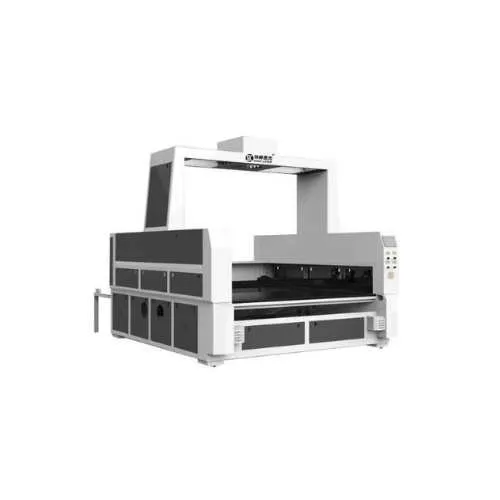
K1814-S2 Double Head Auto-Feeding Laser Cutting Machine

A dual-head CO₂ laser cutter with auto-feeding for continuous processing of roll and flexible materials at high efficiency.
  • Working area: 1800 × 1400 mm
  • Laser type: Glass CO₂ laser tube
  • Laser power: 80/100/130/150W (optional)
  • Laser heads: Double heads
  • Speed: <1000 mm/s
  • Positioning accuracy: ±0.1 mm
  • Supported formats: AI / BMP / PLT / DXF / DST

KX1810-F2 CCD Laser Cutter (Fixed Table)

A large-format CCD laser cutter with fixed table for precise vision cutting of oversized printed materials.
  • Working area: 1800 × 1000 mm
  • Laser heads: Double head
  • Laser power: 80–150W optional
  • Vision system: CCD camera
  • Advantage: higher output for repeated patterns
  • Applications: textiles, printed panels, soft packaging

Why Choose Kasu Fabric Laser Cutting Machine

As a distributor, you need a Fabric Laser Cutting Machine line that is easy to demo, easy to standardize, and easy to support locally. Kasu Fabric Laser Cutting Machine programs help you build repeatable quotations for roll textiles and printed contour jobs, then convert samples into long-run orders with a clear textile laser cutter handover path.

Kasu Fabric Laser Cutting Machine Factory Capability for Dealer Supply

Kasu Fabric Laser Cutting Machine Factory Capability For Dealer Supply

Kasu Fabric Laser Cutting Machine supply is built for dealers who need stable ordering and predictable shipping plans for a textile laser cutter showroom and customer installs.

  • 2009 factory foundation supports long-term cooperation

  • 100+ models in 9 series let you map a textile SKU plan

  • 7-day delivery for standard orders, 15 days for custom builds

  • OEM structure and model design support

  • Visual production and full factory inspection support

Lightning Structure-KASU LASER Quality Spare Parts

Kasu Fabric Laser Cutting Machine Quality System For Long-Run Stability

A dealer-ready Fabric Laser Cutting Machine must stay stable in multi-shift production, because textile laser cutter downtime quickly becomes a service burden for your team.

  • CE, FDA, ISO coverage for compliance planning

  • 70+ patents support product consistency and upgrades

  • Built for 24-hour continuous operation in production sites

  • Low consumables and low energy use for ownership cost control

  • Process-ready setup to reduce maintenance workload on your textile laser cutter installs

Kasu laser cutting machine dealer enablement to grow your local market

Kasu Fabric Laser Cutting Machine Dealer Enablement For Local After-Sales

Your customers trust you when your Fabric Laser Cutting Machine installs start fast and your textile laser cutter support is clear, even for new operators.

  • 7×24 English after-sales engineer support for dealers

  • Full installation and operation videos for each handover

  • Simple install plan with matched auxiliary equipment

  • Low operator skill requirement, so training is shorter

  • Dealer marketing support with no-logo media assets for promotion

What Fabric Laser Cutting Machine Buyers Say After 6 Months

Distributors who add a Kasu Fabric Laser Cutting Machine line often share the same feedback: the textile laser cutter demo is easy to show, the sample results are consistent across repeat runs, and the handover materials help their local engineers support installs with fewer back-and-forth calls. Many dealers also report that Fabric Laser Cutting Machine projects move faster when they can show roll-to-roll cutting and printed contour cutting on a real customer fabric, then turn that proof into repeat orders for the same textile workflow.

Questions to Ask Before Buying a Fabric Laser Cutting Machine

Can A Fabric Laser Cutting Machine Cut All Fabrics Safely?

Not every fabric is laser-safe on a Fabric Laser Cutting Machine. For distributor demos, avoid PVC, vinyl-coated fabrics, or unknown blends, because some coatings can release harmful fumes when a textile laser cutter heats them. Ask the buyer for the fiber content sheet before you approve a material list for the Fabric Laser Cutting Machine.

Will A Fabric Laser Cutting Machine Stop Fraying On Cotton And Polyester?

A Fabric Laser Cutting Machine can seal edges on many synthetic fabrics like polyester because they melt at the cut line, which can reduce fraying. Natural fibers like cotton do not melt the same way, so a textile laser cutter cut edge may still fuzz or fray depending on weave and finish. Set expectations by testing the exact fabric before you quote the Fabric Laser Cutting Machine project.

How Do I Reduce Yellow Edges Or Burn Marks On A Fabric Laser Cutting Machine?

On a Fabric Laser Cutting Machine, yellowing is often linked to too much heat or smoke residue staying on the fabric surface. Dealers typically improve results by adjusting power/speed balance, using air assist, and improving exhaust or downdraft so smoke clears fast during textile laser cutter cutting. If the fabric is very light color, multiple lighter passes can also help reduce surface marks on a Fabric Laser Cutting Machine sample

What Is “contour Cutting” On A Fabric Laser Cutting Machine For Printed Textiles?

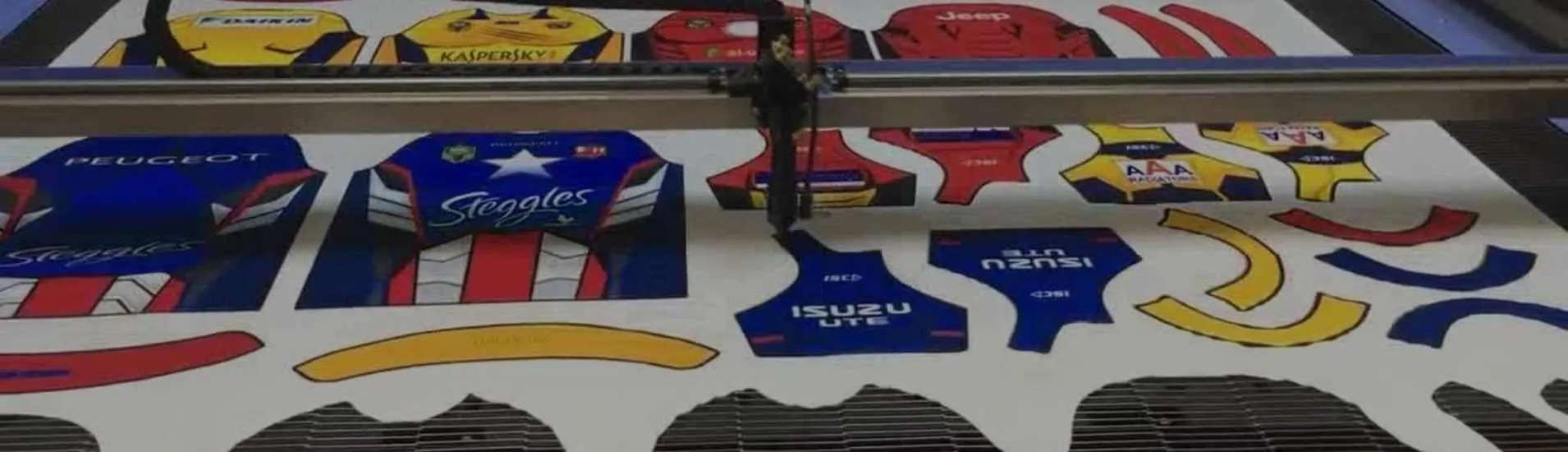
Contour cutting on a Fabric Laser Cutting Machine means the textile laser cutter follows a printed outline by reading registration marks (or using a camera/optical system) and then adjusting the cut path to the print. More detection points can improve alignment in some workflows, especially when printed fabric shifts or stretches. This is a key feature to explain when you sell a printed workflow Fabric Laser Cutting Machine bundle.

What “settings” Data Should A Distributor Collect Before Quoting A Fabric Laser Cutting Machine?

Before you quote a Fabric Laser Cutting Machine, collect: fabric fiber content, thickness or GSM, roll width, target cut size, and whether the job needs contour cutting. For edge issues (burn or fray), also note color (white/light vs dark) and finish/coating, because textile laser cutter airflow and speed choices depend on that material’s behavior.

Fabric Laser Cutting Machine Alternatives to Consider

When you sell a Fabric Laser Cutting Machine, many buyers also ask how to keep the full workflow stable from design to sewing. You can bundle a textile laser cutter project with matching auto-feeding units, exhaust and filtration options, and vision contour modules for printed rolls, so the customer gets one clear cutting standard across sites. If your market is strong in sublimation printing or embroidery, offer the Fabric Laser Cutting Machine as the missing cutting step and guide them to compare roll width, contour accuracy, and daily output before they choose a model. Send your typical customer fabric list and target industries to get a focused Fabric Laser Cutting Machine bundle plan.

Technical support of Fabric Laser Cutting Machine

As a distributor, you need Fabric Laser Cutting Machine support content that helps your engineers solve issues fast, especially when the buyer runs new fabrics or changes print workflows. Our technical resources for textile laser cutter installs cover airflow and exhaust checks, material test methods, contour cutting setup for printed fabrics, and routine care that keeps edge results consistent. Use these guides to shorten training time, reduce repeat questions, and standardize your local service for every Fabric Laser Cutting Machine you deliver—then send your support team’s top questions so we can link you to the right articles.

Contact Us

Ready to add a Kasu Fabric Laser Cutting Machine to your dealer lineup? Fill the form to get Kasu Fabric Laser Cutting Machine dealer pricing, model match, and demo plan for your fabrics and roll width.

Address: No. 105, Nanzhangjing Road, Taicang, Suzhou, Jiangsu, China
Email: [email protected]
WhatsApp: +86-18601718317

Scroll to Top
Send Your Inquiry Today

Scan to add me on WeChat

WeChat QR code

Open WeChat → Scan QR → Chat with our sales

Scan to chat on WhatsApp

WhatsApp QR code

Or call / message: +86-186-0171-8317