

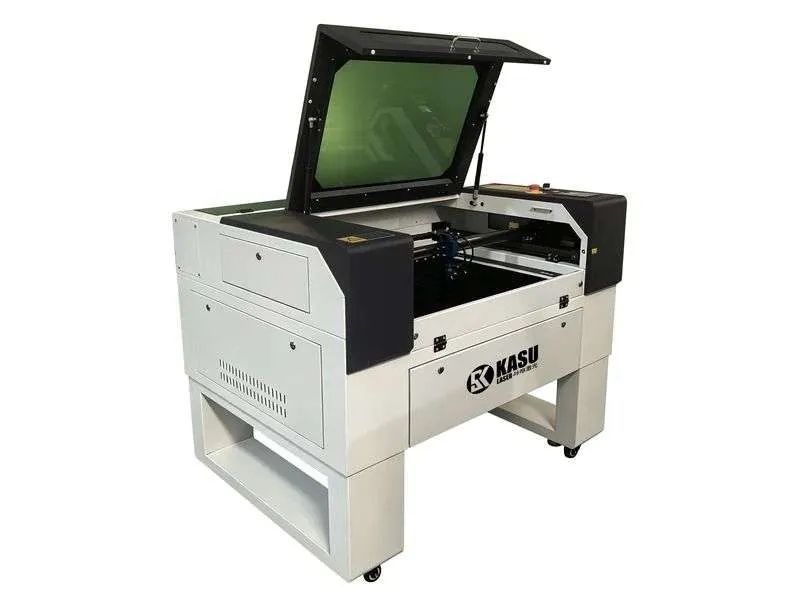


KX640-F1 Compact CCD Laser Cutter for Transfer Labels
The KX640-F1 is the compact entry point into camera-guided transfer label cutting. Its CCD vision cutting area is 450 × 320 mm, which suits sampling rooms, print-on-demand shops and transfer film below the 60 cm class. It shares the KX850-F1 platform, vision system, software and material range — UV-printed 3D TPU, white-ink DTF, woven and printed labels, UV-printed acrylic and plywood — in full cut, half cut and surface engraving.
Where floor space rather than sheet size is the constraint, this is the machine. Where 60 cm film is the standard width, the KX850-F1 is the better fit.

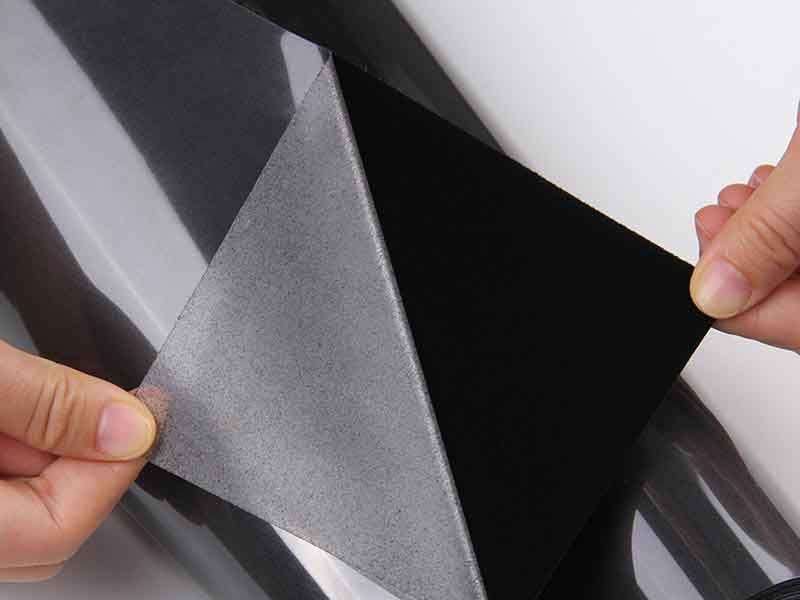
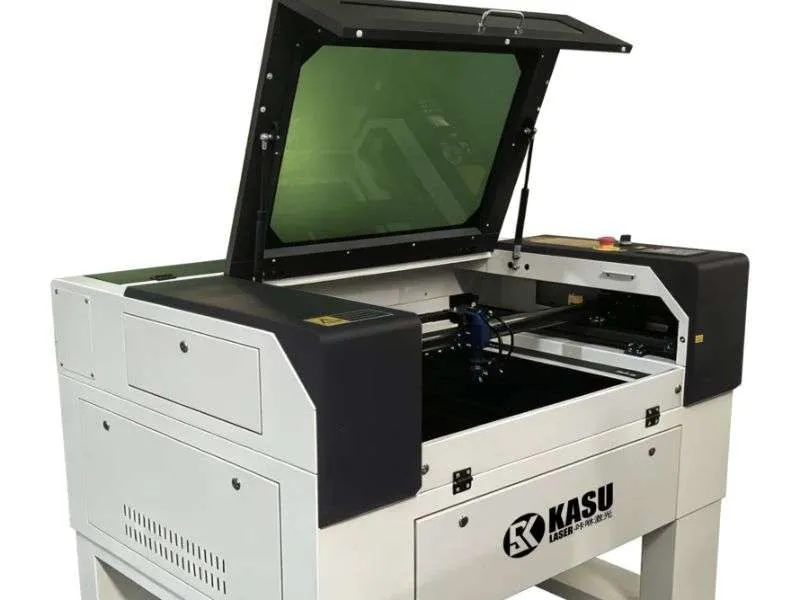
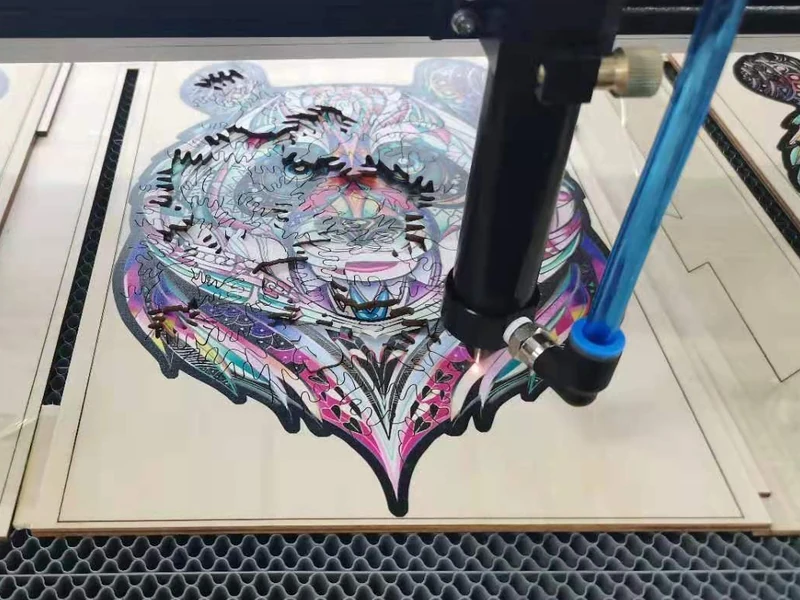
See the KX640-F1 Contour-Cut Printed Transfer Labels
The camera finds the printed edge on the sheet as loaded, then the head follows it — no register marks placed by hand, no fixture.
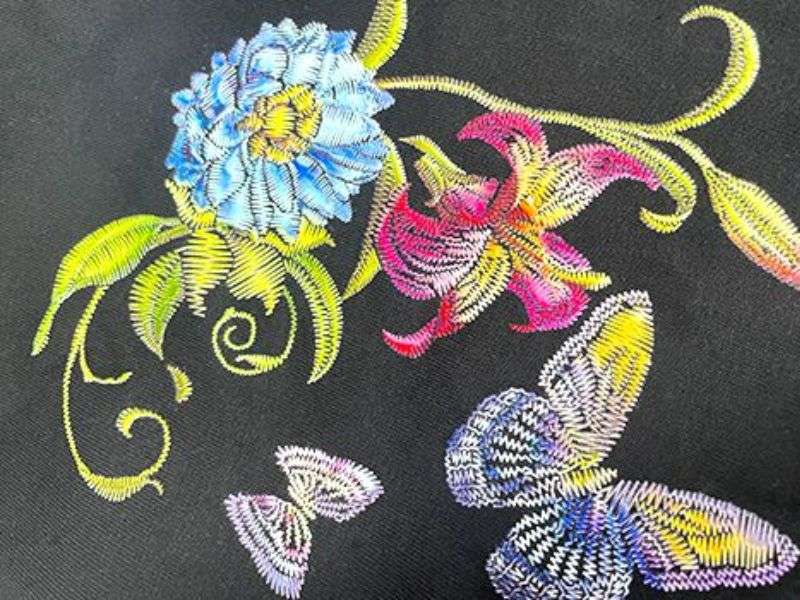
See the KX640-F1 Contour-Cut Printed Transfer Labels
The camera finds the printed edge on the sheet as loaded, then the head follows it. A sheet of printed transfer labels is cut in one setup, with no register marks placed by hand.
KX640-F1 Specifications and Optional Devices
Every dimension below comes from the KASU factory specification for the KX640-F1.
- Data Sheet
- Includes & Options
| CCD Vision Cutting Area | 450MM*320MM | Software | KASU |
| Working Area | On request | Working Speed | 0-600 MM/S |
| Laser Type | Sealed Glass CO2 Laser Tube | Power Supply Requirements | AC220V±5% 50Hz |
| Laser Power | 60/80/100W | Format Supported | PLTDXF |
| Heads of Laser | Single Head | Cutting Thickness | ≤10MM |
| Table | Honeycomb | Total Power | <2500W |
| Machine Dimensions | 1520*1000*1150MM | Cooling System | Air-conditioned constant-temperature water chiller |
| Gross Weight | On request | Suits Film Width | Up to approx. 45 cm |
Inside the KX640-F1 - Vision, Optics and Cutting Modes
The blocks below take you inside the KX640-F1: how the camera finds a printed contour, what the line-scan option removes from the set-up step, and how one table covers full cut, half cut and engraving.
CCD Vision Positioning, 450 x 320 mm
The CCD camera reads the printed contour on the sheet in front of it rather than trusting the file. Print drift, sheet skew and a slightly crooked hand-loaded sheet are absorbed instead of amplified — which is the whole reason contour cutting is done with a camera and not with a fixture.
At 450 × 320 mm the recognition area suits transfer film up to roughly 45 cm wide. Above that width the KX850-F1 and its 650 × 420 mm area leave more margin for manual loading.

Line-Scan Camera Option: No Register Marks, No Original File
With the line-scan camera fitted, the edge of the print is detected automatically. Most designs run without printed register marks and without the customer supplying a vector file, so artwork can change between runs without a new cut path being prepared.
On short runs this is where the margin is: if every design costs ten minutes of file preparation, a sub-50 job is not worth taking. Detection depends on contrast between print and substrate; transparent, low-contrast and highly reflective films are tuned during sample testing.

Full Cut, Half Cut and Surface Engraving on One Table
Full cut through transfer film, half cut (kiss cut) leaving the release liner intact for weeding, and surface engraving are all set in software rather than by changing a tool. Vision and non-vision working modes are selectable per job.
Cut edges come off clean; the exact parameter window depends on film thickness, ink load and liner, and is confirmed by a sample cut on your own material before quotation.


Frequently Asked Questions About the KX640-F1
KX640-F1 or KX850-F1 - which one for my film width?
The KX640-F1 if your film stays below the 60 cm class; its CCD vision area is 450 × 320 mm, suiting film up to roughly 45 cm. For 60 cm film the KX850-F1 and its 650 × 420 mm area leave working margin for manual loading tolerance.
Both machines share the same cutting platform, vision system, control software and material range — the difference is the vision area and whether the base frame detaches for shipping. Every laser power option and optional device can be specified on either model, so choose by the film width you handle most often rather than by worrying that a model will lack a capability.
Can the KX640-F1 cut TPU 3D transfer labels?
Yes. UV-printed 3D TPU is one of its primary materials, along with white-ink DTF film, woven and printed labels, and UV-printed acrylic and plywood. Cutting thickness is up to 10 mm and laser power options are 60 W, 80 W and 100 W.
The power and speed window shifts with film supplier, thickness and ink build, so KASU cuts your own film before quoting rather than reusing a generic parameter set. Thermoplastic polyurethane contains no chlorine, which is what makes it laser-safe where PVC is not — see Covestro’s Desmopan TPU range for the grade families in circulation.
Do I need register marks on my printed sheet?
Not with the line-scan camera option — it detects the printed edge itself, so most designs run without register marks and without the original vector file. Your customer can change artwork between runs without a new cut path being prepared.
The standard CCD system uses feature-point or mark-point recognition. Low-contrast, transparent and highly reflective films are tuned during sample testing, and fixed-repeat layouts can run in non-vision mode.
Can it cut PVC-based heat transfer vinyl?
No. PVC releases chlorine compounds under a laser, which damages the machine and is a hazard to the operator, so KASU excludes PVC from laser processing entirely. Those jobs go to a cold knife instead — see PVC Cutting Systems.
TPU and PU-based films are the laser-safe route. Because base polymer is often not printed on the roll, identify it from the SDS or TDS before the material reaches the machine.