
Fabric cutting becomes expensive when the machine does not match the real order. Printed patterns shift. Edges fray. Heat marks cause rejection. Manual cutting cannot keep up with mixed SKUs. Die molds slow sampling, while blade tools need constant replacement.
For garment OEMs, label producers, textile converters, distributors, and system integrators, buying the wrong fabric laser cutter creates bigger problems than a slow production line. It can lead to failed samples, warranty pressure, weak edge quality, poor exhaust, and delayed delivery. Cutting fabric and textiles with a laser cutter works well when the machine is selected around the material, workflow, output target, and safety requirements.
Can You Cut Fabric and Textiles with a Laser Cutter?
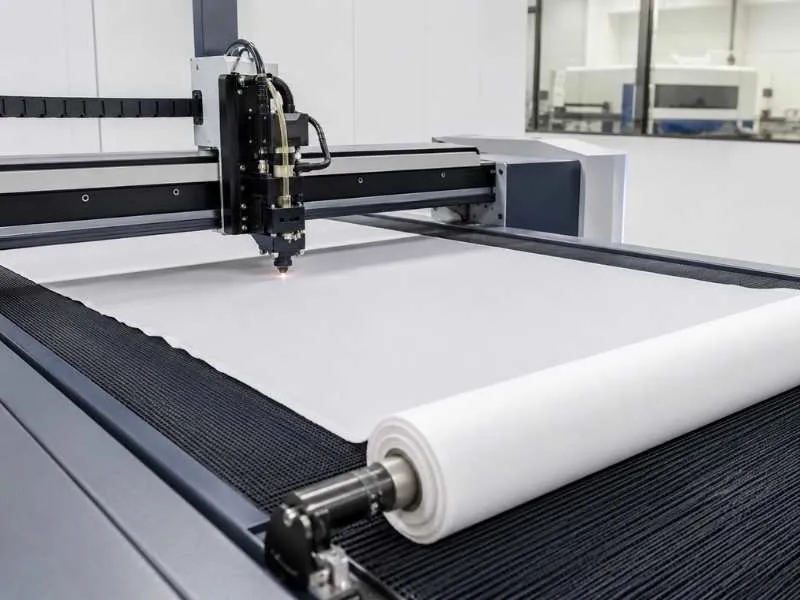
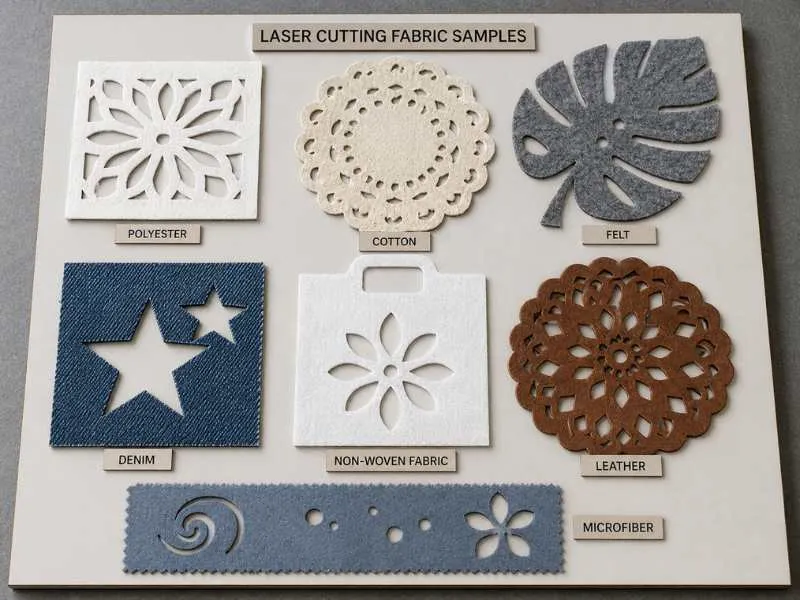
Yes, a CO2 laser cutter can cut many fabrics and textiles, including polyester, nylon, felt, cotton, denim, non-woven fabric, canvas, leather, and microfiber. Synthetic fabrics usually seal at the edge during laser cutting, while natural fabrics need lower heat, faster speed, and stronger exhaust to reduce browning.
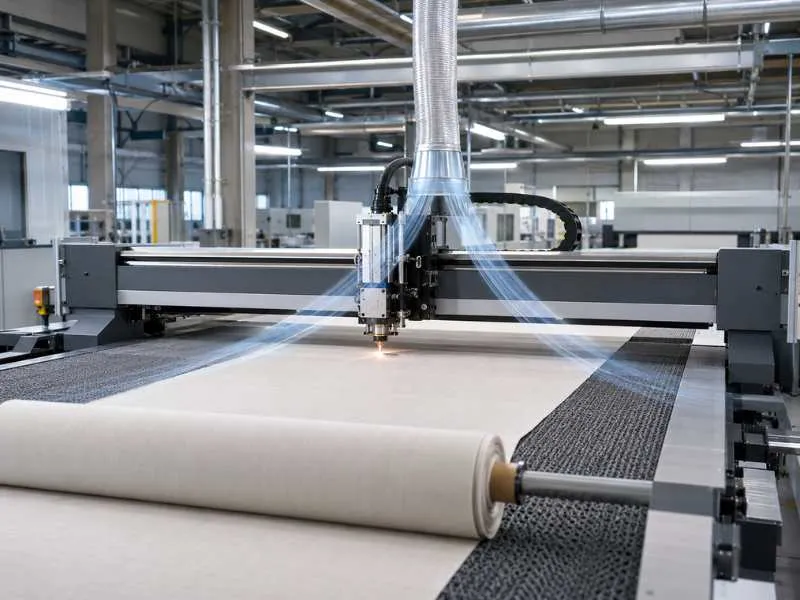
A fabric laser cutter uses a focused beam to remove material along a digital cutting path. The laser does not press the fabric, so it avoids blade drag and physical die tooling. This helps with detailed shapes, short-run production, sample development, and frequent design changes.
For industrial buyers, the real question is not only whether laser cutting fabric is possible. The real question is:
Can the textile laser cutting machine cut your actual fabric at the required speed, with stable edge quality, safe fume extraction, and repeatable accuracy?
A fabric laser cutter is useful when you need:
- Digital cutting for changing patterns
- Clean curves, holes, and detailed edges
- Sealed edges on polyester, nylon, and other synthetic textiles
- Lower tooling cost for mixed-size orders
- Fast changeover between fabric products
- Stable cutting for OEM textile parts
- Roll-to-roll or conveyor fabric production
- Camera cutting for printed fabric, labels, and patches
How Laser Cutting Fabric Works
A fabric laser cutter uses a CO2 laser beam, motion system, cutting bed, air assist, exhaust airflow, and software control. The software reads a file such as DXF, AI, PLT, PDF, or another supported format. The machine then follows the cut path and removes the textile with focused heat.
The main process variables are simple, but they affect each other.
| Setting | What It Controls | Effect on Fabric Laser Cutting |
|---|---|---|
| Laser power | Heat input | Controls whether the beam cuts through the textile |
| Cutting speed | Heat exposure time | Affects edge color, smoke marks, and output speed |
| Focus position | Beam sharpness | Controls kerf width and fine detail |
| Air assist | Smoke removal near the cut | Helps reduce residue and burning |
| Exhaust airflow | Fume and smoke extraction | Protects fabric surface, lens, and operator |
| Frequency or pulse control | Laser energy pattern | Affects edge texture on some textiles |
| Fabric tension | Material stability | Controls accuracy on roll fabric and stretch fabric |
Fabric is not like acrylic, wood, or metal. It can stretch, curl, absorb smoke, shrink, or move during cutting. A thin polyester label may cut fast with a sealed edge. A thick felt pad may need slower speed and stronger exhaust. A white cotton fabric may show yellow marks if the heat stays too long.
Good fabric laser cutting is not a guessed setting. It is a controlled production process.
Best Fabrics and Textiles for Laser Cutting
Many fabrics can be cut with a laser cutter, but the edge result changes by fiber type. Synthetic textiles often perform well because the cut edge can melt and seal. Natural textiles can also be cut, but they may brown or char when heat stays too long on the fabric.
Trotec explains that laser cutting can seal synthetic textile edges and help prevent fraying because the laser melts the material at the cut line. See Trotec’s guidance on laser cutting fabrics.
The safest way to judge a fabric is to test the real production batch. The same “polyester fabric” may behave differently if the GSM, weave, dye, coating, backing, or flame-retardant treatment changes.
Fabric Laser Cutting Compatibility Table
| Fabric or Textile | Best Machine Type | Camera Needed? | Sample Test Priority | Typical Buyer |
|---|---|---|---|---|
| Polyester fabric | CO2 conveyor laser cutter | Yes, if printed | Medium | Sportswear factory, textile converter |
| Nylon fabric | CO2 flatbed or conveyor laser cutter | Usually no | High | Bag factory, outdoor gear supplier |
| Felt | CO2 flatbed laser cutter | No | Medium | Felt parts supplier, gasket producer |
| Fleece | CO2 fabric laser cutter with strong exhaust | No | Medium | Apparel factory, home textile supplier |
| Cotton | CO2 flatbed or conveyor laser cutter | No | High | Garment sample room, textile OEM |
| Linen | CO2 fabric laser cutter | No | High | Home textile factory, fashion supplier |
| Silk | CO2 laser cutter with low heat settings | Sometimes | High | Fashion producer, luxury textile supplier |
| Denim | Higher-power CO2 laser cutter | No | Medium | Garment factory, patch supplier |
| Non-woven fabric | CO2 conveyor laser cutter | No | High | Filter, medical textile, packaging supplier |
| Microfiber | CO2 textile laser cutter | No | Medium | Cleaning cloth and technical textile supplier |
| Canvas | CO2 laser cutter with stable hold-down | No | Medium | Bag, tent, and upholstery supplier |
| Leather | CO2 laser cutter with strong exhaust | Sometimes | High | Patch, label, and accessory producer |
| PU leather | CO2 laser cutter after SDS check | Sometimes | Very high | Bag and trim supplier |
| Coated textile | Case-by-case testing | Depends on print or coating | Very high | Automotive, industrial textile converter |
For distributors and OEM buyers, this table should not replace sample testing. It should help you shortlist the machine type and identify risk before purchase.
Laser Cutting Cotton and Silk: What Changes With Natural Fibers
Cotton and silk both laser cut well, but neither melts, so the edge is not fused the way polyester or nylon is. Natural fibers char instead of melting. The cut edge frays far less than a scissor or knife cut, but it can still loosen with washing and handling, so hems, overlocking, or a fused interlining are planned the same way as for knife-cut parts.
- Cotton and linen: the edge turns light brown when heat lingers. Use the highest speed that still cuts through, keep air assist on, and test on the palest color in the order, because browning shows most on white and pastel fabric. Cotton-polyester blends sit in between: the polyester share melts and gives a firmer edge.
- Silk, chiffon, and organza: very thin and easy to over-burn, so they need low power, high speed, and a flat hold-down; a vacuum or honeycomb bed keeps the fabric from lifting into the beam. Silk is a protein fiber and gives off a burnt-hair smell, so extraction matters even at low power. Test cut on the actual weight, because a 12 momme and a 30 momme silk need very different settings.
Fabrics You Should Not Laser Cut
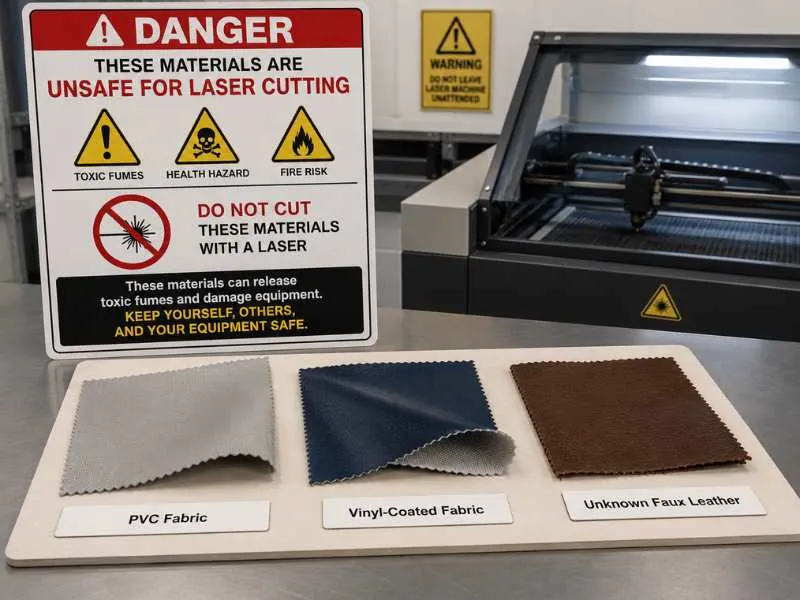
Some textiles should not be cut with a laser. The issue is not only poor edge quality. Unsafe materials can release toxic fumes, corrode machine parts, contaminate lenses, and expose operators to harmful gases.
Avoid PVC, vinyl, PVC-backed tarpaulin, chlorine-containing coated fabric, and unknown faux leather. Emory University’s laser cutter material guidance lists PVC and chlorine-containing plastics as prohibited materials because they can release harmful gases and damage equipment. Read the safety reference on prohibited laser cutter materials.
OSHA also states that adequate ventilation should reduce fumes and vapors from laser cutting and related target interactions below applicable exposure limits. See OSHA’s laser safety guidance on laser cutting ventilation requirements.
Unsafe Textile Checklist
Do not laser cut these materials unless a qualified safety review confirms they are safe:
- PVC fabric
- Vinyl fabric
- PVC-backed tarpaulin
- Unknown artificial leather
- Chlorine-containing coated textile
- Rubberized fabric with unknown compound
- Laminated fabric with unknown adhesive
- Flame-retardant textile without SDS
- Coated fabric without supplier data
- Printed fabric with unknown ink chemistry
For international textile production, ask the material supplier for an SDS before testing. If the fabric has a coating, adhesive, backing, film, print layer, or flame-retardant treatment, request information for every layer.
Fabric Laser Cutting Safety Checklist
Laser cutting fabric creates smoke, odor, lint, and fine residue. A safe textile laser cutting workflow needs more than a laser source. It needs airflow, enclosure, fire control, cleaning, and operator training.
| Safety Item | Why It Matters | Buyer Action |
|---|---|---|
| Material SDS | Confirms whether the fabric, coating, or backing is safe to cut | Request SDS before sample testing |
| Local exhaust ventilation | Removes fumes and smoke from the cutting area | Confirm exhaust fan, duct, and airflow design |
| Activated carbon filtration | Helps reduce odor and organic fumes | Use when indoor exhaust or local rules require it |
| Machine enclosure | Reduces laser exposure and controls smoke movement | Choose enclosed or semi-enclosed design when needed |
| Emergency stop | Allows fast shutdown during abnormal cutting | Check button position and operator access |
| Fire watch | Fabric, lint, and dust can ignite | Do not leave the machine unattended during cutting |
| Bed cleaning | Fabric residue can build up and burn | Set a regular cleaning schedule |
| Lens and mirror cleaning | Smoke can reduce beam quality and cause defects | Stock cleaning tools and spare lenses |
| Operator training | Prevents unsafe material use and poor setup | Train staff on material checks and cutting tests |
| Spare filters | Dirty filters reduce exhaust performance | Stock filters for regular replacement |
Safety also affects product quality. Weak exhaust can create smoke stains. Dirty lenses can cause incomplete cutting. Poor cleaning can create fire risk. For production buyers, safety and quality belong in the same checklist.
CO2 Laser vs Diode vs Fiber for Fabric Cutting
CO2 laser cutting is the standard choice for most fabric and textile materials. CO2 lasers work well with many non-metal materials, including polyester, nylon, cotton, felt, leather, paper, acrylic, wood, and rubber.
Diode lasers can cut some thin fabrics, but they are usually slower and less suitable for industrial textile production. Fiber lasers are mainly used for metals, so they are not the normal choice for fabric cutting.
Laser Source Comparison for Textile Cutting
| Laser Source | Fabric Cutting Fit | Suitable Materials | Production Fit | Buyer Note |
|---|---|---|---|---|
| CO2 laser | Strong | Polyester, nylon, felt, cotton, leather, non-woven fabric | Garment, label, roll textile, patch cutting | Best general choice for fabric laser cutting |
| Diode laser | Limited | Thin dark fabric and hobby materials | Small batch or desktop use | Usually too slow for industrial textile lines |
| Fiber laser | Poor for most textiles | Mainly metals | Metal cutting and marking | Not suitable for common fabric cutting |
| UV laser | Special cases | Some thin films and delicate materials | Electronics and high-value thin materials | Higher cost and not common for general textiles |
If your product is fabric, textile labels, patches, garment panels, non-woven parts, or roll material, start with a CO2 laser cutting machine. Then select the working area, feeding system, camera system, and exhaust design based on the production task.
Recommended Laser Power for Fabric and Textile Cutting
There is no universal laser power for every textile. Thin fabric may cut with low power. Thick felt, denim, multilayer textile, or dense canvas may need higher power or slower speed.
Kern Lasers states that a 100-watt laser can cut most fabric types at top speed and that the likely optimal wattage for fabric cutting is around 100–150 watts. See Kern’s reference on laser cutting fabric and textiles.
For B2B buyers, power should be selected together with speed, working area, exhaust, feeding, and machine structure. A high-power fabric laser cutter with poor exhaust may still produce smoke stains. A lower-power machine with good airflow and feeding may give better practical results.
CO2 Laser Power Planning Table for Fabric
| Fabric Category | Typical Material | Suggested CO2 Laser Range | Production Note |
|---|---|---|---|
| Light fabric | Thin polyester, silk, lining fabric | 60W–100W | Use fast speed and low heat to reduce marks |
| Medium fabric | Cotton, nylon, fleece, woven labels | 80W–150W | Common range for textile laser cutting |
| Thick fabric | Felt, denim, canvas, multilayer textile | 100W–180W | Test cut-through, smoke, and edge color |
| Technical textile | Filter media, coated textile, insulation fabric | 100W–200W+ | Confirm SDS and fume extraction |
| Roll textile | Polyester, non-woven fabric, sportswear fabric | 100W–180W | Conveyor feeding and exhaust are critical |
| Printed fabric | Sublimation textile, labels, patches | 80W–150W | Vision camera matters more than raw power |
Why Laser Power Alone Is Not Enough
Laser power affects cutting speed, but it does not solve every problem. A factory cutting printed polyester rolls needs camera alignment and stable feeding. A label producer cutting small woven tags needs contour accuracy and smoke control. A felt parts supplier needs stronger exhaust and slower thick-material cutting.
Before choosing power, check:
- Laser tube quality
- Beam path stability
- Lens focal length
- Motion speed
- Fabric feeding design
- Exhaust airflow
- Bed structure
- Maintenance access
- Spare parts availability
The best fabric laser cutter is the one that cuts your real textile at the required speed with stable edge quality.

Common Laser Cutting Quality Problems and Fixes
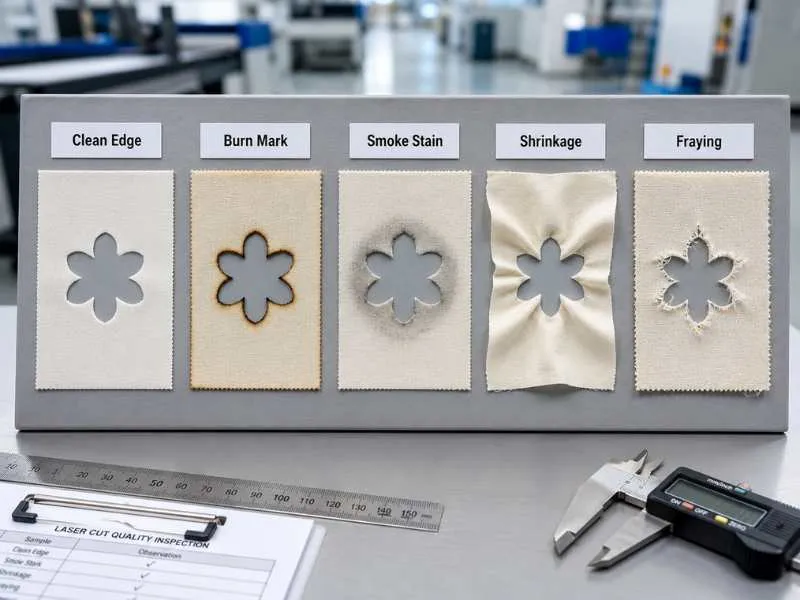
Fabric laser cutting quality depends on heat control, airflow, focus, tension, and material chemistry. Most defects can be reduced with better settings and better machine setup.
Burn Marks or Yellow Edges
Burn marks often happen when the laser adds too much heat to the fabric. Cotton, linen, silk, and light-colored textiles are more sensitive because they can char instead of melt.
To reduce burn marks:
- Lower laser power
- Increase cutting speed
- Improve exhaust airflow
- Check focus position
- Clean the lens and mirrors
- Reduce repeated passes
- Use proper air assist
- Test a different cutting order
A dark edge may be acceptable for hidden parts. It may fail on visible garment panels, white labels, or premium textile products. Define the inspection standard before production.
Frayed Edges
Laser cutting can seal many synthetic fabrics. Polyester and nylon often show cleaner edges because they melt at the cut line.
Natural fibers may still fray because they do not melt. Cotton, linen, and silk may need different settings or a different cutting method if edge sealing is required.
To reduce fraying:
- Confirm the fiber blend
- Test a thermoplastic blend if sealing is required
- Improve focus for a narrower kerf
- Reduce fabric movement
- Compare laser cutting with knife cutting for natural fabrics
Smoke Stains
Smoke stains appear when fumes stay near the fabric surface. They are common on white fabric, felt, fleece, dense textiles, and soft materials that absorb odor.
To reduce smoke stains:
- Improve down-draft exhaust
- Clean the cutting bed
- Increase airflow near the cut
- Reduce heat input
- Keep the fabric away from dirty support surfaces
- Maintain filters and ducts
- Clean lenses and mirrors regularly
Smoke control is not only a safety issue. It affects product appearance, odor, packing quality, and repeat orders.
Fabric Shrinkage or Curling
Shrinkage happens when heat changes the textile shape. Curling happens when thin fabric, coated fabric, or stretch material reacts to heat and airflow.
To reduce shrinkage and curling:
- Use lower power and faster speed
- Keep the fabric flat
- Control roll tension
- Use vacuum hold-down if needed
- Test nesting direction
- Avoid long heat exposure in small areas
- Let parts cool before final measurement
For roll-to-roll fabric laser cutting, feeding stability is as important as laser accuracy.
Laser Cutting vs Knife Cutting vs Die Cutting for Fabric
Laser cutting is not always the only option. Knife cutting and die cutting remain useful in the right production environment.
Fabric Cutting Method Comparison
| Cutting Method | Strength | Limitation | Best Use Case | Procurement Decision |
|---|---|---|---|---|
| Laser cutting | Digital patterns, fine details, sealed synthetic edges | Heat marks on some fabrics, exhaust required | Labels, patches, polyester, printed fabric, small to medium batches | Choose when designs change often |
| Knife cutting | No heat effect, good for many natural fabrics | Blade wear, weaker detail on some shapes | Garment panels, stacked fabric, heat-sensitive textile | Choose when heat must be avoided |
| Die cutting | Fast for repeated shapes | Tooling cost and slow design change | Fixed-shape high-volume parts | Choose when one shape runs for months |
| Manual cutting | Low equipment cost | Slow and inconsistent | Samples or repair work | Not ideal for repeatable OEM orders |
| Vision laser cutting | Cuts along printed graphics | Higher machine cost | Sublimation fabric, labels, patches | Choose when print alignment matters |
Choose laser cutting if your designs change often, your parts need detailed edges, or your synthetic textile benefits from sealed edges. Choose knife cutting if the fabric is heat-sensitive or stacked. Choose die cutting if one shape runs at high volume for a long period.
How to Test Fabric Before Mass Production
A strong textile laser cutting project starts with testing. Generic settings from another factory may not work on your material. The fabric batch, dye, coating, humidity, and backing can change the result.
Use this process before mass production:
- Confirm fiber content.
- Ask for SDS if the fabric has coating, backing, adhesive, print ink, or flame-retardant treatment.
- Cut samples from the real production batch.
- Test different power and speed settings.
- Record focus position, air assist, exhaust, and frequency.
- Check edge color, smoke stain, odor, shrinkage, and fraying.
- Measure part size after cooling.
- Test roll feeding if the material comes from a roll.
- Keep approved samples for repeat orders.
Fabric Laser Cutting Test Record
| Test Item | What to Record | Why It Matters |
|---|---|---|
| Material name | Fiber type, GSM, coating | Prevent wrong settings and unsafe cutting |
| Supplier batch | Batch number or sample source | Helps repeat approved results |
| Laser power | Percentage or wattage | Controls cut-through and heat input |
| Cutting speed | mm/s or machine value | Affects productivity and edge marks |
| Focus position | Lens and focus setting | Controls kerf and detail |
| Air assist | Pressure or airflow level | Helps remove smoke near the cut |
| Exhaust setting | Fan and duct setup | Affects odor, stains, and safety |
| Edge quality | Sealing, fraying, color | Confirms product acceptance |
| Dimensional accuracy | Part size after cooling | Confirms repeatability |
| Odor and residue | Smell, surface stain, dust | Important for packing and customer approval |
For OEM orders, attach this record to the approved sample. It reduces confusion between sales, engineering, operators, and quality teams.

FAQ About Cutting Fabric and Textiles with a Laser Cutter
Can a laser cutter cut cotton fabric?
Yes. A laser cutter can cut cotton fabric, but cotton may brown or char if heat input is too high. Use lower power, faster speed, good focus, and strong exhaust to improve edge quality.
Does laser cutting stop fabric from fraying?
Laser cutting can stop or reduce fraying on many synthetic fabrics, such as polyester and nylon. These materials can melt and seal at the cut edge. Natural fibers may still fray because they do not melt.
What laser is best for cutting fabric?
A CO2 laser cutter is the most common choice for fabric and textile cutting. It works well for many non-metal materials and can support flatbed, conveyor, roll-feeding, and vision camera workflows.
Can you laser cut polyester fabric?
Yes. Polyester fabric is highly suitable for laser cutting. The edge often melts and seals, which helps reduce fraying. Test speed, power, and airflow to avoid shrinkage or glossy edges.
Can you laser cut nylon fabric?
Yes. Nylon can be laser cut, but it may melt, curl, or shrink if the heat is too high. Test the real material and control fabric tension before production.
Can you laser cut felt?
Yes. Felt is commonly laser cut for pads, insulation parts, crafts, gaskets, and decorative textile products. Thick felt may need slower cutting speed and stronger exhaust.
Build Your Fabric Cutting Workflow with KASU
For roll-fed fabric in production, the K1814-S2 double-head auto-feeding laser cutter cuts from the roll on a conveyor. For printed or sublimated fabric that must be cut on the print, the KX1810-F2 CCD laser cutter locates each piece with a camera. Lace and lingerie work runs on the KD9015-SY lace laser cutting machine. See the full range on our fabric laser cutting machine page.
To get a practical machine recommendation, send KASU one fabric photo, one cutting file, your roll width or sheet size, and your expected daily output. If the fabric has coating, backing, adhesive, or flame-retardant treatment, include the SDS or material sheet.
KASU can help you choose the CO2 laser power, working area, conveyor feeding system, CCD or vision camera option, exhaust setup, spare parts plan, and export packing method for your textile production line.