

What Laser Slitting Does That A Rotary Blade Does Not
Quick answer: A textile slitting machine cuts a wide roll into narrower rolls or strips. Conventional slitting uses rotary or razor blades on a rewinder; laser slitting cuts and fuses the edge in the same action, which is what narrow synthetic tape and ribbon usually need.
The distinction is worth making because these are not competing versions of the same machine. A blade rewinder slits at high line speed and is the correct choice for wide-to-wide converting where the edge does not need sealing — nothing here beats it on metres per minute. What it cannot do is stop a synthetic strip from fraying. Cut a 20 mm polyester tape with a razor and the raw edge starts shedding in the wind-up, so a heat-seal or hot-knife pass gets added afterwards, which means handling narrow fragile material twice. A laser slits and seals in one action because the beam fuses the polyester or polyamide filament ends as it parts them. It also does something a blade physically cannot: slit a shaped line. Scalloped ribbon edges, wave-cut tape and profiled strips come off the same setup as straight lanes. The honest limit is speed — on plain wide-to-wide slitting where no edge sealing is needed, buy a blade rewinder. Industry background on textile converting is covered by Textile World.
Materials Suited To Slitting With A Fused Lane Edge
Four roll-goods situations where sealing at the slit matters. The middle bullet explains why the blade route costs more than it looks.

Polyester Ribbon And Tape Stock
- Formats: woven and satin polyester 50–300 gsm, slit to 6–100 mm widths for ribbon, binding and label tape.
- Watch out: a razor-slit polyester ribbon starts shedding immediately, so a heat-seal pass is added — and that pass means running narrow, unstable material through a second machine.
- How we cut it: slit and fuse in one action, so the strip is stable at the wind-up. See our ribbon cutting page.

Webbing, Strapping And Narrow Fabric
- Formats: polyester and polyamide webbing 10–50 mm, elastic and non-elastic narrow fabric.
- Watch out: webbing is load-bearing, so a frayed edge is not cosmetic — it is where failure starts under repeated tension.
- How we cut it: fused edges on both sides of each lane; we cut your own webbing and let your test rig judge the edge under load rather than by eye.

Knitted And Mesh Roll Goods
- Formats: warp-knit mesh, tricot, spacer fabric slit into panels and strips.
- Watch out: knitted structures ladder from a raw slit edge, and a ladder runs the length of the roll rather than staying at the cut.
- How we cut it: the beam fuses the loop ends at the slit, which stops the ladder starting rather than repairing it afterwards.

Coated And Laminated Roll Stock
- Formats: PU-coated polyester and laminated technical fabric slit to lane widths for further converting.
- Watch out: PVC-coated stock is excluded for chlorine release, and coated rolls are frequently unlabelled at the rack — the usual route by which the wrong material reaches a machine.
- How we cut it: polymer confirmed from the specification before running; PU-coated slits with the polyester filament ends fused at both lane edges.
Slitting Jobs Where A Fused Edge Pays For Itself
Each case below currently costs a second pass, a second machine or a rejected batch.

Ribbon, Binding And Trim Production
- Parts: gift and garment ribbon, binding tape, decorative trim in fixed and mixed widths.
- The hard part: a separate heat-seal pass handles narrow, fragile, already-slit material a second time, which is where most of the damage and downtime happens.
- What you get: a single operation instead of two, and shaped or scalloped edges available from the same setup.

Webbing And Strap Lanes
- Parts: load webbing, harness strap, luggage and bag strapping cut to lane width.
- The hard part: load-bearing narrow fabric fails from the edge inward, so edge condition is a specification item rather than an appearance one.
- What you get: both lane edges fused at the slit, with the parameter recorded so the edge condition is repeatable batch to batch.

Label And Woven Tape Stock
- Parts: woven label tape, care label ribbon, printed identification tape.
- The hard part: label tape is slit narrow and then handled repeatedly through printing and cutting, with every handling step attacking a raw edge.
- What you get: a stable edge from the first operation. See our woven label page.

Shaped And Profiled Slitting
- Parts: scalloped ribbon, wave-edge tape, profiled strips, tapered lanes.
- The hard part: a rotary blade can only cut a straight line, so shaped edges are a separate die or hand operation entirely.
- What you get: shaped slitting from the same file and the same run as straight lanes, which is capability a blade rewinder does not have at any price.
Recommended KASU Machines For Roll Conversion
Choose by roll width and by how many lanes you need per run. All three run the same control software. The full range is on the KASU machine category page.

K1814-SY Roll-to-Roll Double Head Laser Cutting Machine
- Cuts: continuous lane slitting on polyester, polyamide and PU-coated roll goods.
- Specs: 1800×1400 mm cutting zone, roll-to-roll transport with tension control, two heads.
- Best for: continuous slitting where material must stay on the roll path from unwind to rewind.

K1814-S2 Double Head Auto Feeding Laser Cutting Machine
- Cuts: lane slitting plus cross-cutting to length in the same job.
- Specs: 1800×1400 mm zone, automatic feeding, two heads.
- Best for: strips that must be slit and cut to finished length rather than rewound.

KD1012-SY Double Head High Speed Laser Cutter With Camera
- Cuts: printed tape and label ribbon that must be slit in register with the print.
- Specs: 1000×1200 mm class area, camera registration, high-speed double head.
- Best for: narrow printed stock where the slit must follow the printed lane edge.
A Rotary Slitter Is Faster. It Also Leaves Both Edges Raw.
On plain straight lanes at volume a rotary slitter wins on speed and cost, and we will not argue otherwise. The reason narrow-fabric shops buy a laser is what happens at the two edges it creates, and what a rotary cannot do at all: a lane that is not straight.
Distributors and OEM partners: KASU offers free OEM/ODM — custom models, your brand colours and logo, multilingual labelling, with no extra service charge. Details on About KASU.

Send Your Own Roll Stock For A Free Sample Cut
- Send the ribbon, webbing, knit or coated stock you slit, on the roll if possible.
- Ask for a shaped lane as well as a straight one — scalloped and profiled edges are what a rotary cannot produce at any speed.
- Parameters recorded per stock and shipped with the machine.
- For distributors: narrow-fabric mills already own slitters. You are selling the capability they have been turning work away for, not a replacement for equipment they just bought.

Sealed Lanes, Shaped Lanes, And The Materials We Exclude
- Both edges of every lane are fused as they are formed, so neither side needs a separate finishing step. Result confirmed on your own stock before quotation.
- Shaped, scalloped and profiled slitting is possible because the cut path is software, not a blade position.
- Excluded: PVC-coated roll stock and natural fibres that char rather than fuse. See PVC Cutting Systems.
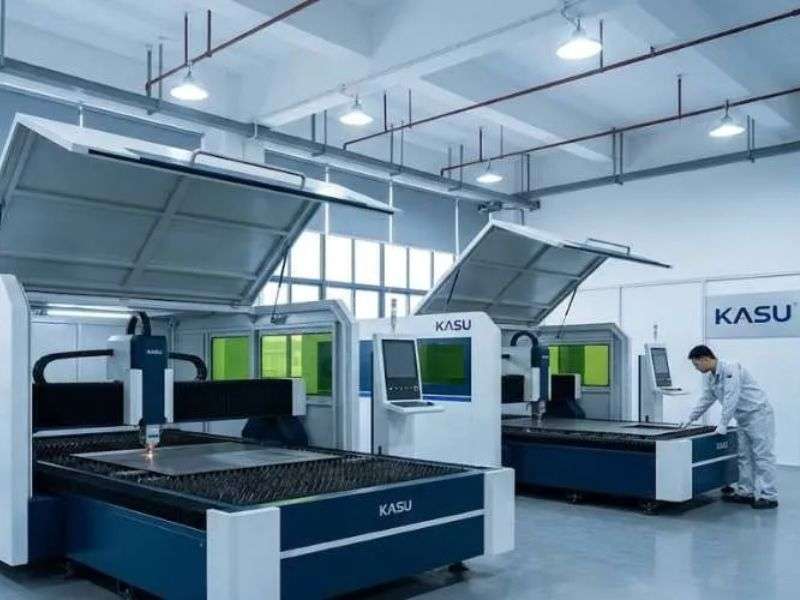
The Factory That Builds Your Textile Slitting Machine
- Founded 2009 · Shanghai R&D · 8,000+ m² Suzhou plant, 15 minutes from the R&D centre.
- 100+ models across 9 series, 70+ owned patents and software copyrights, China High-Tech Enterprise.
- Machines are built in-house rather than traded, so a parameter question reaches the people who built the motion system and specified the extraction.
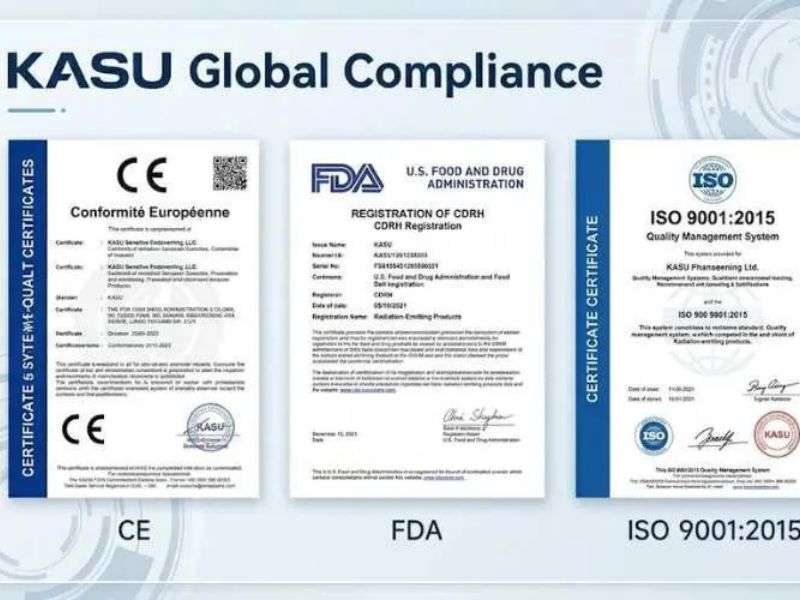
CE And FDA Certified — Send Your Roll Stock For A Free Sample Cut
- CE and FDA certified; 5,000+ customers across 80+ countries.
- Installation guidance, operator training and spare parts supplied from the factory that built the machine.
- Class-1 enclosed configurations available where the destination market requires them.
Buyer Questions On Roll Conversion And Narrow Fabric
Is Laser Slitting Faster Than A Rotary Slitter?
No. A blade rewinder runs at higher line speed and for plain wide-to-wide slitting with no sealing requirement it is the correct machine. Laser wins where the slit edge must be sealed, where the lane must follow a printed line, or where the slit is shaped rather than straight. Many converters run both.
Does It Really Seal Both Edges Of Every Lane?
On polyester, polyamide and other thermoplastic fibres the beam fuses the filament ends on both sides of the kerf as it slits. On natural and aramid fibres there is no melt phase, so the edge chars instead. We slit your own material and return lanes so the edge can be judged or tested rather than assumed.
Can It Slit Shaped Or Scalloped Edges?
Yes, and this is capability a rotary blade does not have at any price. Scalloped ribbon, wave-edge tape and profiled or tapered lanes come from the same file and the same run as straight lanes, because the path is defined in software rather than by blade position.
How Many Lanes Can It Slit At Once?
Multi-head configurations slit several lanes per run, and the practical number depends on lane width, material and the accuracy required. We work it out against your actual lane schedule rather than quoting a headline figure, because a schedule of mixed widths behaves differently from a schedule of identical ones.
Which Materials Are Excluded?
PVC-coated and PVC-blended stock is excluded for chlorine release, which corrodes extraction ducting and raises a plant-safety issue. Natural-fibre tape can be slit but chars at the edge rather than sealing, so whether that suits depends on your product.
What Does A Textile Slitting Machine Cost?
Price depends on roll width, head count, feeding method and whether camera registration is needed rather than on a list figure. Send your roll width, material, lane schedule and daily output and we return a configuration with pricing. Sample slitting is free.
Related KASU Cutting Solutions
Three neighbouring pages covering the narrow-fabric products and roll handling most often quoted alongside slitting.
-

Ribbon Laser Cutting Machine
Ribbon production specifically, including shaped edges and finished-length cutting. -

Roll To Roll Laser Cutter
Roll-to-roll transport, tension control and unattended running on long jobs. -

Woven Label Laser Cutting Machine
Woven label and care-label tape, where the slit edge is handled repeatedly downstream.
Technical Support for Textile Slitting
Background on fused-edge behaviour, material screening and how to decide which of your slitting work belongs on a blade.
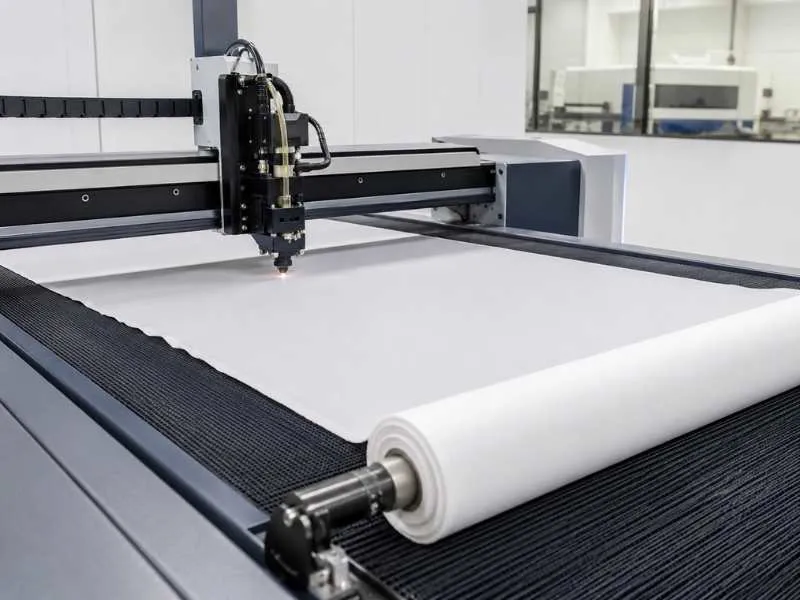

Get A Textile Slitting Machine Quotation
Send your roll width, material type and gsm, lane schedule and daily output, and tell us whether edges currently need a separate sealing pass. We slit your own material free of charge and return the lanes with the configuration.
Address: No. 105, Nanzhangjing Road, Taicang, Suzhou, Jiangsu, China
Email: [email protected]
WhatsApp: +86-18601718317