

What A Soft Signage Cutting Machine Is Solving
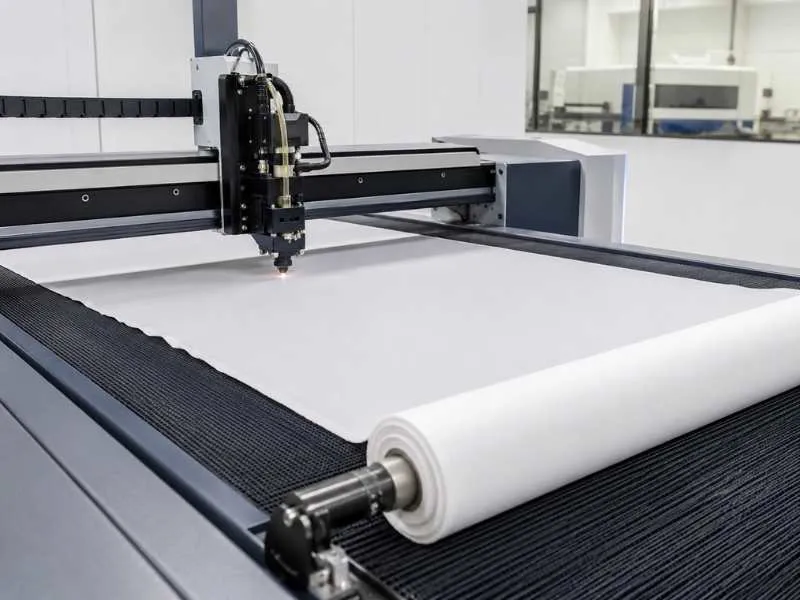
Quick answer: A soft signage cutting machine cuts printed polyester display textiles to their printed contour and fuses the cut edge in the same operation, so panels can go straight to silicone-edge or hem sewing without a separate sealing step.
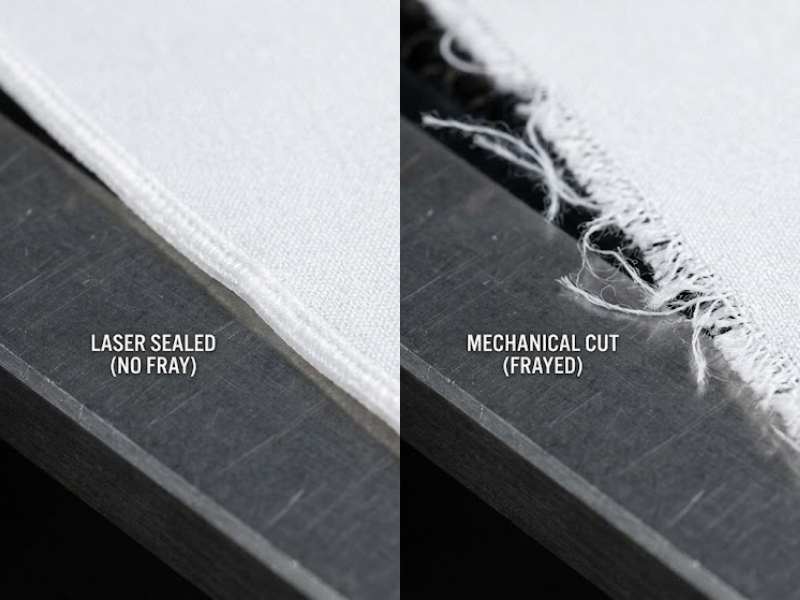
Soft signage displaced rigid printed panels because fabric ships folded, weighs almost nothing and can be reprinted for the next campaign. What it did not displace was the finishing problem. Dye-sublimated polyester frays from any mechanically cut edge, so a knife-cut panel needs a hot-knife or heat-seal pass before it can be sewn — a second handling of a large, awkward, already-printed panel where damage is expensive. A CO2 beam fuses the polyester filament ends as it parts them, which removes that pass entirely. The second problem is registration. Printed fabric stretches on the calender and again on the take-up, so a panel is never quite the size the file says. Camera registration reads the printed contour marks and warps the cut path to the panel as it actually lies, which is the difference between a silicone edge that seats in the frame and one that does not. The limits: this is a polyester process. PVC-based banner scrim is excluded for chlorine release, and natural-fibre display cloth chars instead of fusing. Sign industry background is published by the International Sign Association.
Soft Signage Materials And How Each Cuts
Four display-textile families cover most print-shop enquiries. The middle bullet is what decides whether the beam belongs on the job.

Dye-Sublimated Polyester Display Fabric
- Formats: 110–320 gsm knitted and woven polyester, roll widths to 3.2 m, for backlit and front-lit frame graphics.
- Watch out: the panel is not the size in the file. Sublimation heat and take-up tension change the printed dimension, so cutting to nominal coordinates puts the silicone edge in the wrong place.
- How we cut it: camera registration on printed contour marks, cutting the panel as it actually lies; filament ends fuse locally so the panel is ready to sew.

Flag And Banner Knit
- Formats: 100–160 gsm polyester flag knit and mesh banner cloth for outdoor display.
- Watch out: flag knit is light and open, so it lifts and shifts under any airflow — and an outdoor flag that frays at the hem fails in weeks rather than seasons.
- How we cut it: vacuum hold-down against lift, and a fused hem line that gives the sewing operation a stable edge to work to. See our flag cutting page.

Blockout And Backlit Textile
- Formats: two- and three-layer blockout polyester 220–400 gsm, backlit diffusion textile for lightbox frames.
- Watch out: blockout stock is a laminate with a dark core; too much power leaves a visible scorch halo on the face, and lightbox panels are viewed lit and up close.
- How we cut it: lowest workable power against your own blockout, with the panel viewed on a lightbox before the parameter is signed off.

PVC Scrim And Coated Banner
- Formats: PVC banner scrim, coated mesh, still common in outdoor and construction signage.
- Watch out: PVC releases chlorine compounds under a CO2 beam. It corrodes extraction ducting and is a plant-safety question — not something to work around with better extraction.
- How we cut it: we do not. PVC scrim belongs on a knife or a hot-blade system, and we say so before the order rather than after. See our coated fabric page for that side of the work.
Soft Signage Products Cut And Edge-Finished Together
Every case below is a print shop trying to get a large printed panel through finishing without touching it twice.

SEG Frame Graphics And Backdrops
- Parts: silicone-edge graphic panels, exhibition backdrops, lightbox faces, from 1 m to full drop.
- The hard part: the silicone edge has to seat in an aluminium frame channel with almost no tolerance, and the panel dimension moved during printing.
- What you get: registration to the printed contour rather than the file, and a fused edge the sewing bench can follow without a hot-knife pass.

Flags, Feather Banners And Bunting
- Parts: teardrop and feather banner panels, table throws, bunting strings, event flags.
- The hard part: these are shaped rather than rectangular, so a straight-cut roll slitter cannot produce them and hand cutting introduces exactly the wobble a customer notices on a straight hem.
- What you get: shaped panels cut from the artwork with the hem line fused, in the same nesting as the rectangular work.

Retail And Event Display Textiles
- Parts: hanging banners, ceiling drops, POS graphics, seasonal window sets.
- The hard part: retail campaigns are many versions in small quantities against a fixed installation date, so finishing capacity rather than print capacity is what limits the shop.
- What you get: the finishing step compresses into the cutting step, which is usually where the shop’s bottleneck actually sits.

Sublimation Sample And Proof Panels
- Parts: colour proofs, layout samples, size-set proofs before a production print.
- The hard part: a proof that is not cut and finished cannot be judged as a finished panel, so proofs get approved on assumptions.
- What you get: finished proof panels from the same file and machine that will run the job. See our sublimation cutting page.
Recommended KASU Machines For Printed Display Textiles
Choose by panel drop and by whether the work is roll-continuous or panel-by-panel. All three run the same control software. The full range is on the KASU machine category page.

KD1830-SY Large Format Top Camera Flatbed Laser Cutting Machine
- Cuts: full-drop backdrops, SEG frame graphics, long banner panels.
- Specs: 1800×3000 mm class working area, top camera contour registration.
- Best for: large printed panels that must be cut in a single setup to the printed contour.

KD1822-SY Large Format Top Camera Flatbed Laser Cutting Machine
- Cuts: frame graphics, blockout lightbox faces, shaped flag panels.
- Specs: 1800×2200 mm class area, top camera, CO2 source.
- Best for: mixed panel sizes where registration accuracy matters more than maximum drop.

K1814-SY Roll-to-Roll Double Head Laser Cutting Machine
- Cuts: continuous printed rolls, bunting, repeated banner shapes.
- Specs: 1800×1400 mm cutting zone, roll-to-roll transport, two heads.
- Best for: roll-continuous production where panels never need to be handled as sheets.
Printed Fabric Does Not Come Back The Size It Went In
Dye-sublimated display fabric goes through heat and tension before it reaches the cutting table, and it does not return to the dimensions in the file. A cut path built from the artwork will be wrong by the far edge of the panel. Reading the print is the only way round it.
Distributors and OEM partners: KASU offers free OEM/ODM — custom models, your brand colours and logo, multilingual labelling, with no extra service charge. Details on About KASU.

Send Your Own Printed Panel For A Free Sample Cut
- Send a real printed panel, not a blank swatch — the distortion is the thing being tested.
- We cut it, return it, and tell you how much your process actually moves. Most shops have never measured it.
- Parameters recorded per fabric and shipped with the machine.
- For distributors: soft signage shops buy printers first and discover finishing second. The cutter is the bottleneck they hit about a year in, and they usually hit it suddenly.

One Banner Material We Will Not Cut
- PVC scrim and PVC-coated banner are excluded from laser processing — chlorine release damages the machine and endangers the operator. Those jobs go to a knife; see PVC Cutting Systems. Polyester display fabric, flag knit, blockout and backlit textile are all fine.
- Cut and edge fuse happen in one operation on polyester, which is what removes the separate hemming or overlock step on SEG graphics.
- Blockout and backlit textile carry a coating that scorches earlier than the base cloth — set on a sample, never copied from plain polyester.
The Factory That Builds Your Soft Signage Cutter
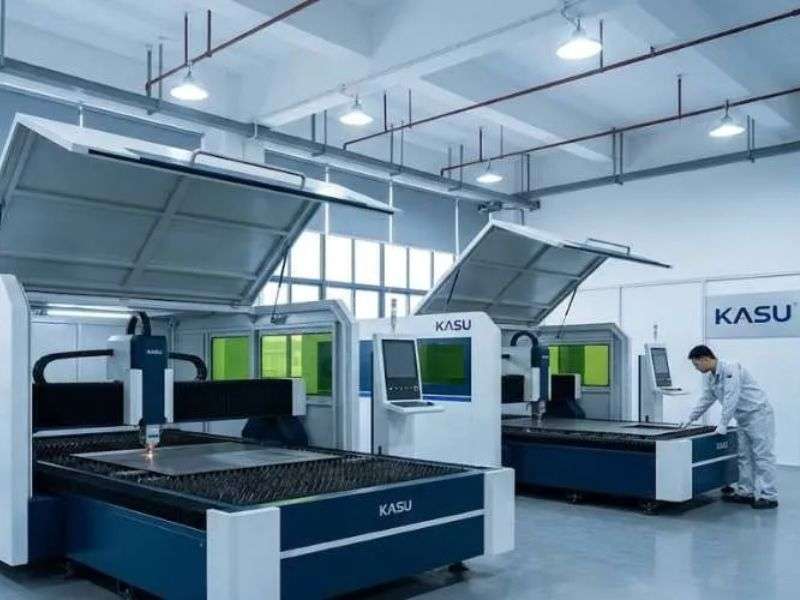
- Founded 2009 · Shanghai R&D · 8,000+ m² Suzhou plant, 15 minutes from the R&D centre.
- 100+ models across 9 series, 70+ owned patents and software copyrights, China High-Tech Enterprise.
- Machines are built in-house rather than traded, so a parameter question reaches the people who built the motion system and specified the extraction.
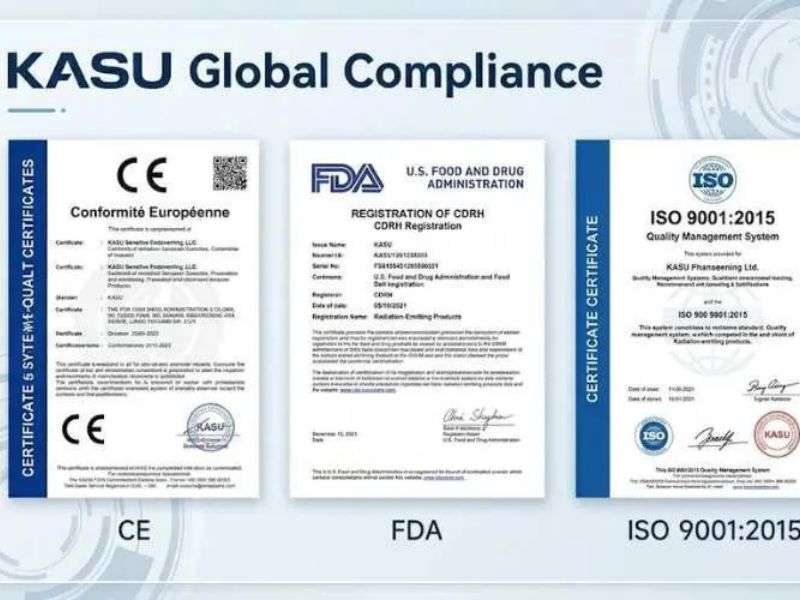
CE And FDA Certified — Send Your Printed Panel For A Free Sample Cut
- CE and FDA certified; 5,000+ customers across 80+ countries.
- Installation guidance, operator training and spare parts supplied from the factory that built the machine.
- Class-1 enclosed configurations available where the destination market requires them.
Buyer Questions On Cutting Printed Display Textiles
Does The Machine Cut And Seal The Edge In The Same Operation?
On polyester display fabric the beam fuses the filament ends as it parts them, so the panel reaches the sewing bench without a separate hot-knife or heat-seal pass. Edge quality still depends on fabric construction and finish, so we cut your own printed material and let your sewing operator handle the result before you decide.
How Does Registration Handle Fabric That Stretched During Printing?
A top camera reads the printed contour marks and warps the cutting path to the panel as it actually lies on the bed, rather than cutting to nominal file coordinates. This is the main reason soft signage moved to camera cutting, since sublimation heat and take-up tension both change the printed dimension.
Can It Cut PVC Banner Scrim?
No, and we will not configure a machine for it. PVC releases chlorine compounds under a CO2 beam, which corrodes extraction ducting and raises a plant-safety issue rather than a quality one. Scrim belongs on a knife or hot-blade system.
Will It Scorch Blockout Or Backlit Textile?
Blockout stock is a laminate with a dark core and excess power leaves a visible halo on the face, which matters because lightbox panels are viewed lit and close up. We set the lowest workable power on your actual blockout and inspect the panel on a lightbox before signing off the parameter.
What Does A Soft Signage Cutting Machine Cost?
Price depends on working area, camera specification, head count and feeding method rather than on a list figure. Send panel sizes, fabric types and gsm, daily square-metre output and whether work is roll or panel based, and we return a configuration with pricing. Sample cutting is free.
How Large A Panel Can Be Cut In One Setup?
Up to a 1800 by 3000 mm class working area on the large-format models, which covers most full-drop backdrops and SEG panels. Longer work is handled by roll-fed indexing rather than by a bigger bed, and we will size the machine against your actual panel mix rather than your largest occasional job.
Related KASU Cutting Solutions
Three neighbouring pages covering the display products most often quoted alongside soft signage work.


Technical Support for Soft Signage Cutting
Background on polyester edge behaviour, material screening and how to size a machine against a print shop’s panel mix.
Get A Soft Signage Cutting Machine Quotation
Send a printed sample panel, your fabric types and gsm, typical panel sizes and daily square-metre output. We register and cut your own printed material free of charge and return the finished panel with the machine configuration.
Address: No. 105, Nanzhangjing Road, Taicang, Suzhou, Jiangsu, China
Email: [email protected]
WhatsApp: +86-18601718317