

What An Insole Cutting Machine Has To Deal With
Quick answer: An insole cutting machine cuts footbed blanks — foam, board, cork composite and laminated top covers — to graded outlines from a digital pattern, replacing the size-by-size steel dies used on a clicking press.
Insoles look like a simple part and are not. They are usually a laminate of two or three materials with different densities, they are graded across a dozen sizes, and the finished outline has to match a last that the customer may revise mid-season. Under die cutting each size in each style is a tool. That is manageable for one high-volume style and financially impossible for the orthopaedic and custom end of the market, which is precisely where insole demand has been growing. Cutting the blank digitally removes the tooling from the equation and, because the process is non-contact, it also removes the compression problem: a blade squeezes foam before it severs it, so a 6 mm EVA blank comes off the press slightly undersized and springs back afterwards to something else. The limits are worth stating. Latex and some rubber-loaded footbeds produce heavy fume loads and are better handled mechanically, and above roughly 10 mm the cut face on foam starts to draft noticeably. Footwear component test methods are published by SATRA Technology.
Insole Materials And How Each Behaves Under The Beam
Four footbed material families cover most enquiries. The middle bullet is the one that changes the machine choice.

EVA And PU Foam Sheet
- Formats: 25–60 Shore C EVA and PU foam, 2–10 mm, in sheet and roll for cushioning footbeds.
- Watch out: foam is compressible, so any blade compresses it before it cuts. The blank measures correctly on the press and is a different size once it recovers — a defect that gets blamed on the pattern rather than the process.
- How we cut it: nothing touches the sheet, so the blank is the thickness and outline the file specified. Above about 10 mm the cut face begins to draft and we say so.

Cork And Cork-Rubber Composite
- Formats: agglomerated cork and cork-rubber sheet 2–8 mm for orthopaedic and comfort footbeds.
- Watch out: cork cuts well but the rubber binder content varies between suppliers, and higher rubber content raises fume load and darkens the cut face.
- How we cut it: parameters set against your actual sheet rather than a generic cork setting, with extraction specified for the binder content you actually use.

Textile-Topped And Laminated Board
- Formats: cellulose and non-woven insole board with fabric or microfibre top cover, 1.5–4 mm total build.
- Watch out: the layers behave differently — a parameter that cuts the board cleanly can scorch the top cover, and the top cover is the visible surface.
- How we cut it: parameters chosen for the visible layer first, with camera registration where the top cover is printed so the pattern stays centred on the footbed.

Latex And Rubber-Loaded Footbeds
- Formats: latex foam and rubber-filled comfort sheet used in orthopaedic and work footwear.
- Watch out: these produce heavy fume loads and a strong odour that lingers on the part. That is an extraction and workplace question, not a cut-quality one.
- How we cut it: we run a sample and let you smell and measure the result before you decide. For high-rubber grades we will recommend a press instead.
Insole And Footbed Parts Cut Without Size Tooling
Value concentrates where the size range is wide or the order quantity per size is small.

Graded Insole Blanks
- Parts: full-length and three-quarter footbed blanks across sizes 35–48, in single or laminated material.
- The hard part: a fourteen-size range in three widths is forty-two tools per style under die cutting, before any style revision.
- What you get: one graded file. A size or width addition costs nesting time, and a last revision does not scrap a tool library.

Orthopaedic And Custom Footbeds
- Parts: individually shaped footbeds, posting and wedge blanks, arch support blanks.
- The hard part: quantity one per patient is the definition of a case that tooling cannot serve, so this work is usually done by hand with a knife.
- What you get: a scanned or CAD outline cut directly, so custom work runs on the same machine and the same records as series production.

Printed And Branded Top Covers
- Parts: printed sock liners, branded top covers, logo-perforated footbeds.
- The hard part: a printed top cover has to be cut in register with the print, and a few millimetres of drift puts the logo off-centre on a surface the wearer sees every day.
- What you get: camera registration reads the print and warps the path to the sheet as it lies, plus logo perforation in the same setup.

Sampling And Seasonal Ranges
- Parts: development footbeds, size-set samples, small custom and promotional runs.
- The hard part: insole samples usually wait behind the upper samples for tooling, and the delay is invisible until the whole shoe misses its review date.
- What you get: footbed samples cut the day the pattern arrives, on the parameters that will run the order.
Recommended KASU Machines For Footbed Blanks
Choose by whether top covers are printed and by how many blanks you need per shift. All three run the same control software. The full range is on the KASU machine category page.

K1610-F4 Four Head Laser Cutting Machine With Honeycomb Table
- Cuts: plain EVA, PU foam, cork composite and board blanks.
- Specs: 1600×1000 mm honeycomb bed, four synchronised heads, no camera.
- Best for: unprinted footbed blanks where the same outline repeats in high volume.

KX1810-F2 CCD Laser Cutter With Fixed Table
- Cuts: printed top covers, branded sock liners, laminated board.
- Specs: 1800×1000 mm class fixed table, CCD camera registration.
- Best for: printed footbed covers that must be cut in register with the artwork.

K1325-F1 High Precision Flatbed Laser Cutter
- Cuts: sheet-format foam and board, orthopaedic and custom blanks.
- Specs: 1300×2500 mm flatbed, high-precision drive, single head.
- Best for: sheet stock and one-off custom footbeds where flexibility beats throughput.
A Clicking Press Compresses Foam Before It Cuts It
A die pushes down through a footbed, so the foam is under load at the moment it severs. On firm board that does not matter. On a soft EVA or PU footbed the part relaxes back to a different profile than the drawing, and nobody measures until a fitting goes wrong.
Distributors and OEM partners: KASU offers free OEM/ODM — custom models, your brand colours and logo, multilingual labelling, with no extra service charge. Details on About KASU.

Send Your Own Footbed Stock For A Free Sample Cut
- Send the density you actually run. Density drives the window far more than thickness, and it is the number usually missing from an enquiry.
- We cut your graded blanks and return them so you can measure the profile rather than trust ours.
- Parameters recorded per stock and shipped with the machine.
- For distributors: orthopaedic and custom footbed work is short-run by nature — every pair is potentially different. That is a market a die-based shop structurally cannot serve, which makes this an addition rather than a replacement sale.

Latex, Rubber-Loaded And Printed Top Covers
- Latex and rubber-loaded footbeds behave differently from EVA and PU — filler content sets the window, and some compounds are better cut mechanically. We will say which after a sample.
- Printed and branded top covers register to the print with the CCD option, so the logo lands where the design put it.
- Non-contact cutting keeps loft and cell structure intact on soft grades.
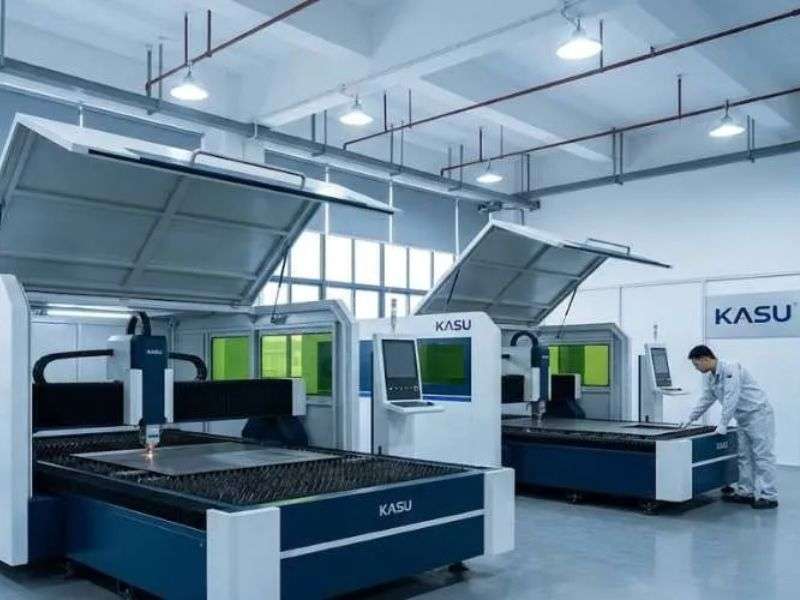
The Factory That Builds Your Insole Cutter
- Founded 2009 · Shanghai R&D · 8,000+ m² Suzhou plant, 15 minutes from the R&D centre.
- 100+ models across 9 series, 70+ owned patents and software copyrights, China High-Tech Enterprise.
- Machines are built in-house rather than traded, so a parameter question reaches the people who built the motion system and specified the extraction.
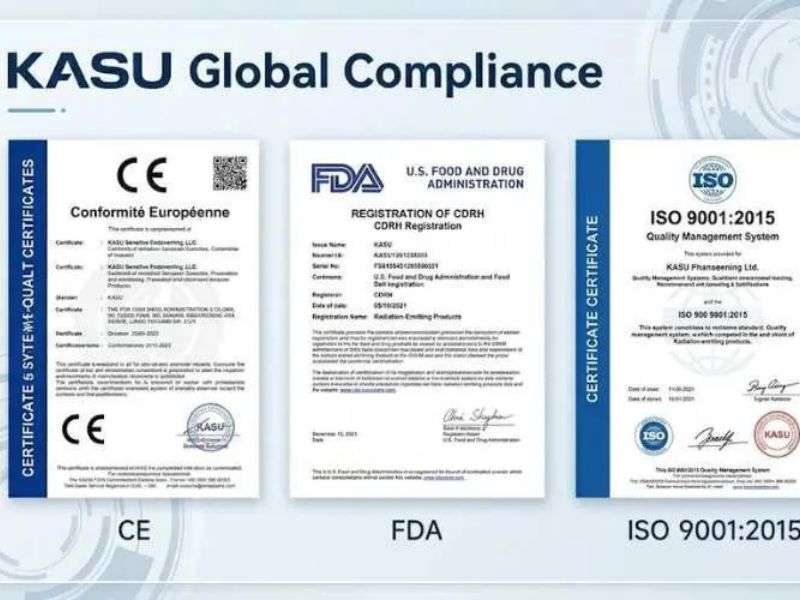
CE And FDA Certified — Send Your Density For A Free Sample Cut
- CE and FDA certified; 5,000+ customers across 80+ countries.
- Installation guidance, operator training and spare parts supplied from the factory that built the machine.
- Class-1 enclosed configurations available where the destination market requires them.
Buyer Questions On Cutting Footbeds And Insoles
How Thick A Foam Footbed Can It Cut?
EVA and PU foam up to roughly 10 mm cuts well and holds a square face. Above that the cut face begins to draft, which may or may not matter depending on whether the edge is visible or covered. We cut your actual sheet at your actual thickness and show you the face before you decide.
Why Does Laser Suit Foam Better Than A Clicking Press?
Because a blade compresses foam before it severs it. The blank measures correctly on the press bed and recovers to a different size afterwards, which is usually blamed on the pattern rather than the process. Non-contact cutting applies no compression, so the blank matches the file.
Can It Cut Latex Or Rubber-loaded Footbeds?
Technically yes, but these produce heavy fume loads and a lingering odour on the part. For high-rubber grades we normally recommend a press instead. We will cut a sample from your material first so the decision is made on the actual smell and extraction load rather than on a specification.
Can It Register Printed Top Covers?
Yes. A CCD camera reads the printed artwork and warps the cutting path to the sheet as it actually lies, so the logo stays centred on the footbed. Logo perforation can be done in the same setup as the outline cut.
What Does An Insole Cutting Machine Cost?
Price depends on working area, head count and whether camera registration is needed rather than on a list figure. Send material build, thickness, size range and daily blank output and we return a configuration with pricing. Sample cutting is free.
Is This The Same Machine As A Shoe Upper Cutter?
The machine family is the same but the configuration differs — footbed work favours multiple heads and a honeycomb bed, while upper work favours camera registration for printed and knitted material. Many factories run one of each. Our footwear cutting page covers the upper-room side.
Related KASU Cutting Solutions
Three neighbouring pages covering the sole, foam and mat materials most often quoted alongside footbed work.


Technical Support for Insole and Footbed Cutting
Background on foam behaviour under a beam, thickness limits and how to translate a size range into a machine specification.


Get An Insole Cutting Machine Quotation
Send your footbed material build, thickness, size range and daily blank output. We confirm the laminate suits laser cutting, run a free sample cut and return the parameter record with the machine configuration.
Address: No. 105, Nanzhangjing Road, Taicang, Suzhou, Jiangsu, China
Email: [email protected]
WhatsApp: +86-18601718317