

What A Flexible Circuit Cutting Machine Is Chosen For
Quick answer: A flexible circuit cutting machine profiles flex and thin-film circuit material — polyimide, PET, coverlay and adhesive layers — using a UV laser, because the short wavelength couples into thin polymer with less heat spread than a CO2 beam.
Flex circuit work is a precision film business rather than a cutting business, and the wavelength choice is most of the engineering. Polyimide is thin, dimensionally sensitive and expensive per panel, and it carries copper traces that must not be disturbed by heat conducted from the cut line. A UV beam is absorbed in a very shallow depth, which is why this segment standardised on UV and why the competitors visible for this term are all UV or excimer systems. Three boundaries need to be explicit, because this is a segment where vague claims are quickly exposed. First, this is film and flex work, not rigid FR-4 depaneling — our PCB page covers the rigid side. Second, cut quality on flex is judged by heat-affected zone and edge carbonisation under microscope, which means acceptance is decided by your own inspection on your own panels, not by a specification we publish. Third, we do not claim production depaneling throughput comparable with dedicated high-power flex depaneling lines; where that is the requirement we will say so. Flex circuit standards are published by IPC.
Flexible Circuit Materials And How UV Handles Each
Four film families cover most flex enquiries. The middle bullet is the acceptance criterion that decides the job.

Polyimide Film And Base Laminate
- Formats: 12.5–125 µm polyimide film and copper-clad polyimide laminate for single- and double-sided flex.
- Watch out: polyimide carbonises at the cut line and the carbon residue is conductive. On a circuit that residue is not cosmetic — it is a potential leakage path between adjacent traces.
- How we cut it: UV wavelength with parameters set to minimise the affected zone, and cut panels returned for your own microscope and insulation-resistance inspection.

Coverlay And Adhesive Layers
- Formats: polyimide coverlay with acrylic or epoxy adhesive, bond-ply and stiffener films.
- Watch out: the adhesive layer behaves differently from the film above it, and a parameter tuned on bare film will leave adhesive residue or flow at the aperture edge.
- How we cut it: parameters developed on the full stack rather than on bare polyimide, with apertures inspected on your own coverlay build.

PET And Polyester Circuit Film
- Formats: 50–250 µm PET for membrane switches, printed silver circuits and graphic overlays.
- Watch out: PET distorts thermally at a lower threshold than polyimide, so a parameter set that suits polyimide will deform PET apertures.
- How we cut it: lower fluence for PET, and the two materials treated as separate parameter families rather than one setting. See our PET film page.

Stiffeners, Shielding And Tape Layers
- Formats: FR-4 and polyimide stiffeners, shielding film, thermal and double-sided tape layers in a flex stack.
- Watch out: a flex assembly is a stack of dissimilar materials, and the stiffener is usually much thicker than everything above it — one parameter cannot serve the whole stack.
- How we cut it: layers processed separately with their own parameters; thick FR-4 stiffener work belongs on routing rather than on this machine.
Flexible Circuit And Film Parts Profiled Without Tooling
Each case below is a low-volume or fast-changing job where a punch tool cannot be justified.

Flex Circuit Outline Profiling
- Parts: single- and double-sided flex outlines, tails, bend reliefs and slot features.
- The hard part: flex outlines change through development and a hard punch tool per revision is unaffordable at prototype and pilot volumes.
- What you get: outline revisions absorbed as file changes, so pilot builds keep pace with the design.

Coverlay Apertures And Windows
- Parts: pad openings, connector windows, component apertures in coverlay.
- The hard part: apertures are small, numerous and positionally critical, and a punched aperture set needs its own tool for every layout.
- What you get: full aperture sets cut from the layout file, so a pad change is a file edit rather than a tool.

Membrane Switch And Overlay Layers
- Parts: PET circuit layers, spacer layers, graphic overlays and vent channels.
- The hard part: a membrane switch is several film layers that must register to each other, and each layer is a separate tool in a punch-based process.
- What you get: every layer of the stack cut from one registered file set on the same machine.
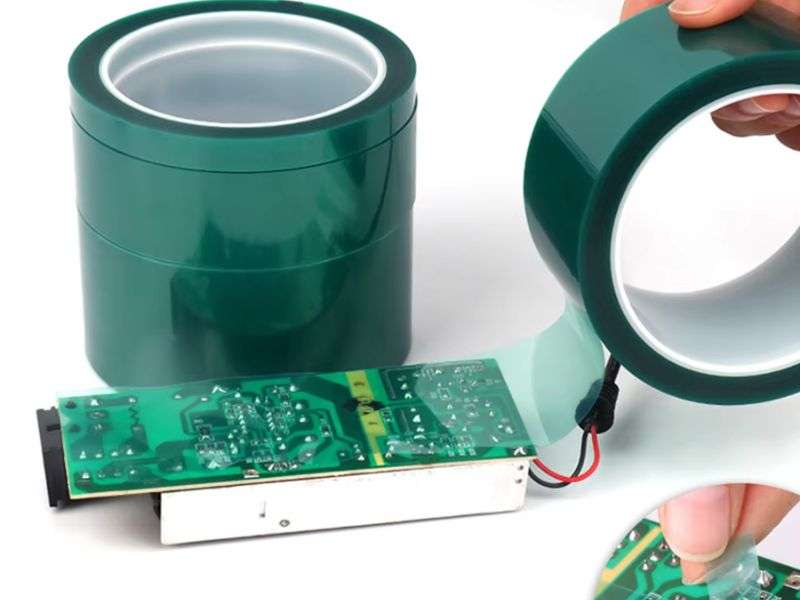
Prototype And Pilot Builds
- Parts: engineering samples, design iterations, qualification builds before tooling release.
- The hard part: flex prototypes wait on tooling more often than on design, which puts the tooling lead time on the product’s critical path.
- What you get: profiled parts from the layout file with no tooling step in between.
Recommended KASU UV Systems For Thin-Film Work
Choose by whether the assembly is flat and by feature size. All three are UV systems from the KASU marking and micromachining range; see also our UV laser cutter page. The full range is on the KASU machine category page.
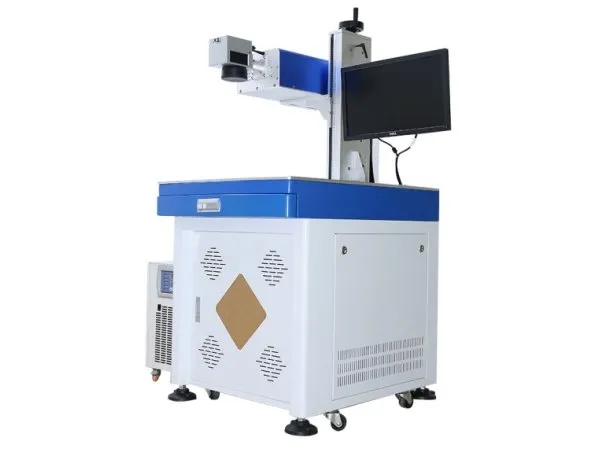
KMU-5 UV Laser Marking Machine
- Cuts: thin polyimide and PET film, coverlay apertures, fine profiling on flat work.
- Specs: 5 W class UV source, galvo scanning head, flat-field lens.
- Best for: the highest fine-feature capability in this group on flat film.
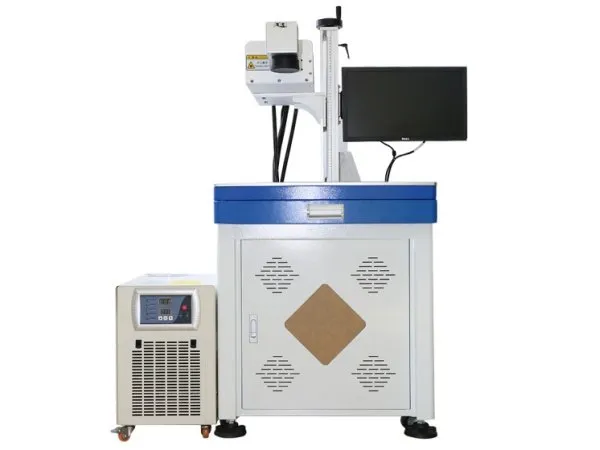
KMU-3 UV Laser Marking Machine
- Cuts: thin film profiling, marking and shallow aperture work.
- Specs: 3 W class UV source, galvo scanning head.
- Best for: prototype and low-volume film work at a lower entry cost.

KU-10 3D Auto-Focus UV Laser Marking Machine
- Cuts: stepped and non-flat assemblies, stiffened flex, populated or contoured surfaces.
- Specs: 10 W class UV source with 3D auto-focus.
- Best for: work where the surface is not a single flat plane.
For Flex Circuits The Question Is UV, Not CO₂
A CO₂ beam is absorbed thermally and leaves a heat-affected zone — acceptable on fabric, not on a 25 µm polyimide with copper underneath. UV removes material photochemically with far less heat into the part. On this page that distinction comes before any discussion of speed or table size.
Distributors and OEM partners: KASU offers free OEM/ODM — custom models, your brand colours and logo, multilingual labelling, with no extra service charge. Details on About KASU.

Send Your Own Panel For A Free Sample Cut
- Send a real panel — base laminate, coverlay, stiffener, the stack you actually build.
- Cut quality on polyimide is judged under magnification for carbonisation, delamination and copper exposure, not by eye. We return the parts for your own inspection.
- Parameters recorded per stack and shipped with the machine.
- For distributors: flex buyers start in prototype and pilot, where a dedicated depaneling line cannot be justified. That is a smaller machine and a shorter decision — and it is how the relationship starts.

When A Dedicated Depaneling Line Is The Right Answer
- At sustained volume on one repeated panel, a dedicated flex depaneling line will beat this machine. We would rather say so than sell against it.
- Where this wins: outline profiling, coverlay apertures and windows, prototype and pilot builds, and any product where the panel design is still moving.
- This is not rigid PCB depaneling. FR4 routing and V-scoring are a different process with different equipment.
- Assemblies that are not flat need review before quotation — focus is set to a plane, and a populated or formed part may not sit in one.
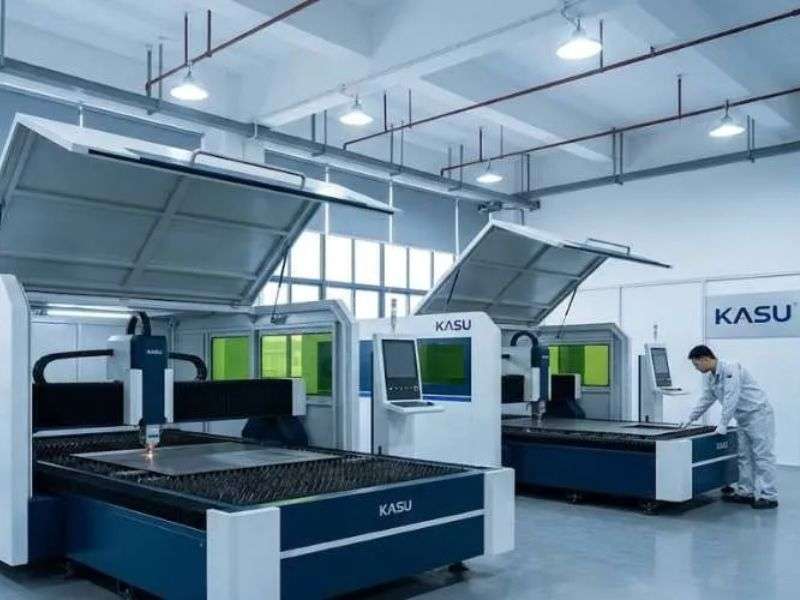
The Factory That Builds Your Flexible Circuit Cutter
- Founded 2009 · Shanghai R&D · 8,000+ m² Suzhou plant, 15 minutes from the R&D centre.
- 100+ models across 9 series, 70+ owned patents and software copyrights, China High-Tech Enterprise.
- Machines are built in-house rather than traded, so a parameter question reaches the people who built the motion system and specified the extraction.
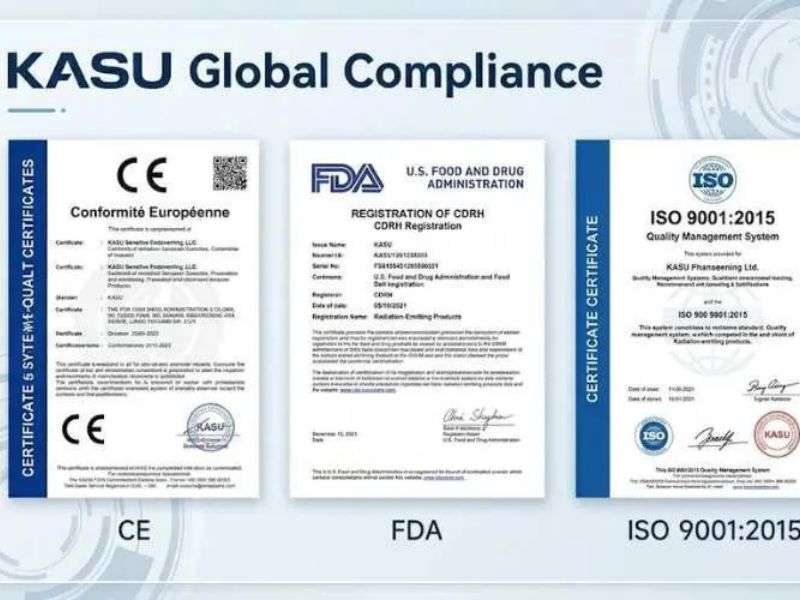
CE And FDA Certified — Send Your Panel For A Free Sample Cut
- CE and FDA certified; 5,000+ customers across 80+ countries.
- Installation guidance, operator training and spare parts supplied from the factory that built the machine.
- Class-1 enclosed configurations available where the destination market requires them.
Buyer Questions On UV Processing Of Thin Film
Why UV Rather Than CO2 For Flexible Circuits?
A UV beam is absorbed in a very shallow depth of thin polymer, so less heat conducts into the substrate and into nearby copper traces. A CO2 beam puts more heat into the material, which on 25 micron polyimide with fine traces is usually unacceptable. This is why the flex segment standardised on short-wavelength sources.
How Is Cut Quality On Polyimide Judged?
By heat-affected zone width and edge carbonisation under microscope, and often by insulation resistance between adjacent conductors, because polyimide carbon residue is conductive. That means acceptance is decided by your own inspection on your own panels rather than by any figure we could publish. We process samples first for exactly this reason.
Does This Replace Rigid PCB Depaneling?
No. Rigid FR-4 depaneling is a different process on different equipment and our PCB laser cutter page covers that side. This page is about flexible film: polyimide, PET, coverlay and the adhesive and stiffener layers in a flex stack.
Can It Match A Dedicated Flex Depaneling Line For Volume?
No, and we will say so rather than let it be assumed. These are UV micromachining systems suited to prototype, pilot and low-to-medium volume work. If your requirement is high-volume production depaneling, a dedicated high-power flex line is the right equipment.
Can It Handle Assemblies That Are Not Flat?
The 3D auto-focus model tracks a stepped or contoured surface, which covers stiffened flex and assemblies where the working plane changes. Flat film work is handled by the galvo models. We confirm which applies from your actual assembly drawing.
What Does A Flexible Circuit Cutting Machine Cost?
Price depends on UV source power, whether 3D auto-focus is needed, field size and handling requirements rather than on a list figure. Send your film types and thicknesses, feature sizes and monthly panel volume and we return a configuration with pricing after sample processing.
Related KASU Cutting Solutions
Three neighbouring pages covering the adjacent electronics and film applications, each with a different boundary.
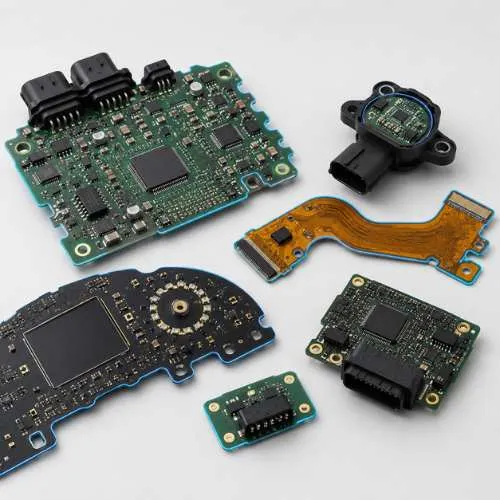

Technical Support for Flexible Circuit Film Work
Background on wavelength selection, polymer behaviour under laser processing and how to specify a system for film work.


Get A Flexible Circuit Cutting Machine Quotation
Send your film types and thicknesses, smallest feature size, layer stack and monthly panel volume. We process samples first and return them with the parameter record so your own microscope inspection decides acceptance before any quotation.
Address: No. 105, Nanzhangjing Road, Taicang, Suzhou, Jiangsu, China
Email: [email protected]
WhatsApp: +86-18601718317