

What A Filter Fabric Cutting Machine Is Actually Solving
Quick answer: A filter fabric cutting machine cuts filtration media to pleat blanks, bag panels, discs and gaskets from a digital outline, without steel-rule tooling. The economics are driven by media cost per square metre and by blade wear, not by cutting speed.
Filtration media is expensive stock and it punishes mechanical cutting in two different ways. Glass and ceramic-loaded media blunt blades within hours, so the consumable line quietly overtakes the machine payment. Needle felt and spunbond do the opposite — they are soft enough that a blade drags fibre out of the cut line, and those loose filaments end up on the clean side of the element where they are a customer complaint. A laser removes both problems: there is no cutting edge to wear, and on thermoplastic media the filament ends fuse locally rather than being torn. The limits are real and worth stating up front. PTFE-membrane laminate is the material we most often decline: heating fluoropolymer is a plant-safety question, and the membrane is the entire performance of the product. PVC-backed media is excluded for the same chlorine reason. Test standards for this material class are published by ASTM International.
Filter Media Types And How Each Behaves Under The Beam
Four media families cover most filtration enquiries. The middle bullet on each card is the one that changes the machine decision.

Polyester And Polypropylene Needle Felt
- Formats: 350–800 gsm needled felt, 1.5–4 mm thick, roll widths to 2.2 m, for dust-collection bags and panels.
- Watch out: needle felt is soft and lofty. A blade compresses it before it cuts, so the finished panel is narrower than the file and loose fibre is pulled along the edge into the clean side.
- How we cut it: non-contact cutting with vacuum hold-down; the thermoplastic filaments fuse locally at the cut so the edge holds together during bag sewing.

Spunbond And Wet-Laid Pleat Media
- Formats: 60–260 gsm synthetic and cellulose-blend pleat stock for panel and cartridge elements.
- Watch out: pleat pitch is dimensionally unforgiving — a blank cut 1 mm oversize will not seat in the frame, and the scrap is expensive because the media is expensive.
- How we cut it: nested layouts computed on the real roll width, with camera registration where the media carries printed pleat marks.

Monofilament And Multifilament Mesh
- Formats: polyester and polyamide screen mesh, 20–500 µm aperture, for liquid filtration and sieve elements.
- Watch out: mesh unravels from any mechanically cut edge, and once it starts the whole element is scrap. Heat-sealing the edge afterwards is a second operation nobody budgets for.
- How we cut it: the beam fuses the monofilament ends as it cuts, so the aperture geometry is held right up to the edge without a separate sealing step.

Glass And High-Temperature Media
- Formats: woven and needled glass media, high-temperature felts for hot-gas and cement-plant filtration.
- Watch out: this is the material that destroys blade economics — rotary and drag knives dull within a shift and the true cost per part is hidden in the consumable account rather than on the cutting line.
- How we cut it: there is no cutting edge to wear. Glass has no melt phase so the fibres part rather than fuse; we photograph the edge on your own media before you decide.
Filter Elements And Parts Cut Without Tooling
Filtration is a short-run, high-variety business — which is exactly the case steel-rule tooling handles worst.

Dust Collector Bags And Panels
- Parts: bag body blanks, cuff and snap-band strips, panel inserts, batches of 20–2,000.
- The hard part: every plant has a slightly different cage length and bag diameter, so almost every order is a new size and a new die under conventional tooling.
- What you get: a bag size change is a parameter in the file. Quoting a one-off replacement set stops being a loss-making job.

Pleated Cartridge And Panel Elements
- Parts: pleat blanks, end-cap gaskets, support sleeves, media discs.
- The hard part: media is the dominant cost, so yield per roll decides margin — and a blade that drifts 0.5 mm across a shift silently eats that yield.
- What you get: nested cutting on the real roll width, with the layout recalculated whenever the element spec changes rather than fixed by the die.

Liquid Filtration Screens And Sieve Discs
- Parts: mesh discs, oval and rectangular screens, sock-filter panels.
- The hard part: an unravelled mesh edge contaminates the filtrate, so a mechanically cut screen usually needs a separate heat-sealing or binding operation.
- What you get: the edge is fused during the cut, removing that second operation from the routing.
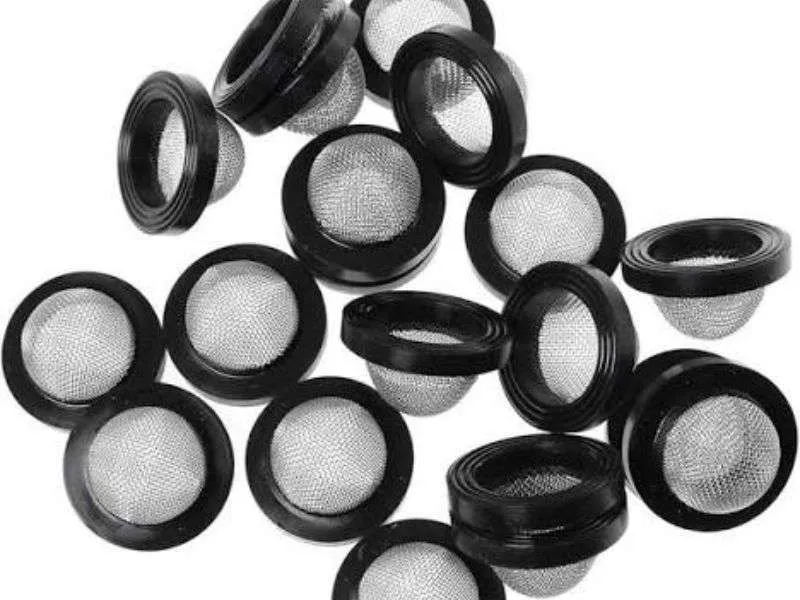
Filter Gaskets And Sealing Rings
- Parts: flat gaskets, spacer rings, end-cap seals in felt, foam and non-asbestos sheet.
- The hard part: gasket orders are small, frequent and geometry-specific — the classic case where die cost per part exceeds the part value.
- What you get: same-day sample rings from a drawing. See our gasket cutting page for the sealing-specific detail.
Recommended KASU Machines For Filtration Media
Choose by roll width and by whether the media arrives as continuous roll or as sheet. All three run the same control software. The full range is on the KASU machine category page.

K1814-SY Roll-to-Roll Double Head Laser Cutting Machine
- Cuts: needle felt, spunbond pleat media, monofilament mesh straight off the roll.
- Specs: 1800×1400 mm cutting zone, roll-to-roll transport, two heads.
- Best for: continuous bag and panel production where the media never leaves the roll path.

K1814-S2 Double Head Auto Feeding Laser Cutting Machine
- Cuts: felt panels, pleat blanks, gasket rings, sleeve blanks.
- Specs: 1800×1400 mm zone, automatic feeding, double head.
- Best for: mixed part sizes where the job changes several times a shift.

KD2016-AF Large Flatbed Top Vision Laser Cutting Machine
- Cuts: wide media, printed pleat-marked stock, large bag body blanks.
- Specs: 2000×1600 mm bed, top camera registration, automatic feeding.
- Best for: wide rolls and media that carries registration marks.
On Filter Media The Cut Edge Is A Contamination Source
Every other cutting question on filter fabric is secondary to one: does the edge shed fibre into the clean side. A mechanically sheared edge releases what the blade tore loose; a fused edge does not. That single difference is why filtration shops end up on a laser.
Distributors and OEM partners: KASU offers free OEM/ODM — custom models, your brand colours and logo, multilingual labelling, with no extra service charge. Details on About KASU.

Send Your Own Media For A Free Sample Cut
- Send the media you actually pleat — needle felt, spunbond, wet-laid or mesh. Basis weight and finish move the window more than thickness does.
- We cut your pleat blanks and return them, so you can check edge shed and blank tolerance on your own bench.
- Parameters recorded per media and shipped with the machine.
- For distributors: filtration customers run the same media for years and then requalify all at once. Holding their parameter records is what gets you the call when they do.

One Media We Will Check Before Quoting
- PTFE-membrane media needs review before any quote. Fluoropolymer behaviour under a beam is not the same as the substrate it is laminated to, and we will not assume it from a datasheet.
- Gaskets and sealing rings run on the same table as pleat blanks, which is usually what removes a second machine from the plan.
- Non-contact cutting holds pleat blank tolerance without drawing the media out of shape at the corners.
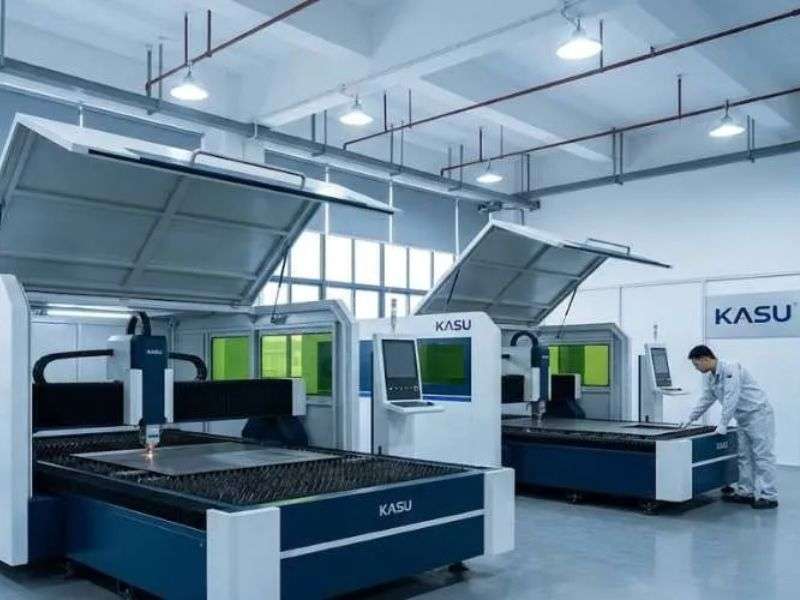
The Factory That Builds Your Filter Fabric Cutter
- Founded 2009 · Shanghai R&D · 8,000+ m² Suzhou plant, 15 minutes from the R&D centre.
- 100+ models across 9 series, 70+ owned patents and software copyrights, China High-Tech Enterprise.
- Machines are built in-house rather than traded, so a parameter question reaches the people who built the motion system and specified the extraction.
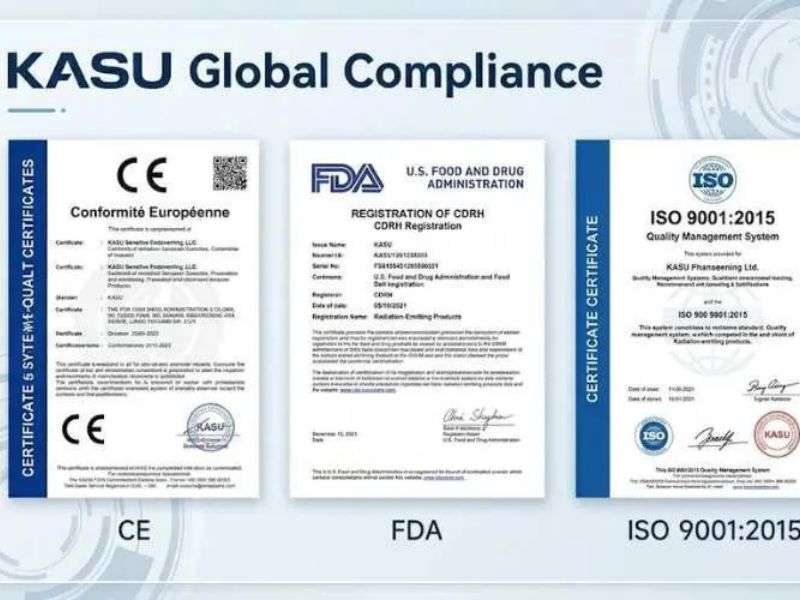
CE And FDA Certified — Send Your Media For A Free Sample Cut
- CE and FDA certified; 5,000+ customers across 80+ countries.
- Installation guidance, operator training and spare parts supplied from the factory that built the machine.
- Class-1 enclosed configurations available where the destination market requires them.
Buyer Questions On Cutting Filtration Media
Can A Laser Cut PTFE-membrane Filter Media?
We do not recommend it and normally decline the job. Heating fluoropolymer raises a plant-safety question, and the membrane layer is where the product’s performance lives, so any heat-affected zone is a functional risk rather than a cosmetic one. Membrane-laminated media belongs on a knife or die system.
Does The Cut Edge Shed Fibre Into The Clean Side?
On polyester and polypropylene media the filament ends fuse locally at the cut, which reduces loose fibre compared with a blade that tears filaments out of the edge. On glass media there is no melt phase, so the fibres simply part. We photograph the edge on your own media so you can judge it against your element specification.
How Much Does A Filter Fabric Cutting Machine Cost?
Price is set by working area, head count, feeding method and camera type rather than a published figure. Send roll width, media type and gsm, part mix and daily output and we return a configuration with pricing. Sample cutting is free.
Will It Hold Pleat Blank Tolerances?
Pleat blanks are dimensionally demanding and this is where the yield argument is won or lost. Achievable tolerance depends on media stability and roll tension rather than on the machine alone, so we cut your actual media and measure the blanks before quoting rather than quoting a figure in advance.
Can The Same Machine Cut Gaskets And Sealing Rings?
Yes — flat gaskets, spacer rings and end-cap seals in felt, foam and non-asbestos sheet run on the same bed with different parameters. Many filtration customers use one machine for both media and sealing parts.
What Lead Time Should We Plan For?
Standard configurations typically ship within 30–45 days of a confirmed order; custom feeding systems and non-standard beds take longer. Commissioning documentation, remote setup support and operator training are included. Confirm the current lead time when requesting a quotation.
Related KASU Cutting Solutions
Three neighbouring pages covering the media and sealing materials most often quoted alongside filtration work.
-

Non Woven Cutting Machine
Nonwoven web handled outside the filtration context — same roll problem, wider material range. -

Felt Laser Cutter
Needle felt in detail, including thickness limits and edge behaviour on lofty stock. -

Laser Gasket Cutting Machine
The sealing parts that come off the same bed — end caps, spacer rings and flat gaskets.
Technical Support for Filter Media Cutting
Background on material screening, the blade-versus-beam cost comparison and how to turn a part mix into a machine specification.

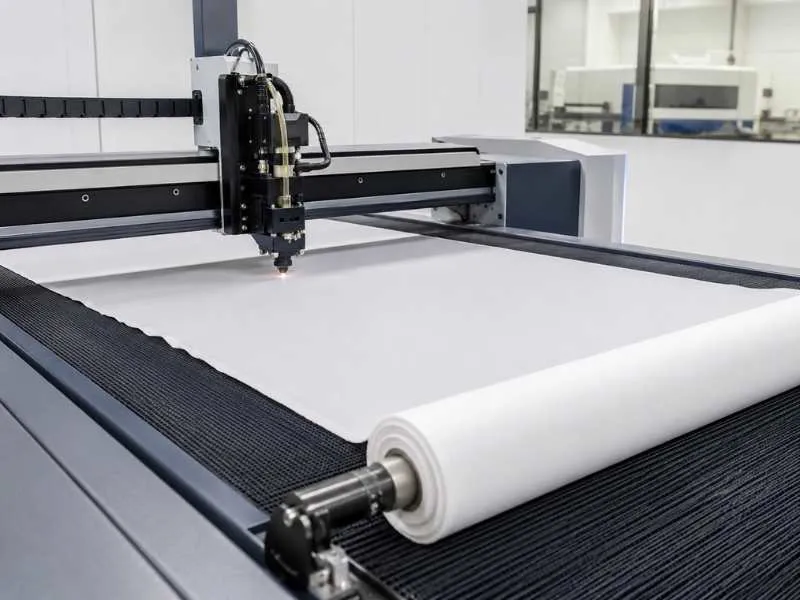

Get A Filter Fabric Cutting Machine Quotation
Send your media type, gsm, thickness, roll width and part mix. We confirm whether the media suits laser cutting, run a free sample cut with nested layouts and return the achievable yield with the machine configuration.
Address: No. 105, Nanzhangjing Road, Taicang, Suzhou, Jiangsu, China
Email: [email protected]
WhatsApp: +86-18601718317