

How A DTF Cutting Machine Separates A Printed Gang Sheet
Quick answer: A DTF cutting machine reads the printed designs on a gang sheet with a camera and cuts each one to its printed outline. What decides the result is the powder layer, the PET carrier and how far print registration has drifted across the sheet — not the wattage on the spec sheet. KASU establishes the parameters on your own film before quotation.
First, a boundary worth stating plainly: KASU sells the cutting equipment, not the printed film. A large share of searches for DTF gang sheets are from people buying ready-to-press transfers. If that is what you need, a transfer printing service is the right supplier. This page is for the shop that already prints its own gang sheets and has to get them apart.
That step is where DTF production quietly loses its margin. A printed sheet carries many designs at once, and separating them by hand is slow, inconsistent and impossible to price. A drawn cut file does not help either — print registration drifts sheet to sheet, so a path built from the artwork amplifies the drift instead of absorbing it. A camera cuts to where the ink actually landed.
The carrier is polyester film (see Toray’s polyester film range for the grade families in circulation), which cuts cleanly. The complication is the adhesive powder sitting on top of it: it scatters, and extraction has to pull across the sheet rather than around it. One material is excluded outright — PVC-based film is not laser processed at KASU; those jobs go to a cold knife, see PVC Cutting Systems.
DTF And Transfer Films This Cutting Machine Handles
Transfer films differ in carrier, coating, ink load and whether powder has been applied. Those four decide the parameter window. KASU runs a sample cut on your own film before quoting rather than reusing a generic setting.
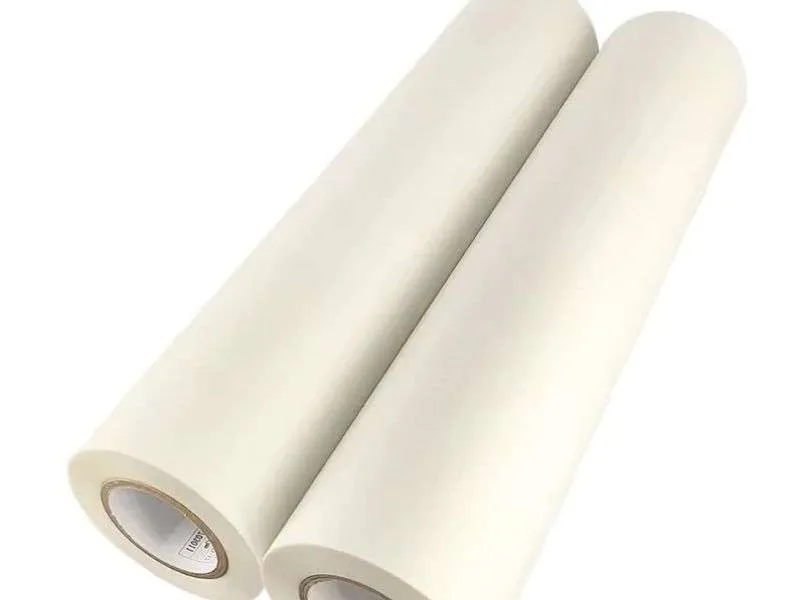
White-Ink DTF Film (Powdered)
- Formats: PET carrier with CMYK plus white underbase and hot-melt adhesive powder, roll or sheet, typically 30–60 cm wide.
- Watch out: The powder is the problem, not the film. It scatters at the kerf and can re-deposit on the sheet, and a batch that has been sitting powdered for days behaves differently from one straight off the shaker.
- How we cut it: Enclosed chamber with downdraft extraction pulling across the sheet; contour cut against the printed edge so the white underbase stays inside the outline.
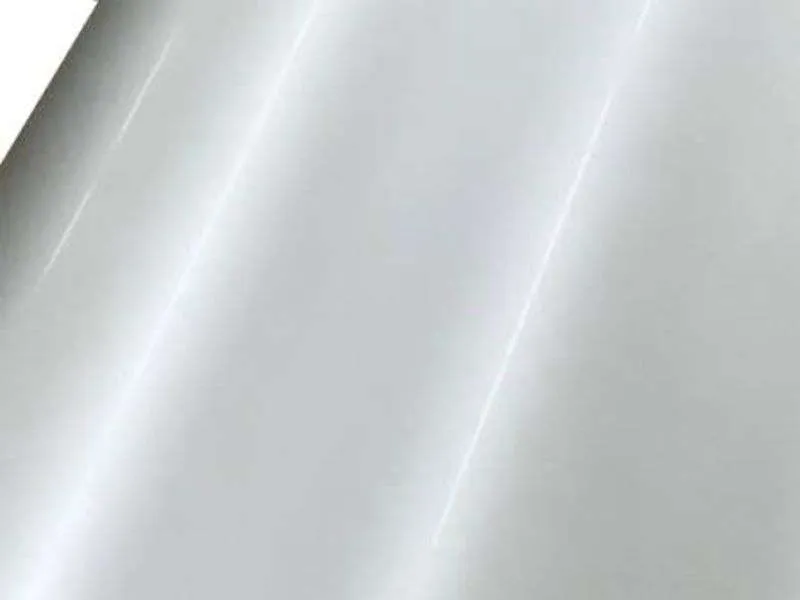
UV DTF A/B Film
- Formats: Two-layer UV DTF sets — printed A film plus transfer B film — for hard-surface stickers on glass, metal, acrylic and packaging.
- Watch out: The cured UV ink sits proud of the carrier, so focus is not constant across a design with heavy build. Cut too deep and you sever the B film that is supposed to carry the sticker off.
- How we cut it: Kiss cut through the printed layer with the carrier left intact, with the depth window set during sample testing on your own A/B set.
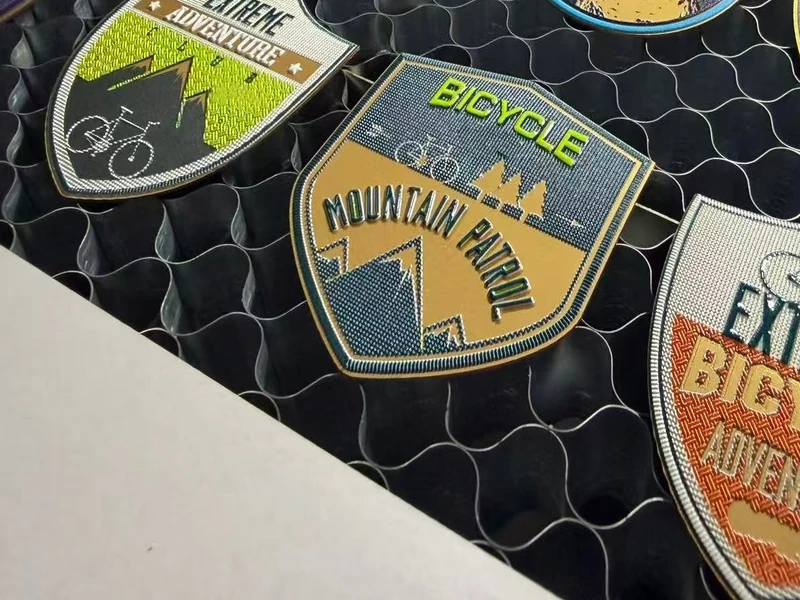
3D TPU Transfer Labels
- Formats: UV-printed raised TPU labels and faux-embroidery badges, usually 0.1–0.3 mm, often run on the same machine as DTF.
- Watch out: TPU melts rather than burns. Too much power or too slow a pass leaves a raised bead that sticks the part back into the sheet — more wattage makes this worse, not better.
- How we cut it: Faster pass at lower power. Full details on the heat transfer label cutting machine page.
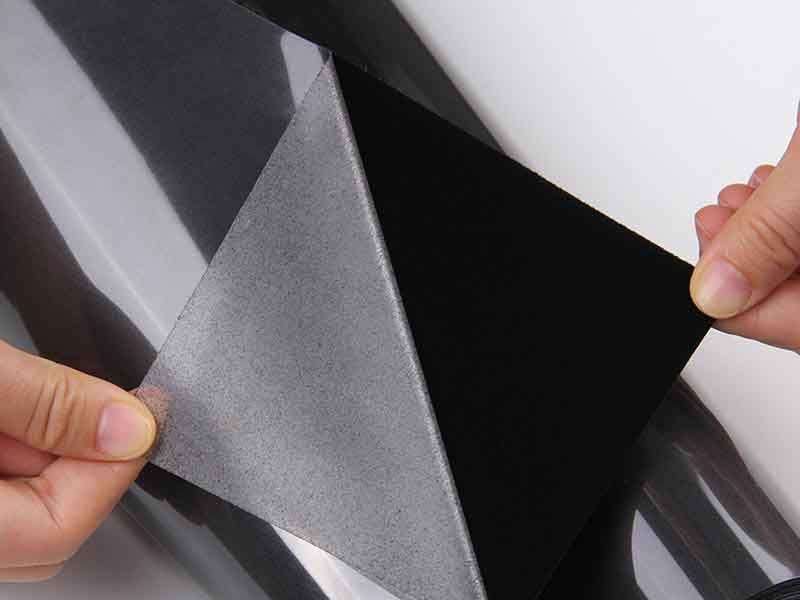
Cut Vinyl And Flock, Non-PVC Only
- Formats: PU-based cut vinyl, flock and glitter transfer film, roll or sheet.
- Watch out: PVC-based heat transfer vinyl is excluded from laser processing. It is widely sold without the base polymer stated on the roll, so it has to be identified from the SDS or TDS before it reaches the machine, not after.
- How we cut it: PU film is contour cut or kiss-cut with the liner intact; PVC jobs are routed to a cold knife — see PVC Cutting Systems.
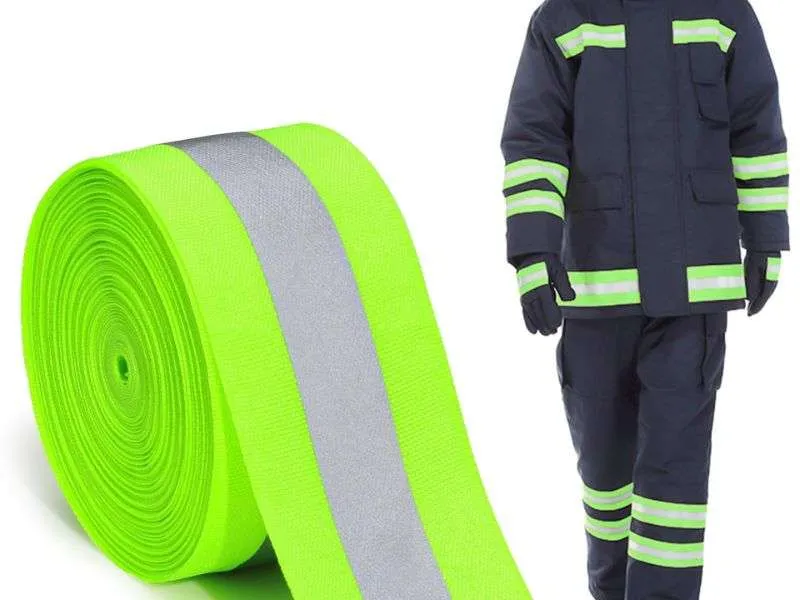
Reflective Transfer Film
- Formats: Glass-bead and micro-prismatic reflective transfer film for workwear and high-visibility garments.
- Watch out: The reflective layer is what the camera has to read, and it reads very differently under machine lighting than a matte print does. Contrast, not accuracy, is the usual failure mode here.
- How we cut it: Lighting and detection threshold tuned per film during the sample cut; non-vision mode available where the layout is a fixed repeat.
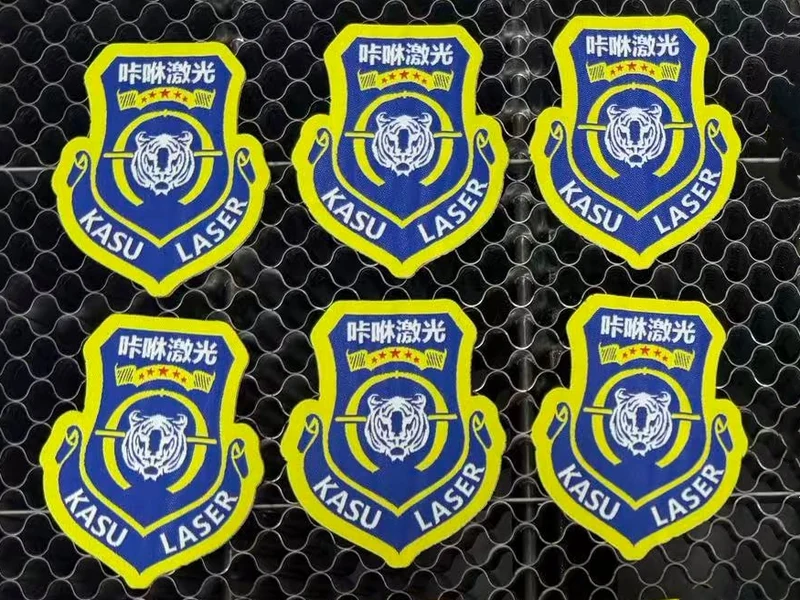
Woven And Printed Labels
- Formats: Satin and damask woven labels, printed care labels, taffeta tape — work most DTF shops get asked for sooner or later.
- Watch out: These are textiles, not film. They need a fused edge to stop fraying, which is a different parameter family from DTF — and it is why a DTF-only cutter leaves part of the floor uncovered.
- How we cut it: Same table, different recipe. See the woven label laser cutting machine page.
Transfers And Parts A DTF Shop Produces
Every job below starts as a printed sheet and ends as separated parts. What changes is batch size, how often the artwork changes, and whether the customer is paying for set-up time.
Gang Sheet Separation
- Parts: One printed sheet carrying dozens of unrelated designs at mixed sizes, cut apart into individually pressable transfers.
- The hard part: Every sheet is a different combination, so there is no repeat layout to program. Cutting by hand is slow and inconsistent, and it is the step that makes small orders impossible to price.
- What you get: Load the sheet, the camera finds the parts, the nest is cut without a file exchange step.
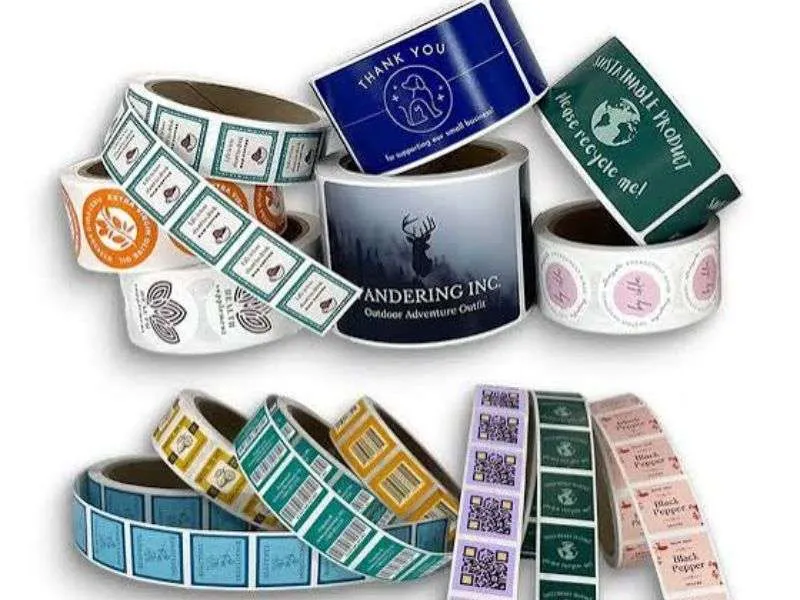
Print-on-Demand Short Runs
- Parts: One-off and sub-50 transfers, many designs per sheet, shipped within days.
- The hard part: Set-up time is the whole margin. Ten minutes of file preparation per design and the job is not worth taking.
- What you get: With the line-scan camera option most designs need neither a vector file nor register marks. See print-on-demand laser cutting.
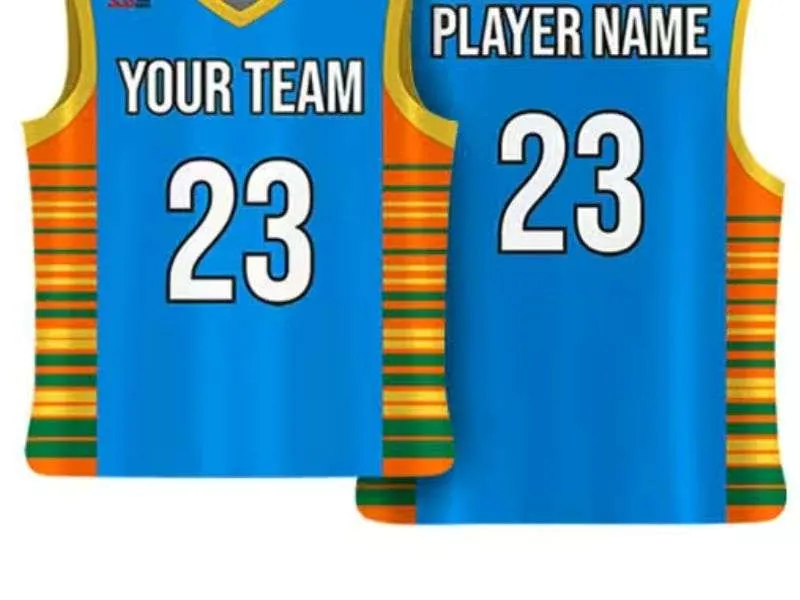
Team Names, Numbers And Crests
- Parts: Squad numbers, player names and club badges printed many-up and cut as a mixed nest.
- The hard part: The deadline is the match. No run is long enough to justify tooling, and there is no time to re-plot a cut file per sheet.
- What you get: Same-day turnaround on a sheet that was laid out this morning.
Reflective Markings For Workwear
- Parts: Reflective strips, chevrons and logo panels heat-applied to high-visibility garments.
- The hard part: Reflective film reads poorly to a camera, and the finished garment may have to meet a visibility standard — so the cut geometry is not purely cosmetic.
- What you get: Detection tuned to your specific film during sample testing, with non-vision mode for fixed repeats.

UV DTF Stickers For Hard Surfaces
- Parts: UV DTF decals applied to glass, metal, acrylic, tumblers and packaging — a fast-growing line for DTF shops adding a UV printer.
- The hard part: The cut has to go through the printed layer and stop at the transfer film. Too deep and the sticker will not lift off; too shallow and it tears on application.
- What you get: A kiss-cut depth window established on your own A/B film set rather than copied from another shop’s settings.
3D TPU Badges And Garment Branding
- Parts: Raised TPU logo badges for caps, bags, footwear and sportswear, run alongside DTF on the same table.
- The hard part: Build height varies across a badge, so a single focus setting is wrong somewhere on the part.
- What you get: Auto-focus Z-axis option holds focus across the build. See the heat transfer label cutting machine page for this workflow in full.
Laser vs Blade Cutting on DTF Film
Most machines sold as DTF cutters use a blade — auto-feed flatbed knives and rotary cross-cutters. They are good machines and on some jobs they are the better answer. This table compares cutting methods, not brands.
| Job | Blade / rotary film cutter | Camera-guided CO₂ laser |
|---|---|---|
| Cross-cutting a roll into sheets | Usually the better tool. A straight cross cut is a mechanical operation and a rotary cutter does it fast and cheaply. | Possible, but you are paying for contour capability you are not using on a straight cut. |
| Separating mixed designs on a gang sheet | Needs a cut path per sheet, or a rectangular cut that leaves film around every design. | Camera finds each printed outline and cuts to it. Mixed nests need no file and no repeat layout. |
| Following the printed edge | Depends on registration hardware and on the artwork matching where the ink actually landed. | Reads the ink itself, so print drift is absorbed rather than amplified. |
| Kiss cut on UV DTF A/B film | Blade depth is a mechanical setting — a genuine advantage on thin carriers. | Set by power rather than depth; the window is narrower and is established during sample testing. |
| Fine detail and small radii | Limited by blade geometry and how the tool turns. | Limited by beam width, not tool geometry. |
| Consumables | Blades and cutting mats are running costs; blade wear shows up as edge quality before it shows up as a failure. | No tool contact and no tool wear. Optics and extraction need cleaning, especially with adhesive powder in the chamber. |
| Anything other than transfer film | Cuts textiles, but woven labels and patches fray and need a separate finishing step. | Fuses the edge as it cuts — woven labels, embroidered patches, UV-printed acrylic and plywood on the same table. |
The practical split: a rotary cutter if all you ever do is cross-cut roll into sheets; a camera-guided laser once designs have to come off the sheet individually, or once the shop is asked for woven labels and badges as well as DTF.
Recommended KASU Machines For DTF Cutting
Two questions decide the machine: does the film arrive on a roll or as sheets, and how wide is it. All three below cut to the printed edge with a camera.

KX1814-S2 Double Head CCD Laser Cutter
The main gang-sheet machine. CCD vision plus two heads, so a densely nested sheet is cut in roughly half the passes of a single-head table.
- Cuts: White-ink DTF, UV DTF, 3D TPU labels, reflective film, PU cut vinyl, woven and printed labels, embroidered patches.
- Specs: 1800 × 1400 mm working area · double heads · 80/100/130/150 W · CCD vision registration.
- Best for: DTF shops separating full gang sheets as their main daily job.

K1814-S2 Double Head Auto Feeding Laser Cutting Machine
For film that arrives on a roll and should stay on the roll. Auto feeding keeps a continuous web moving so an operator is not loading sheets one at a time.
- Cuts: Roll-form DTF film, transfer film, technical textiles, coated fabric.
- Specs: 1800 × 1400 mm · double heads · 80–150 W · conveyor auto-feed for roll stock.
- Best for: Continuous roll production where throughput, not sheet handling, is the constraint.

KD1814-SY Large Format Top Camera Laser Cutting Machine
A top-mounted camera sees the whole sheet at once rather than scanning it in sections, which suits wide gang sheets and layouts with no repeat structure.
- Cuts: Wide-format printed film and fabric, gang sheets beyond the standard width class.
- Specs: Large-format flatbed · top-mounted vision · roll feeding available.
- Best for: Shops running wider film or combining DTF with printed fabric panel work.
Scissors, Desktop Plotter or Industrial Cutter — Where Each One Stops
There are three ways a shop separates printed transfers, and the right one depends almost entirely on volume. This is the question behind “can you cut DTF with a Cricut?” — the honest answer is yes, up to a point.
| Scissors / craft knife | Desktop cutting plotter | Industrial cutting machine | |
|---|---|---|---|
| Works for | A handful of transfers, samples, one-offs. | Small batches, simple shapes, one design at a time. | Full gang sheets, mixed nests, continuous roll. |
| Set-up per sheet | None. | Load the mat, align the sheet, prepare or import a cut path per design. | Load and go. With the line-scan option most jobs need no file and no register marks. |
| Where it stops working | As soon as the edge quality has to be consistent across an order. | When one sheet carries many unrelated designs, or when the sheet is wider than the mat. The per-design alignment time is what caps throughput, not cutting speed. | — |
| Other materials | — | Vinyl, paper, thin card. | DTF, UV DTF, TPU, reflective film, woven labels, embroidered patches, fabric, paper, UV-printed acrylic and plywood. |
So: a desktop plotter is a reasonable starting point, and plenty of shops begin there. The switch usually happens for one specific reason — not cutting speed, but the alignment time per design once a sheet stops carrying a single repeated graphic. If you are still cutting one design at a time, you probably do not need this page yet.
The Cutting Step Is Where DTF Margin Leaks
Printing a gang sheet is the part that gets planned. Getting it apart is the part that quietly sets how small an order you can afford to take. Everything below is aimed at that step.
Distributors and OEM partners: KASU offers free OEM/ODM — custom models, your brand colours and logo, multilingual labelling, with no extra service charge. Details on About KASU.

Send A Real Gang Sheet, Not A Sample Swatch
- Send a sheet you actually printed — powdered, nested the way you nest, with the registration drift it really has. We cut it and send the parts back.
- We will also time it, so the throughput figure in your quote comes from your own sheet rather than a demo layout.
- Parameters are recorded per film and ship with the machine, so the operator recalls the setting instead of re-deriving it when the supplier changes.
- For distributors: DTF printer installations are still climbing, and cutting is a required step after printing — not an accessory. Every printer placed in your territory is a cutter that has to follow it, and the parameter records keep the customer coming back to you.

Powder In The Chamber Is An Extraction Problem, Not A Laser Problem
- Adhesive powder scatters at the kerf and will re-deposit if the airflow pulls around the sheet instead of across it. That is a configuration question, and it is the one most often skipped at quotation.
- Enclosed chamber with downdraft extraction, and a filtration spec matched to your site rather than assumed.
- With the line-scan camera option most sheets need neither register marks nor a vector file, so artwork changes between runs without a new cut path.
- What we will not sell you: if your film is PVC-based, we route it to a cold knife instead — see PVC Cutting Systems.

The Factory That Builds Your DTF Cutter
- Founded 2009 · Shanghai R&D · 8,000+ m² Suzhou plant, 15 minutes from the R&D centre.
- 100+ models across 9 series, 70+ owned patents and software copyrights, China High-Tech Enterprise.
- Machines are built in-house rather than traded, which is why a question about powder re-deposition reaches the people who specified the extraction.
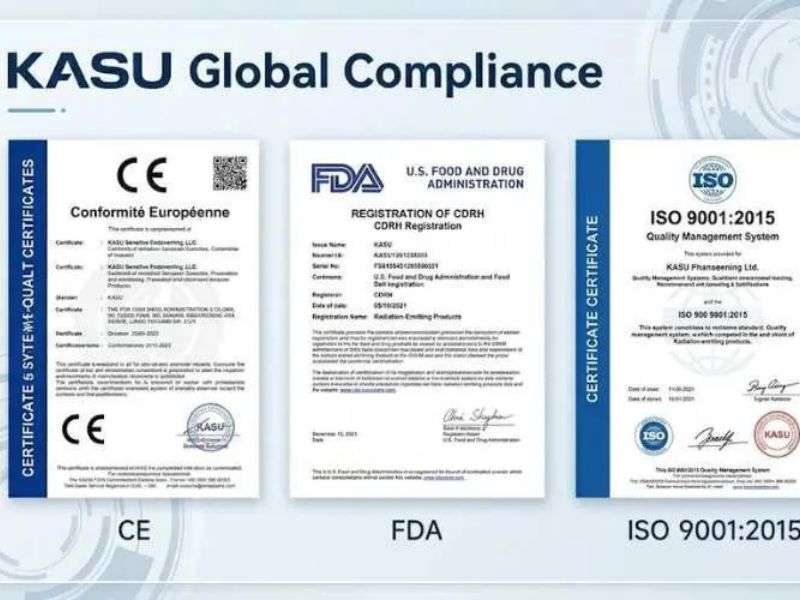
CE And FDA Certified, Shipping To 80+ Countries
- CE and FDA certified; 5,000+ customers across 80+ countries.
- Installation guidance, operator training and spare parts supplied from the factory that built the machine.
- Class-1 enclosed configurations available where the destination market requires them.
DTF Cutting Machine — Buyer FAQ
Can You Cut DTF Transfers With A Laser?
Yes. The carrier is polyester film, which cuts cleanly, and a camera follows the printed outline so each design comes off the gang sheet at its own edge. The variable that actually decides the result is the adhesive powder: it scatters at the kerf, so extraction has to pull across the sheet rather than around it. KASU cuts your own powdered sheet before quoting rather than reusing a generic setting.
Can You Cut DTF With A Cricut Or Similar Desktop Plotter?
Yes, up to a point — and plenty of shops start there. A desktop plotter handles small batches and simple shapes fine.
Where it stops working is specific: one gang sheet carrying many unrelated designs. Each design needs its own alignment, the sheet may be wider than the mat, and the cap on throughput turns out to be alignment time rather than cutting speed. If you are still cutting one repeated design at a time, a plotter is probably the right tool and this page is premature.
What Machine Do You Use For DTF Cutting?
Two questions decide it: does the film arrive on a roll or as sheets, and how wide is it.
Sheets, mixed nests — a CCD vision flatbed such as the KX1814-S2. Continuous roll — an auto-feeding machine such as the K1814-S2, so the web keeps moving without manual loading. Wide sheets — a top-camera large-format machine such as the KD1814-SY, which sees the whole sheet at once instead of scanning it in sections.
Do Gang Sheets Need Register Marks Or The Original Design File?
With the line-scan camera option, most do not. The camera detects the printed edge itself, so a sheet can be laid out differently every time without a new cut path being prepared — which is the whole point on mixed nests.
The standard CCD system uses feature-point or mark-point recognition. Low-contrast, transparent and highly reflective films are tuned during sample testing, and fixed-repeat layouts can run in non-vision mode.
Does The Adhesive Powder Damage The Optics?
It is a maintenance item, not a failure mode, provided extraction is specified correctly. Powder that is pulled across the sheet and out leaves the optics alone; powder allowed to circulate in the chamber settles on the lens and on the sheet.
Practically: an enclosed chamber, downdraft extraction, and a lens-cleaning interval set for powdered film rather than for plain fabric. A sheet that has been sitting powdered for days sheds more than one straight off the shaker.
How Is This Different From A Heat Transfer Label Cutting Machine?
Same table, different workflow. A heat transfer label cutting machine covers the heat transfer family as a whole, where 3D TPU labels and faux-embroidery badges are the main output and sheets are usually small and repeated.
DTF is its own production line: PET carrier, white underbase, adhesive powder, and gang sheets that are a different mixed layout every time. The powder and the unrepeatable nesting are what make it a separate setup, not the laser.
How Many Cutters Do I Need Per DTF Printer?
Plan on one cutter per printer as a starting point. Cutting is a required step after printing, not an optional accessory — once the sheet is printed there is no manual route that scales.
The real ratio depends on your sheet size, nesting density and run length. Send a typical sheet and we will time it on the machine you are quoting.
Can The Same Machine Cut Anything Besides DTF Film?
Yes, and this is usually the deciding factor against a DTF-only cutter. The same table runs UV DTF A/B film, 3D TPU labels, reflective film, PU cut vinyl, woven and printed labels, embroidered patches, fabric, paper, and UV-printed acrylic and plywood — full cut, kiss cut and surface engraving.
The one exclusion is PVC-based film, which is routed to a cold knife.
Adjacent Machines for DTF Cutting Machine Buyers
Adjacent pages for shops whose work does not stop at DTF film.
-
Heat Transfer Label Cutting Machine
The heat transfer family as a whole — 3D TPU labels, faux-embroidery badges and reflective film. DTF is one workflow inside it; that page covers the rest, and the machine choice differs because the sheets repeat. -

PET Film Laser Cutting Machine
The carrier under your DTF film is polyester. Read that page if you are evaluating PET film as a material — thickness, coating, heat behaviour — rather than the DTF workflow around it. -
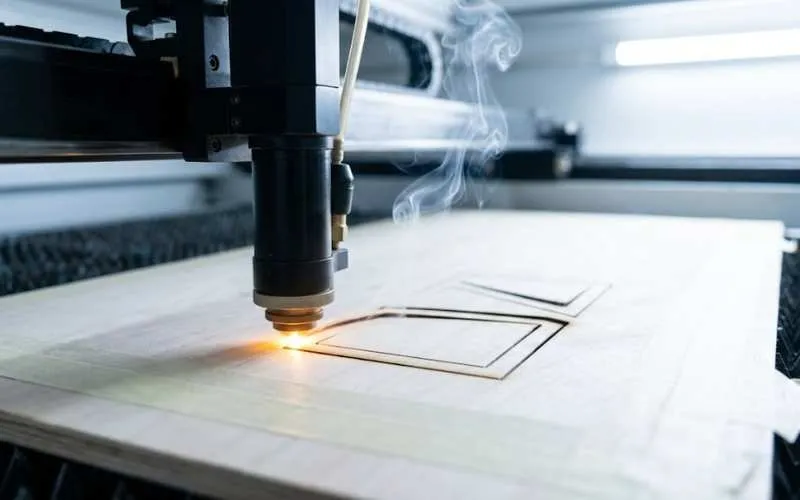
POD Laser Cutting Machines For Custom Products
DTF is the engine of most print-on-demand lines. That page looks at the whole production flow rather than the cutting step alone.
Technical Support for DTF Cutting Machine
How camera registration works, how laser compares with a blade on real material, and which polymers can be laser processed at all.


Contact Us For DTF Cutting Machine
Send a real printed gang sheet — powdered, nested the way you nest it — plus your film width and whether it arrives on a roll. KASU cuts it, times it, and returns the parts with the recorded parameters before any quotation.
Address: No. 105, Nanzhangjing Road, Taicang, Suzhou, Jiangsu, China
Phone: +86-18601718317
Email: [email protected]