
Felt1 is a versatile material widely used in crafting, apparel, and home décor. However, cutting it by hand can be time-consuming and imprecise. If you’re considering laser cutting as a solution, you’re in the right place. Let’s explore whether laser cutting felt is practical and how to achieve the best results.
Yes, you can laser cut felt, and it offers precise, clean cuts that are hard to achieve manually. CO2 laser cutters are especially suitable for this purpose, handling various types and thicknesses of felt effectively.
Laser cutting felt opens up a world of creative possibilities. From detailed patterns to large-scale production, understanding the process ensures you make the most of your laser cutter.
Can I Cut Felt With A CO2 Laser?
CO2 lasers are among the most popular choices for cutting non-metal materials like felt. But why are they ideal?
A CO2 laser2 can cut felt with precision, providing smooth, sealed edges and detailed designs. Its high-energy beam vaporizes the material quickly, leaving minimal residue.
CO2 lasers excel due to their adjustable power and speed settings, which allow customization for different types of felt. However, understanding the machine’s operation is key to achieving the best results.

Why CO2 Lasers Are Perfect For Cutting Felt
CO2 lasers are effective because of their infrared wavelength, which is absorbed well by organic materials like wool and synthetic fibers. Here’s why they work so well:
- Precision: They cut intricate designs effortlessly.
- Speed: Faster than manual methods.
- Edge Quality: Sealed edges prevent fraying.
- Versatility: Works on various felt types and thicknesses.
Additionally, CO2 lasers are relatively affordable and widely available, making them accessible to professionals and hobbyists alike.
Is It Safe To Laser-Cut Felt?
Safety is a common concern when using laser cutters, especially with materials like felt that may contain adhesives or coatings.
Yes, it is safe to laser-cut felt, including felt with adhesives or coatings, as long as you have proper ventilation and an efficient exhaust system in place to remove fumes.
While adhesives or coatings on felt can emit fumes when cut, a well-maintained exhaust system ensures that harmful substances are safely extracted, making the process safe for users.
Tips For Safe Laser Cutting
- Use A High-Quality Ventilation System: Ensure your workspace has an efficient exhaust system to eliminate fumes.
- Check Material Specifications: Know the composition of the felt you’re using to anticipate any potential issues.
- Regular Maintenance: Clean the machine’s filters and exhaust system to maintain optimal performance.
- Stay Alert: Monitor the cutting process and avoid leaving the machine unattended.
By addressing ventilation and understanding your material, you can laser-cut felt safely, even when adhesives or coatings are involved.

What Kind Of Felt Can You Laser-Cut?
Felt comes in various materials, each with unique properties. Which types work best for laser cutting?
Most natural wool and synthetic polyester felts are suitable for laser cutting. Blended felts may also work but can produce varied results depending on their composition.
Understanding the type of felt ensures optimal cutting quality and reduces wear on your laser cutter.
Comparing Felt Types
| Type | Laser Compatibility | Notes |
|---|---|---|
| Wool Felt | Excellent | Natural fibers, clean cuts, eco-friendly. |
| Polyester Felt | Good | Durable, can emit fumes when cutting. |
| Blended Felt | Variable | Results depend on fiber ratio. |
| Adhesive-Backed | Depending | Adhesives may cause burnt edge. |
For consistent results, test a small piece before proceeding with a larger project.

How Thick Of Felt Can A Laser Cutter Cut?
The thickness of felt that a laser cutter can handle depends on the machine’s power and precision settings.
Most CO2 laser cutters can cut felt up to 10mm thick, but the optimal range for clean and precise cuts is between 2-5mm. For thicker felt, an industrial-grade laser cutter with higher wattage is recommended.
Cutting thick felt often requires more power and slower speeds to maintain accuracy without scorching or uneven edges. Industrial-grade machines are better suited for this purpose.
Recommendations For Cutting Thick Felt
- Industrial Laser Machines: For felt thicker than 5mm, consider a CO2 laser with at least 100-150W power. Higher wattage ensures better penetration and cleaner cuts.
- Adjust Settings: Use slower cutting speeds and increase the power to handle the added material density.
- Proper Focus: Ensure the laser is perfectly focused on the felt surface to avoid irregular edges.
- Multiple Passes: For very thick felt, multiple passes may be necessary. Ensure proper cooling time between passes to prevent material damage.
With the right machine and settings, even thick felt can be laser cut effectively, opening up possibilities for high-end projects or industrial applications.
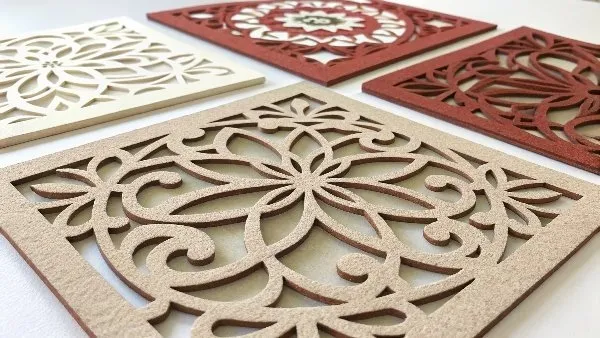
Can I Cut Felt With Multi-Layers?
Cutting multiple layers of felt simultaneously can be a time-saver for large-scale projects, but it requires careful consideration of the laser cutter’s capabilities.
Yes, you can cut felt in multiple layers with a CO2 laser cutter, but success depends on the combined thickness of the layers, the machine’s power, and proper material alignment.
When cutting multi-layered felt, uneven edges or incomplete cuts can occur if the laser power and focus are not adjusted appropriately.
Tips For Cutting Multi-Layer Felt
- Check Combined Thickness: Ensure the total thickness of the layers is within your laser cutter’s capacity. For most machines, this is around 8-10mm for precise results.
- Increase Laser Power: Use higher power laser tubes like 100-150W to penetrate all layers cleanly.
- Secure The Layers: Use masking tape or weights to keep the felt layers aligned during cutting.
- Adjust Focus: Set the laser focus to account for the added height of the stacked material.
- Test First: Run a small test cut to confirm settings before cutting the full design.
By optimizing your laser cutter settings and securing the material, you can efficiently cut multiple layers of felt with clean and accurate results.

How To Cut 3mm Felt?
Cutting 3mm felt is a common requirement for crafts and industrial applications. Here’s how to do it effectively.
To cut 3mm felt, use a CO2 laser set to medium power and moderate speed. Proper focus and a honeycomb bed prevent warping and ensure clean edges.
Preparation and testing are essential for optimal results.
Step-By-Step Guide
- Prepare The Material: Lay the felt flat on the laser bed.
- Adjust Settings: Use medium power (30-50%) and moderate speed.
- Focus The Laser: Ensure the beam is focused on the felt’s surface.
- Test Cut: Perform a small test to confirm settings.
- Execute The Cut: Proceed with the full design.
Regular maintenance of your laser cutter also ensures consistent performance.
Can I Laser Engrave Felt?
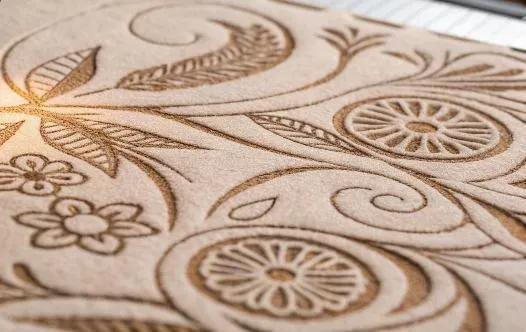
Felt is a versatile material that can be both cut and engraved using a CO2 laser. Engraving adds depth and texture, making it perfect for custom designs, logos, and patterns.
Yes, you can laser engrave felt effectively with a CO2 laser. Optimal results are achieved using low power (10-30%) and medium speed (200-400 mm/s) to create clear engravings without burning or distorting the material.
Engraving felt works best on firm, dense types, as softer varieties may compress and affect detail quality.
Tips For Engraving Felt
- Set Low Power Levels: Use 10-30% power to avoid cutting through or burning the material.
- Moderate Speed: A speed of 200-400 mm/s allows precise control over the engraving process while avoiding excessive heat.
- Focus Adjustment: Ensure the laser is accurately focused on the felt’s surface for sharp details.
- Design Considerations: Simple and bold designs yield the best results, as intricate patterns may lose clarity on softer materials.
- Test Engraving: Perform a test run on a small piece to fine-tune settings before engraving the full design.
How Wool Felt and Polyester Felt Engrave Differently
Wool felt engraves with a darker, slightly browned mark; polyester felt engraves tone-on-tone with a fused, slightly glossy surface. Wool is a protein fiber and chars at the surface, which gives visible contrast. Polyester melts instead of charring, so the engraved area stays close to the original color and relies on the texture change to show the design. If your customer wants high-contrast logos, test on wool or wool-blend felt; if they want a subtle embossed look, polyester felt is the better base.
| Felt type | Engraved look | Watch out for |
|---|---|---|
| Wool / wool blend | Darker mark, clear contrast | Burnt smell; air out parts before packing |
| Polyester (PET) felt | Tone-on-tone, embossed texture | Too much power melts the fibers into a hard, shiny patch |
| Felt with adhesive backing | Depends on the face fiber | Engrave only the face; heat can soften the adhesive |
| Felt with PVC or latex backing | — | Do not put PVC-backed felt on the laser |
Engraving vs Cutting Felt in One Job
Most production jobs combine both: the logo or pattern is raster-engraved first, then the outline is vector-cut in the same run so the engraving stays registered to the part. Typical products are felt coasters, placemats, bag and laptop-sleeve panels, acoustic wall panels, and branded packaging inserts. On printed or pre-marked felt, a camera-equipped machine such as the KX1814-S2 CCD laser cutter locates each piece so the engraving lands on the print. For plain felt in volume, the K1610-F2 double-head laser cutter runs two heads on the same sheet.
By dialing in the right settings and using high-quality felt, you can create detailed and professional engravings that stand out beautifully.
Why Are My Laser Cut Edges Not Straight?
Uneven edges on laser-cut projects can be frustrating and negatively impact the final result. This issue can stem from multiple factors, including settings, alignment, and even hardware problems.
Laser cut edges may not be straight due to incorrect focus, improper speed or power settings, uneven material placement, or mechanical issues like loose belts or damaged V17 pulleys in the motion system.
Identifying the root cause is essential to correcting the problem and ensuring clean, straight edges in future cuts.
Common Causes And Solutions For Uneven Edges
| Cause | Explanation | Solution |
|---|---|---|
| Laser Out Of Focus | Beam is not properly focused on the material. | Recalibrate the focus to match material thickness. |
| Speed Or Power Issues | Improper settings cause uneven cutting quality. | Adjust speed and power for the material being cut. |
| Uneven Material | Material is not lying flat on the bed. | Secure the material with weights or clamps. |
| Loose Belts | Motion belts have slack, affecting precision. | Tighten all belts according to the manufacturer’s instructions. |
| Worn V17 Pulleys | Damaged or worn pulleys disrupt movement. | Inspect and replace faulty pulleys if needed. |
| Machine Calibration | Misalignment in the motion system. | Perform regular calibration and maintenance. |

Maintenance Tips To Avoid Uneven Edges
- Regularly Check Hardware: Inspect belts, pulleys, and rails for wear and tear. Tighten or replace parts as necessary.
- Perform Alignment Checks: Ensure the laser head is properly aligned with the cutting surface.
- Clean The Bed: Remove debris to ensure the material lies flat.
- Run Test Cuts: Use small test cuts to confirm settings and machine precision before starting larger projects.
By addressing both software settings and hardware maintenance, you can ensure your laser cutter delivers clean, straight edges consistently.
What Is The Best Way To Cut Felt?
Felt can be cut using a range of tools and machines, each catering to different needs and scenarios. While traditional methods like scissors and rotary cutters are suitable for small projects, more advanced tools are required for precise, high-volume production. The best cutting method ultimately depends on your business type, customer quality requirements, order volume, and equipment budget.
Common Cutting Tools For Felt
Scissors:
- Application: Perfect for small, simple, or one-off projects.
- Advantages: Affordable, portable, and requires no setup.
- Disadvantages: Time-consuming, lacks precision, and unsuitable for repetitive or intricate cuts.
- Application: Great for straight lines and cutting thin layers of felt.
- Advantages: Faster and more accurate than scissors.
- Disadvantages: Limited to simple shapes, struggles with thick or detailed patterns.
Die Cutters4:
- Application: Ideal for repetitive shapes in crafting or small-scale production.
- Advantages: Provides consistent shapes quickly, with sharp edges.
- Disadvantages: Requires separate dies for each design, making it less flexible for custom work.
CO2 Laser Cutters:
- Application: Suitable for detailed designs, high-volume production, and engraving.
- Advantages: Offers high precision, speed, and versatility for cutting and engraving various types and thicknesses of felt.
- Disadvantages: Higher initial investment compared to manual tools but cost-effective for large-scale production.
Matching Cutting Methods To Your Business Needs
The best cutting method depends on key factors like production scale, material type, and budget:
| Cutting Method | Best For | Limitations |
|---|---|---|
| Scissors | Small, simple, handmade projects | Low precision, not scalable |
| Rotary Cutter | Straight-line cutting for thin felt | Limited to basic shapes |
| Die Cutter | Mass production of repetitive shapes | Limited to pre-made dies |
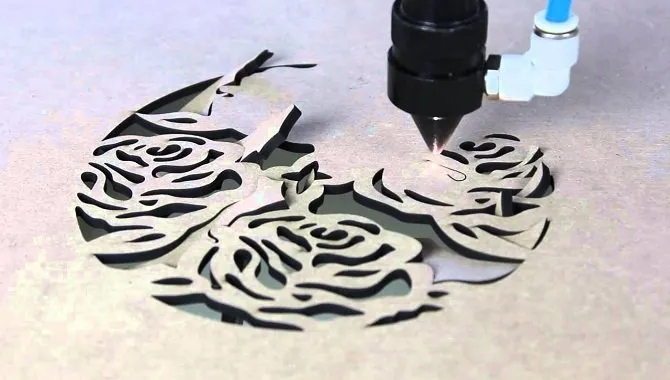
| CO2 Laser | Complex, detailed designs, high volumes | Higher upfront equipment cost |
Considerations For Choosing The Best Method
While CO2 laser cutters are highly versatile, they may not be the best fit for every business. Consider these factors:
- Order Volume: Small, irregular orders might not justify a laser cutter investment; manual tools or die cutters may suffice.
- Quality Requirements: For high-precision designs and consistent quality, laser cutters are unmatched.
- Budget: Evaluate the initial cost of equipment against long-term efficiency and labor savings.
- Product Range: If you offer diverse felt products, a laser cutter’s flexibility can help meet varying demands.
Final Recommendation
There is no one-size-fits-all solution for cutting felt. For businesses focused on high-volume production, intricate designs, or premium quality, a CO2 laser cutter is the most efficient and versatile option. However, smaller-scale operations or craft-based businesses may find scissors, rotary cutters, or die cutters more practical depending on their specific needs. Assess your business type, customer expectations, and budget to choose the method that aligns best with your goals.
Conclusion
Laser cutting felt is an efficient and precise method for creating intricate designs and products. CO2 lasers are safe, versatile, and capable of handling various felt types and thicknesses. By understanding your machine’s settings and the properties of felt, you can achieve exceptional results with every project.
This resource explains the key properties and applications of felt. ↩
This link explains the science behind CO2 lasers, which are commonly used in laser cutting, offering context for their effectiveness in felt cutting. ↩
The Amazon product page for rotary cutters is a useful resource to compare alternative cutting tools for felt, especially for those exploring traditional methods alongside laser cutting. ↩
From this linnk you will understand traditional die-cutting methods and their applications. ↩