

What An Automotive Interior Cutting Machine Is For
Quick answer: An automotive interior cutting machine cuts trim materials — laminated foam-backed textiles, carpet, artificial leather and non-woven — to model-specific outlines from a digital file, replacing the model-specific steel-rule dies that used to gate every programme change.
Interior trim is a high-mix business pretending to be a high-volume one. A single plant may run trim for a dozen vehicle programmes, each with left- and right-hand-drive variants, several trim levels and a facelift every few years. Under die cutting each of those is tooling, and the tooling is what makes a small programme unprofitable and a mid-cycle change slow. Die-less cutting moves that cost into nesting software. The material side is what decides between a laser and a knife, and it decides differently by part. Polyester carpet, non-woven and PU-faced trim cut well under a CO2 beam and the cut edge is stabilised as it is made. PVC-faced artificial leather — still very common in interior trim — releases chlorine compounds under the beam, so it belongs on an oscillating knife instead. We will say which group your material is in during sample testing rather than after the order. Thick laminated foam sandwiches above roughly 10 mm are also better handled mechanically. Interior material and testing standards are published through SAE International.
Automotive Interior Materials And How Each Cuts
Four trim material families cover most enquiries. The middle bullet is the one that decides beam versus knife.
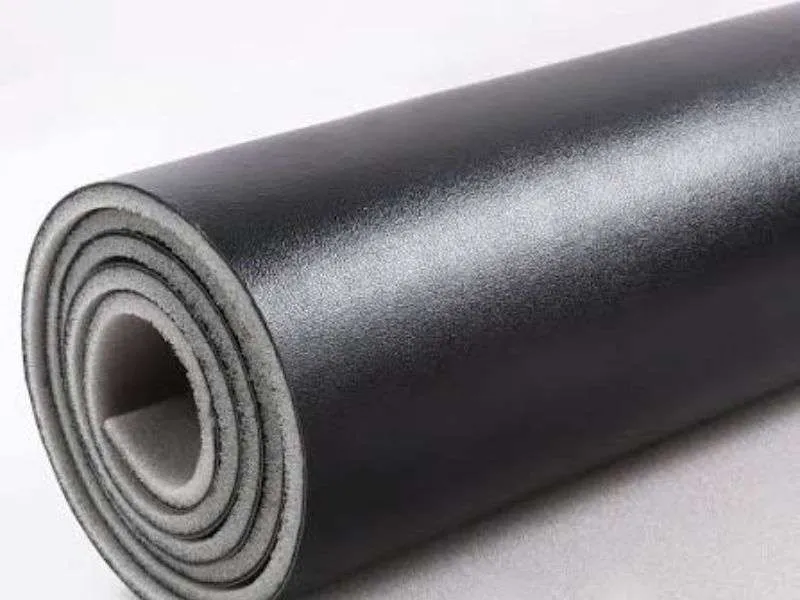
Foam-Backed Laminated Trim
- Formats: knit or woven face laminated to 2–8 mm PU or PE foam, used for door panels, headliner and pillar trim.
- Watch out: the face and the foam behave differently under any cutting process. A blade compresses the foam and the face fabric relaxes afterwards, so the finished panel is not the size the file said.
- How we cut it: non-contact cutting applies no compression at all, so the laminate is the same dimension after the cut as before it. Above about 10 mm total build we recommend a knife instead.

Automotive Carpet And Needle Felt
- Formats: tufted and needled polyester or polypropylene carpet, 400–1,200 gsm, with latex or heavy-mass backing for floor and trunk applications.
- Watch out: heavy-mass backing layers are often filled compounds, and filler content changes how the material behaves thermally — two rolls of the same part number can cut differently.
- How we cut it: parameters set per roll batch rather than per part number, with the settings recorded so a batch change is traceable. See our car mat page for floor-mat specifics.

PU Artificial Leather And Microfibre
- Formats: PU-faced synthetic leather and microfibre suede for seat inserts, wraps and instrument-panel covers.
- Watch out: PU cuts cleanly, PVC does not. The two look almost identical on a sample board, and the spec sheet is often the only way to tell — which is why material substitution by a supplier can silently break a validated process.
- How we cut it: we ask for the material spec, not just the swatch, and confirm the polymer before running. PVC-faced stock goes to a knife.

Non-Woven Backing And Insulation Layers
- Formats: needled non-woven backing, acoustic absorber layers, 100–900 gsm, behind trim and under carpet.
- Watch out: these parts are geometrically complex and dimensionally forgiving, so they are the ones most often cut roughly — and a badly cut absorber layer shows up later as a squeak-and-rattle complaint.
- How we cut it: same nested layout as the visible trim, so the hidden layers get the same dimensional discipline as the ones the customer sees.
Automotive Interior Parts Cut Without Model-Specific Tooling
The saving is concentrated in programme changes and in variant mix, not in the cutting minute itself.

Headliner And Pillar Trim
- Parts: headliner blanks, sun-visor covers, A/B/C-pillar trim faces.
- The hard part: headliners are large, laminated and full of openings for lights, handles and sunroof — every trim-level variant moves those openings and each variant is a die.
- What you get: openings are geometry in the file. A trim-level variant costs nesting time, and a mid-cycle change does not wait for tooling.

Seat Covers And Inserts
- Parts: seat facing panels, bolster inserts, perforated centre panels, piping strips.
- The hard part: perforated and printed inserts must be cut in register with the pattern; a few millimetres of drift puts the perforation field off-centre on a visible surface.
- What you get: camera registration reads the perforation or print and warps the path to the material as it lies, so the pattern stays centred.

Floor Mats And Trunk Liners
- Parts: model-specific floor mat sets, trunk liners, wheel-arch covers, spare-wheel covers.
- The hard part: the aftermarket wants mats for hundreds of vehicle models in small quantities, which is the worst possible tooling case.
- What you get: a model library held as files. Adding a vehicle costs a digitising session rather than a die set.

Prototype And Low-Volume Programmes
- Parts: show-car trim, pre-series builds, special editions, retrofit kits.
- The hard part: these programmes cannot carry tooling amortisation, so they are usually cut by hand and the quality shows.
- What you get: production-quality parts from the drawing at quantity one, on the same machine and parameters that will run the series.
Recommended KASU Machines For Trim And Carpet Panels
Choose by panel size and by whether the material carries a pattern that must be registered. All three run the same control software. The full range is on the KASU machine category page.

KD2016-SY Large Flatbed Top Vision Laser Cutting Machine
- Cuts: headliner blanks, door panel laminate, seat facing panels, carpet sets.
- Specs: 2000×1600 mm bed, top-mounted camera for full-bed pattern registration.
- Best for: large trim panels that must be cut in one setup and registered to a printed or perforated pattern.

KD1830-SY-G KASU Super High Speed Laser Cutting Machine
- Cuts: long carpet and liner panels, repeated trim shapes at production rate.
- Specs: 1800×3000 mm class working area, high-speed gantry, top camera.
- Best for: full-length floor and trunk panels where cycle time drives the line rate.

K1814-SY Roll-to-Roll Double Head Laser Cutting Machine
- Cuts: roll-fed non-woven backing, insulation layers, plain trim stock.
- Specs: 1800×1400 mm cutting zone, roll-to-roll transport, two heads.
- Best for: unpatterned roll goods where continuous feeding beats sheet handling.
Half Of Automotive Interior Trim Is PVC — And PVC Is Excluded
Artificial leather is sold as one category and is made from two very different polymers. PU cuts cleanly on a laser; PVC releases chlorine compounds that damage the machine and endanger the operator. Before anything else on an interior programme, the base polymer has to be established from the datasheet.
Distributors and OEM partners: KASU offers free OEM/ODM — custom models, your brand colours and logo, multilingual labelling, with no extra service charge. Details on About KASU.

Send Your Own Trim Laminate For A Free Sample Cut
- Send the laminate as built — face material, foam and backing together. The stack behaves differently from any layer alone.
- Send a perforated seat insert too if you run them; registration on perforation is the hardest case and the most revealing.
- Parameters recorded per laminate and shipped with the machine.
- For distributors: interior programmes are long and start with prototype and low-volume work. The sample and development cell is the realistic entry, and it is decided on turnaround rather than price.

What This Machine Is And Is Not Qualified For
- PVC artificial leather is excluded. PU synthetics and microfibre are fine. The two sit next to each other in the same supplier catalogues — see PVC Cutting Systems.
- Foam-backed laminate thickness is set on a sample; the foam, not the face, is usually what limits it.
- What we will not claim: no machine ships automotive-qualified. We supply equipment, repeatability data and support; IATF and OEM-specific approval remain your process.
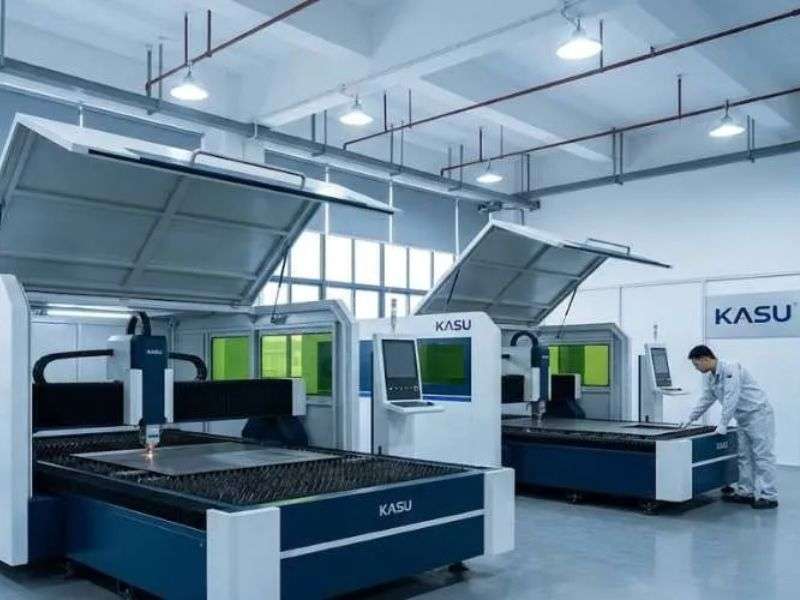
The Factory That Builds Your Automotive Interior Cutter
- Founded 2009 · Shanghai R&D · 8,000+ m² Suzhou plant, 15 minutes from the R&D centre.
- 100+ models across 9 series, 70+ owned patents and software copyrights, China High-Tech Enterprise.
- Machines are built in-house rather than traded, so a parameter question reaches the people who built the motion system and specified the extraction.
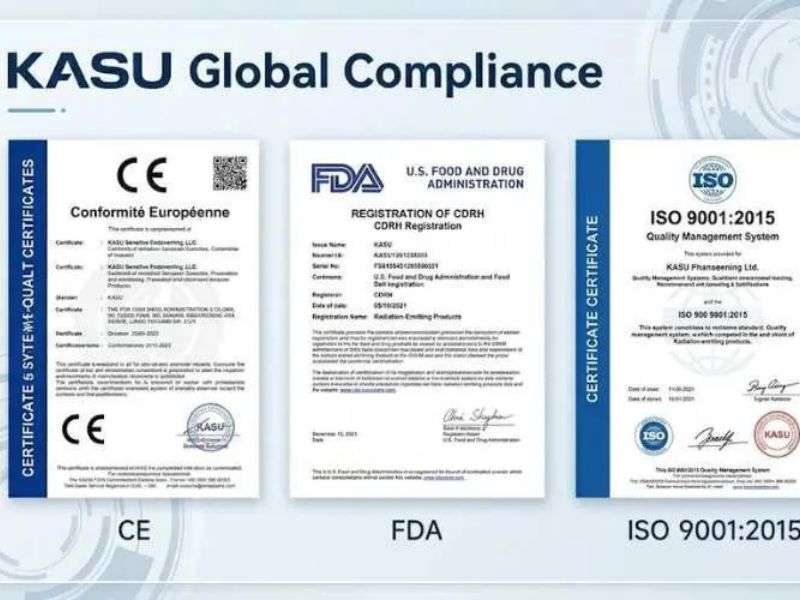
CE And FDA Certified — Send Your Laminate For A Free Sample Cut
- CE and FDA certified; 5,000+ customers across 80+ countries.
- Installation guidance, operator training and spare parts supplied from the factory that built the machine.
- Class-1 enclosed configurations available where the destination market requires them.
Buyer Questions On Cutting Vehicle Trim Materials
Can A Laser Cut PVC Artificial Leather For Seat Covers?
No. PVC releases chlorine compounds under a CO2 beam, which is a plant-safety and equipment-corrosion problem rather than a cut-quality one. PVC-faced trim belongs on an oscillating knife. PU-faced synthetic leather and microfibre suede cut well, so the first question we ask is which polymer the face layer actually is.
How Thick A Foam Laminate Can It Handle?
Foam-backed trim up to roughly 10 mm total build cuts well, and because the process is non-contact the laminate keeps its dimension instead of being compressed by a blade. Above that thickness a knife system is usually the better answer, and we will say so rather than push the machine past its useful range.
How Accurate Is Pattern Registration On Perforated Seat Inserts?
A top-mounted camera reads the perforation field or printed pattern and warps the cutting path to the material as it actually lies. Achievable accuracy depends on pattern contrast and material stability rather than on a headline figure, so we register and cut your own material during sample testing and measure the result.
What Does An Automotive Interior Cutting Machine Cost?
Cost is driven by working area, camera type, head count and feeding system rather than a list price. Send panel sizes, material types, variant count and daily output and we return a configuration with pricing. Sample cutting is free.
Does The Machine Come Automotive-qualified?
No machine does. Cutting is one step inside a process you validate under your own quality system. We supply parameter records, sample evidence, maintenance documentation and operator training that feed into that file, but the qualification itself remains the trim supplier’s responsibility.
Can We Build A Model Library For Aftermarket Floor Mats?
Yes, and it is one of the strongest cases for die-less cutting. Each vehicle model is a file rather than a die set, so adding a model costs a digitising session. Our car mat page covers the aftermarket mat workflow in more detail.
Related KASU Cutting Solutions
Three neighbouring pages covering the specific trim materials most often quoted alongside interior work.
Technical Support for Automotive Interior Cutting
Background on material screening, the knife-versus-beam decision on trim laminates, and how to translate a programme mix into a machine specification.


Get An Automotive Interior Cutting Machine Quotation
Send your trim material specifications, panel sizes, variant count and daily output target. We confirm which parts suit laser and which belong on a knife, run a free sample cut and return the parameter record with the machine configuration.
Address: No. 105, Nanzhangjing Road, Taicang, Suzhou, Jiangsu, China
Email: [email protected]
WhatsApp: +86-18601718317