

What Makes A Fabric Cutting Machine Automatic
Quick answer: An automatic fabric cutting machine feeds material continuously and cuts without the operator positioning each piece — the automation is in the feeding and the nesting, not only in the cutting head.
The word automatic gets applied to three different things in this market and they are worth separating, because they cost very different amounts. First, automatic feeding: the roll advances under the head so the operator loads a roll rather than a sheet, and this is where most of the labour saving actually is. Second, automatic nesting: software lays parts on the real roll width, which is where the material saving is. Third, automatic material handling: unwind, tension control and take-up on a roll-to-roll path so a job runs between roll changes. KASU machines cover all three at different levels, and the useful question is which of them your job actually needs. A shop cutting varied short runs gets most of its return from nesting; a shop running one part all day gets it from feeding and multiple heads. What we are not describing here is a multi-ply automatic knife cutter, which is a different machine for plain-fabric production volume — our apparel cutting page explains that dividing line in detail. Industry background is maintained by the Industrial Fabrics Association International.
Fabric Types That Run Well On Automatic Feeding
Four roll-goods situations. The middle bullet is what breaks the automation if you ignore it.

Plain Synthetic Roll Goods
- Formats: polyester and polyamide woven and knitted fabric, 60–400 gsm, roll widths to 2 m.
- Watch out: unattended running depends on tension staying constant. A roll wound unevenly at the mill will drift across a long job and nobody is watching to catch it.
- How we cut it: tension-controlled feeding with the parameter set on your actual roll, plus periodic reference checks rather than blind running.

Printed And Sublimated Rolls
- Formats: dye-sublimated polyester, printed jersey and display textile with repeating or panel graphics.
- Watch out: printed stock cannot be cut blind at all — the print position drifts along the roll, so an automatic feed without registration produces a whole roll of misplaced parts.
- How we cut it: camera registration on each advance step, so automation and accuracy are not traded against each other.

Open Structures And Light Knits
- Formats: mesh, tulle, light jersey and warp-knit below about 100 gsm.
- Watch out: light open fabric is the hardest thing to feed automatically — it stretches under tension and lifts under extraction airflow, so what feeds beautifully on a demo can misbehave on a real roll.
- How we cut it: vacuum hold-down with reduced tension, and we prove it on your own fabric rather than on a demonstration roll.

Coated And Laminated Roll Stock
- Formats: PU-coated polyester, laminated technical fabric, 200–600 gsm.
- Watch out: PVC-coated stock is excluded for chlorine release, and coated goods are frequently mislabelled at the roll rack — which is how the wrong material reaches the machine.
- How we cut it: polymer confirmed from the specification before running. PU-coated cuts with the polyester filament ends fused at the edge.
Automatic Fabric Cutting Jobs That Pay Back Fastest
Each case below returns its investment through a different one of the three automations.

Continuous Roll Production
- Parts: one repeating part cut all shift — panels, blanks, liners, covers.
- The hard part: the labour cost is not in the cutting, it is in an operator positioning and removing sheets all day.
- What you get: the operator loads rolls instead of sheets, and multi-head configurations multiply output without multiplying operators.

Short Runs With High Part Variety
- Parts: mixed orders, made-to-order goods, many shapes per roll.
- The hard part: variety destroys yield when nesting is done by eye, and fabric is usually the largest cost in the finished product.
- What you get: nesting computed on the real roll width for the actual job mix, which is where the material saving lives.

Printed Panel Production
- Parts: sublimated panels, printed covers, display graphics, engineered-print garments.
- The hard part: automation and print accuracy pull against each other unless the machine can register on every advance.
- What you get: registration at each step, so a printed roll runs as automatically as a plain one.

Unattended And Second-Shift Running
- Parts: overnight batches, buffer stock, long repeat jobs.
- The hard part: unattended running is only safe if a fault stops the machine rather than producing a roll of scrap quietly.
- What you get: roll-to-roll transport with fault stops, so an overnight job either runs or halts — and we will size expectations honestly rather than promising lights-out.
Recommended KASU Machines With Continuous Feeding
Choose by whether stock is printed and by how many heads the output needs. All three run the same control software. The full range is on the KASU machine category page.

K1814-S2 Double Head Auto Feeding Laser Cutting Machine
- Cuts: plain synthetic roll goods, liners, blanks, repeat panels.
- Specs: 1800×1400 mm cutting zone, automatic feeding, two heads.
- Best for: continuous production of unprinted parts where feeding is the main automation needed.

K1814-SY Roll-to-Roll Double Head Laser Cutting Machine
- Cuts: roll stock that must stay on the roll path from unwind to rewind.
- Specs: 1800×1400 mm zone, roll-to-roll transport with tension control, two heads.
- Best for: long unattended runs and materials that should not be handled as sheets.

KD1814-S2 Double Head Laser Cutter With Camera
- Cuts: printed and sublimated rolls, panel graphics, patterned stock.
- Specs: 1800×1400 mm bed, camera registration on each advance, double head.
- Best for: printed roll production where automation must not cost accuracy.
“Automatic” Should Mean Something Specific
The word is used loosely in this category. On a KASU machine it means three concrete things: the material feeds itself, the camera finds the work, and the job continues without an operator standing at the table. Anything a supplier will not name that precisely is worth questioning.
Distributors and OEM partners: KASU offers free OEM/ODM — custom models, your brand colours and logo, multilingual labelling, with no extra service charge. Details on About KASU.

Send Your Own Roll For A Free Sample Cut
- Send your roll goods — plain, printed, open structure or coated — and the part mix you actually run.
- We cut it and time it, so the throughput figure in your quote comes from your fabric rather than a demo layout.
- Parameters recorded per fabric and shipped with the machine.
- For distributors: the trigger for this purchase is almost never a capacity plan. It is a second shift the customer cannot staff — which makes labour availability, not cost per metre, the argument that lands.

What Unattended Running Actually Requires
- Conveyor or auto-feed so the web advances without manual loading; camera registration so printed work stays on position as the roll feeds.
- Unattended overnight running is realistic with the right extraction, fire-safety configuration and material — and unrealistic without them. It is a site question as much as a machine question, and we will go through it rather than tick a box.
- Not the same as an automatic knife cutter: a knife cuts a multi-ply spread, this cuts single ply and fuses the edge. Different machines for different work.
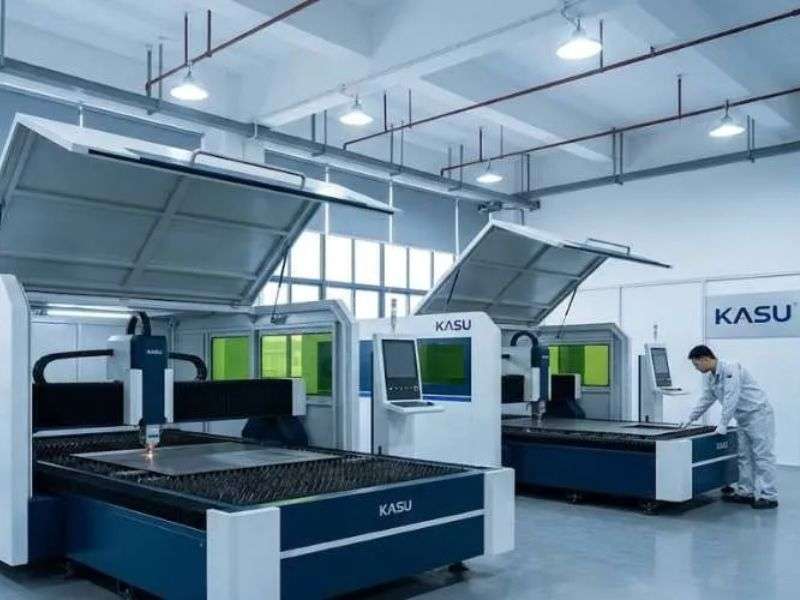
The Factory That Builds Your Automatic Fabric Cutter
- Founded 2009 · Shanghai R&D · 8,000+ m² Suzhou plant, 15 minutes from the R&D centre.
- 100+ models across 9 series, 70+ owned patents and software copyrights, China High-Tech Enterprise.
- Machines are built in-house rather than traded, so a parameter question reaches the people who built the motion system and specified the extraction.

CE And FDA Certified — Send Your Roll For A Free Sample Cut
- CE and FDA certified; 5,000+ customers across 80+ countries.
- Installation guidance, operator training and spare parts supplied from the factory that built the machine.
- Class-1 enclosed configurations available where the destination market requires them.
Buyer Questions On Continuous Roll Cutting
What Exactly Is Automatic On An Automatic Fabric Cutting Machine?
Three separate things, and they cost differently. Automatic feeding advances the roll so the operator loads rolls instead of sheets, which is where most labour saving is. Automatic nesting lays parts on the real roll width, which is where material saving is. Roll-to-roll handling adds tension control and take-up for long runs. We ask which of the three your job needs before quoting.
Can It Run Unattended Overnight?
It can run long batches between roll changes, and a fault stops the machine rather than continuing to produce scrap. We would not describe that as lights-out operation, because fabric behaviour, roll quality and extraction all need periodic human judgement. Anyone promising fully unattended fabric cutting is overselling.
Does Automation Reduce Accuracy On Printed Fabric?
Only if the machine cannot register during feeding. Print position drifts along a roll, so an auto-feed machine without registration will produce a whole roll of misplaced parts. Camera models register on each advance step, so automation and print accuracy are not traded against each other.
Is This The Same As An Automatic Knife Cutter?
No. A multi-ply automatic knife cutter spreads and cuts many plies of plain fabric and is the better machine for plain-fabric production volume. These are single-ply laser machines whose automation is in feeding and nesting. Our apparel cutting page explains which side of that line your work falls on.
What Does An Automatic Fabric Cutting Machine Cost?
Price depends on cutting zone, head count, feeding type and whether camera registration is required rather than on a list figure. Send fabric type and gsm, roll width, part mix and daily output and we return a configuration with pricing. Sample cutting is free.
How Wide A Roll Can It Take?
Cutting zones of 1800 by 1400 mm and 2000 by 1600 mm cover most roll widths in this sector. We size the machine against the roll width you actually buy rather than the widest you have ever handled, because a wider bed you rarely use is the most common way to overspend here.
Related KASU Cutting Solutions
Three neighbouring pages covering the feeding and material topics most often quoted alongside continuous roll cutting.
-
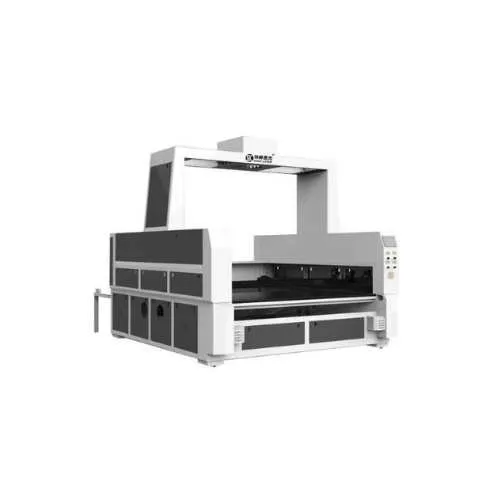
Auto Feed Laser Cutting Machine
Auto-feeding in detail, including how tension and advance accuracy are controlled. -

Roll To Roll Laser Cutter
Roll-to-roll transport, for materials that should never be handled as sheets. -
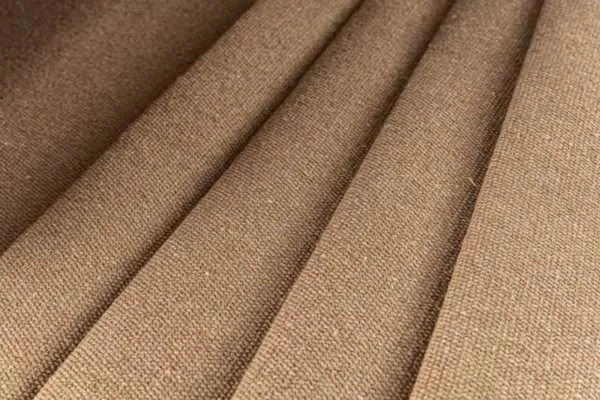
Fabric Laser Cutting Machine
Fabric behaviour by material family, independent of the feeding method.
Technical Support for Automatic Fabric Cutting
Background on how roll feeding works, where the savings actually come from and how to size a machine without overspending on automation you will not use.
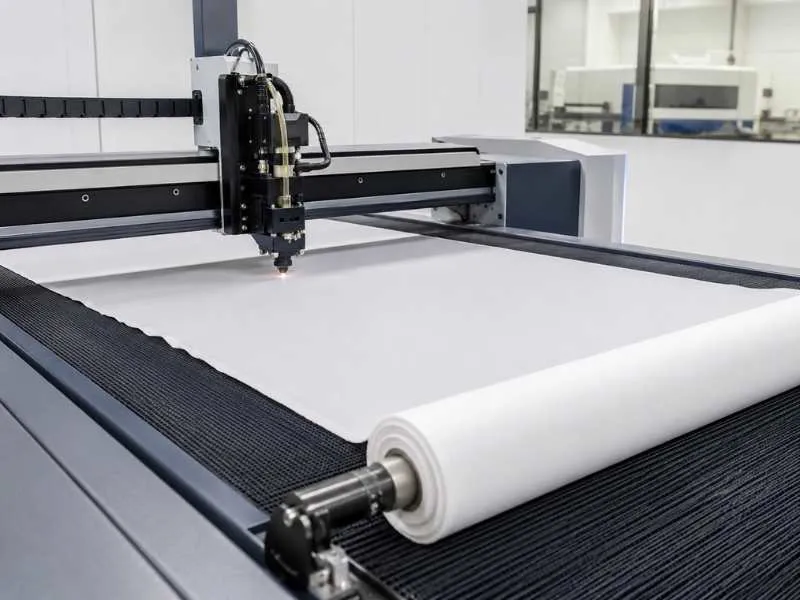


Get An Automatic Fabric Cutting Machine Quotation
Send your fabric type and gsm, roll width, part mix and daily output, and tell us whether stock is printed. We identify which automation you actually need, run a free sample cut on your own roll and return the configuration.
Address: No. 105, Nanzhangjing Road, Taicang, Suzhou, Jiangsu, China
Email: [email protected]
WhatsApp: +86-18601718317