

Where An Apparel Cutting Machine Uses A Laser Instead Of A Knife
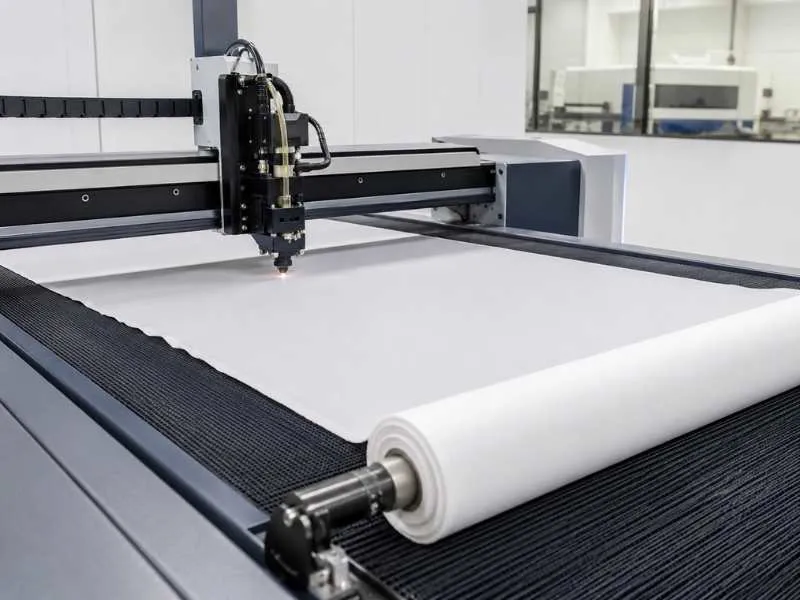
Quick answer: An apparel cutting machine cuts garment panels from a digital marker. The category covers two very different machine types — multi-ply knife cutters and single-ply laser cutters — and they solve opposite problems. KASU Laser builds the laser type.
It is worth being direct about this because most search results for this term are straight-knife and band-knife suppliers, and buying the wrong one is an expensive mistake. A multi-ply knife cutter spreads twenty to sixty plies and cuts them together. For plain solid-colour fabric in production quantities, nothing beats that on cost per panel and nothing we build will. A single-ply laser cutter does what a knife stack cannot: it follows a print, a check, a placed graphic or a knitted design, panel by panel, and it fuses the edge of synthetic fabric as it cuts. The moment a garment has an engineered print or a placement that must align across a seam, the knife stack stops being an option because every ply in the stack is in a slightly different place. That is the dividing line, and most factories above a certain size end up with both machines. If your work is entirely plain-fabric production volume, we will tell you a knife cutter serves you better. Industry background on cutting-room automation is covered by Textile World.
Apparel Fabrics That Suit Single-Ply Laser Cutting
Four fabric situations where the beam earns its place. The middle bullet is why a knife stack struggles with each.

Printed And Sublimated Polyester
- Formats: dye-sublimated jersey, tricot and woven polyester, 80–280 gsm, for sportswear and fashion prints.
- Watch out: the print moves. Sublimation heat and roll tension change the printed dimension, so panels cut to nominal marker coordinates put the graphic in the wrong place on the body.
- How we cut it: camera registration reads the printed contour on each panel and warps the path to the fabric as it lies. See our sportswear page.

Checks, Stripes And Placement Prints
- Formats: woven checks, stripes, engineered placement prints on cotton blends and synthetics.
- Watch out: matching a check across a seam requires every panel to be cut in the same phase of the pattern — impossible in a ply stack because each ply drifts relative to the one below.
- How we cut it: single ply, registered to the pattern on that ply, so the check matches at the seam without hand-marking.

Engineered Knit And Seamless Panels
- Formats: flat-knit engineered panels, spacer knit, warp-knit mesh for sportswear and shapewear.
- Watch out: engineered knits have the design knitted in and unravel from a mechanically cut edge, so the cut has to follow the knitted line and stabilise it.
- How we cut it: registration on the knitted design plus local fusing of polyester and polyamide filament ends at the cut.

Lace, Mesh And Open Structures
- Formats: raschel and corded lace, power mesh, tulle for lingerie and occasion wear.
- Watch out: open structures cannot be clamped or held by a stack, and a blade drags the structure out of shape before it severs it.
- How we cut it: vacuum hold-down and non-contact cutting; the beam follows the motif rather than a nominal outline. See our lace cutting page.
Apparel Panels A Knife Stack Cannot Produce
Every case below fails in a multi-ply stack for the same reason: the pattern on each ply is in a different place.

Engineered-Print Sportswear
- Parts: cycling and running kit, team jerseys, leggings with placed graphics across seams.
- The hard part: a graphic that must continue across a side seam demands panel-level registration, and every ply below the top one is already out of position.
- What you get: panels registered individually to their own printed graphic, so the design continues across the seam as designed.

Check And Stripe Matched Garments
- Parts: shirts, jackets and skirts in checks and stripes where matching is a quality criterion.
- The hard part: matched cutting is traditionally done by hand-marking each ply, which is slow, skilled and the first thing to slip under schedule pressure.
- What you get: phase-correct panels cut from the file, so matching stops depending on the cutter’s care that day.

Lingerie, Lace And Occasion Wear
- Parts: lace panels cut to motif, mesh gussets, appliqué shapes, scalloped edges.
- The hard part: cutting lace to the motif rather than to an outline is a hand operation in most factories, and it is where the value of the garment is created or lost.
- What you get: motif-following cuts with fused edges on synthetic lace, repeatable across a production run.

Sampling, Small Runs And Made-to-Measure
- Parts: development samples, size-set proofs, made-to-measure single garments, small custom orders.
- The hard part: spreading and stacking for a single garment is pure setup cost, so sample rooms end up hand-cutting and the sample does not represent production.
- What you get: single garments cut on production parameters, so the sample and the bulk come off the same process.
Recommended KASU Machines For The Cutting Room
Choose by fabric width and by how demanding the registration is. All three run the same control software. The full range is on the KASU machine category page.

KD1814-SY Large Format Top Camera Laser Cutting Machine
- Cuts: sublimated prints, engineered knits, checks and placement graphics.
- Specs: 1800×1400 mm working area, top-mounted camera for full-bed registration.
- Best for: printed and patterned work where registration accuracy is the whole requirement.

KX1814-S2 Double Head CCD Laser Cutter
- Cuts: printed jersey, mesh, lace, moderate-accuracy patterned work.
- Specs: 1800×1400 mm class area, CCD camera registration, two heads.
- Best for: patterned production at a lower machine cost than a top-camera system.

K1810-S4 Four Head Laser Cutting Machine
- Cuts: plain synthetic panels, repeated components, trims and small parts.
- Specs: four synchronised heads, 1800×1000 mm class zone, no camera.
- Best for: unpatterned high-repetition parts where throughput matters and registration does not.
A Laser Cuts One Ply. That Is The Trade.
A straight knife cuts a spread of many plies and a laser cuts one. On volume basics that settles it in the knife’s favour, and we will say so. What flips it is printed, engineered and placement-critical work, where every panel is different and a spread has nothing to spread.
Distributors and OEM partners: KASU offers free OEM/ODM — custom models, your brand colours and logo, multilingual labelling, with no extra service charge. Details on About KASU.

Send Your Own Fabric And Marker For A Free Sample Cut
- Send the fabric and a real marker, printed if that is how you run it. We cut it and return the panels with recorded parameters.
- Checks, stripes and placement prints are where registration is judged — send the hardest one you have rather than the easiest.
- Parameters recorded per fabric so the setting survives an operator change.
- For distributors: apparel buyers already own a spreader and a knife. You are not replacing that line — you are selling the second machine that takes the jobs the first one handles badly. That is an easier conversation and a shorter cycle.

Where The Knife Still Wins, And We Will Tell You
- High-volume plain basics on a multi-ply spread: keep the knife. A laser will lose on cost per panel and we are not going to pretend otherwise.
- Single-ply is an advantage on engineered knits, seamless panels, lace and open structures, where a spread distorts the very thing you are trying to place.
- Camera registration matches checks and stripes across seams by reading each panel as it arrives rather than trusting the spread.
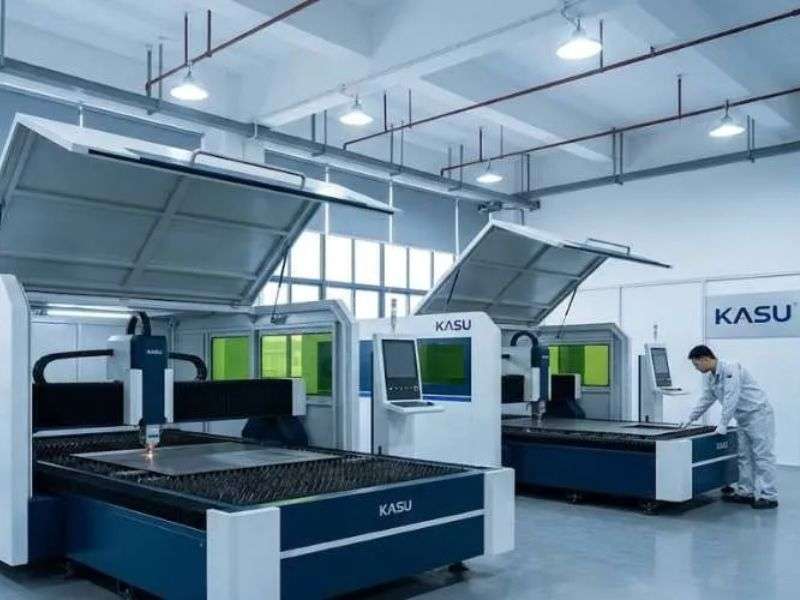
The Factory That Builds Your Apparel Cutting Machine
- Founded 2009 · Shanghai R&D · 8,000+ m² Suzhou plant, 15 minutes from the R&D centre.
- 100+ models across 9 series, 70+ owned patents and software copyrights, China High-Tech Enterprise.
- Machines are built in-house rather than traded, so a parameter question reaches the people who built the motion system and specified the extraction.
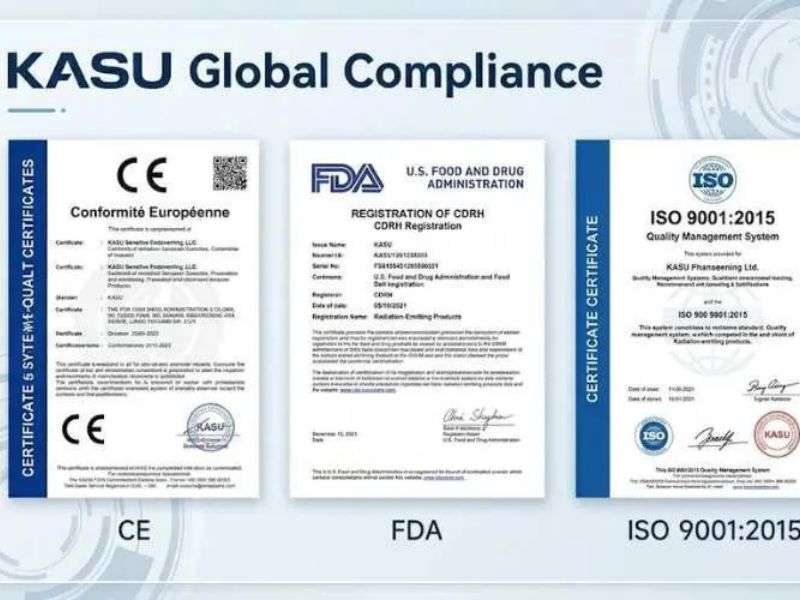
CE And FDA Certified — Send Your Marker For A Free Sample Cut
- CE and FDA certified; 5,000+ customers across 80+ countries.
- Installation guidance, operator training and spare parts supplied from the factory that built the machine.
- Class-1 enclosed configurations available where the destination market requires them.
Buyer Questions On Cutting Room Equipment
Is A Laser Better Than A Straight Knife For Garment Cutting?
Not universally, and it is worth being blunt about it. A multi-ply knife cutter spreads and cuts twenty to sixty plies at once and wins decisively on plain fabric in production quantities. A single-ply laser wins where the panel must be registered to a print, check or knitted design, because in a ply stack every ply is in a slightly different position. Most factories above a certain size run both.
How Many Plies Can A Laser Cut At Once?
In practice this is single-ply work. Some thin synthetics can be cut two or three plies deep, but stacking defeats the reason to use a laser in the first place, which is per-panel registration to the pattern. If your requirement is multi-ply throughput on plain fabric, a knife cutter is the correct machine.
Which Apparel Fabrics Does Laser Cutting Suit?
Polyester, polyamide and their blends cut well and the filament ends fuse locally at the edge. Cotton and other cellulose fibres cut but char, leaving a brown edge line that is a reject on light unlined garments. PVC-coated and PVC-blended fabric is excluded entirely for chlorine release.
Can It Match Checks And Stripes Across Seams?
Yes, and this is one of the strongest cases for single-ply laser cutting. Each panel is registered to the pattern on that specific ply, so panels are cut in the same phase and match at the seam without hand-marking. Achievable matching depends on pattern contrast and fabric stability, which we verify on your own cloth.
What Does An Apparel Cutting Machine Cost?
Price depends on working area, camera type, head count and feeding method rather than on a list figure. Send your fabric types, whether work is printed or plain, panel sizes and daily output and we return a configuration with pricing. Sample cutting is free.
Do You Supply OEM Or ODM Machines For Our Brand?
Yes. KASU Laser provides free OEM and ODM service including custom configuration, brand colour and logo, and multi-language labelling and manuals, with no extra service charge.
Related KASU Cutting Solutions
Three neighbouring pages covering the garment categories most often quoted alongside cutting-room equipment.
Technical Support for Apparel Cutting
Background on the knife-versus-beam decision, fabric screening and how to size a machine against a cutting room’s real order mix.


Get An Apparel Cutting Machine Quotation
Send your fabric types, whether the work is printed or plain, panel sizes and daily output. We tell you honestly whether a laser or a knife cutter fits, cut your own printed fabric free of charge and return the configuration.
Address: No. 105, Nanzhangjing Road, Taicang, Suzhou, Jiangsu, China
Email: [email protected]
WhatsApp: +86-18601718317