

What An Airbag Cutting Machine Has To Guarantee
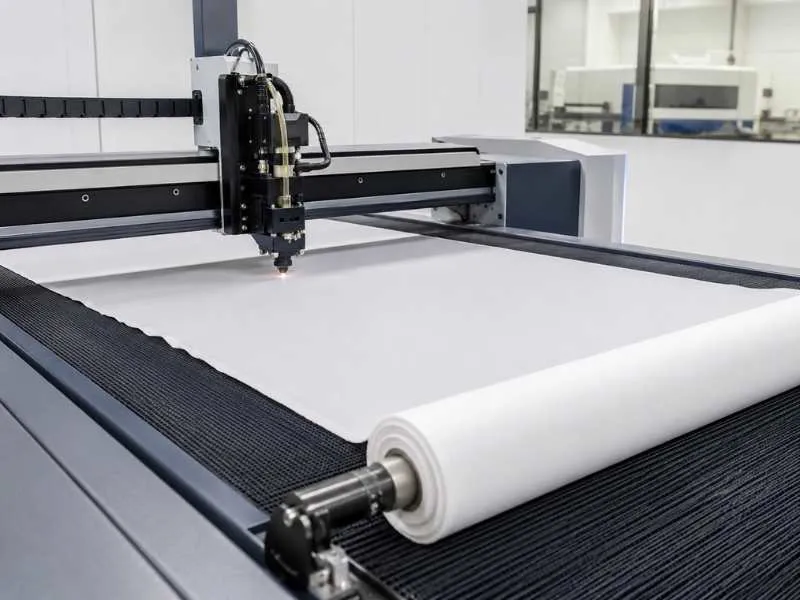
Quick answer: An airbag cutting machine cuts high-tenacity nylon cushion panels to a digital outline and seals the cut edge in the same pass, because a frayed edge in an inflating cushion is a seam failure rather than a cosmetic defect.
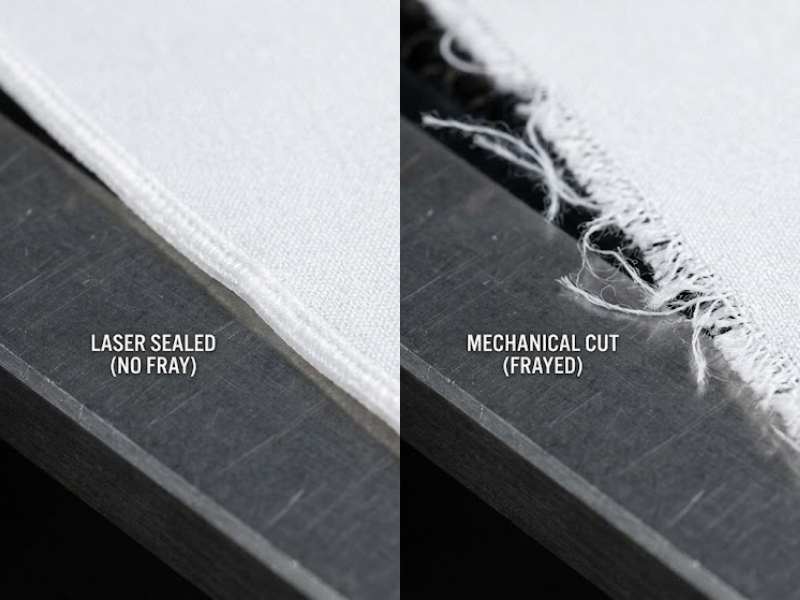
This is the most demanding application in soft-material cutting, and the reason is physics rather than tolerance. An airbag deploys in roughly 30 milliseconds and the seam has to hold a pressurised gas load while the fabric is still accelerating. Any loose filament at a panel edge is a crack initiator in that seam. Blade cutting leaves exactly that — torn filament ends — which is why the industry moved to laser cutting for cushion panels decades ago and why the established suppliers in this SERP are all laser companies. The beam melts the nylon filament ends as it parts them, so the edge arrives at the sewing station already stabilised. Two limits are worth stating plainly. Cutting is one qualified step inside an IATF 16949 process; the machine does not confer that qualification, your process validation does. And para-aramid reinforcement layers used in some housing components char rather than fuse, so they are handled differently from the nylon cushion itself. Automotive occupant-restraint standards are published through SAE International.
Airbag Materials And How The Beam Handles Each
Four material types cover cushion, tether and housing work. The middle bullet is the failure mode that decides the process.

Silicone-Coated Nylon 6.6
- Formats: 235–470 dtex high-tenacity nylon 6.6 with 15–60 g/m² silicone coating, roll widths to 2 m.
- Watch out: the silicone coating is the gas barrier and the thermal protection. Too much power locally degrades it, and a degraded barrier is only found during a leak-down test on the finished cushion — after all the sewing labour is spent.
- How we cut it: lowest workable power with high feed rate, and we return cut panels for your own leak-down and coating-adhesion testing before quotation.

Uncoated Woven Nylon (OPW Stock)
- Formats: one-piece-woven cushion stock and plain uncoated 6.6 weave for side-curtain and knee applications.
- Watch out: OPW panels are woven to shape, so the cut line runs close to the integral seam. A cut that wanders 1 mm into the woven seam scraps a panel that already carries most of its value.
- How we cut it: camera registration reads the woven boundary itself rather than trusting a nominal layout, so the path follows the panel as it actually lies on the bed.

Tethers, Vents And Reinforcement Patches
- Formats: narrow nylon strips, vent rings, D-shaped patch shapes, typically from the same coated stock as the cushion.
- Watch out: these are small parts in high mixes and they are the parts most often cut with hand tools and hand-marked — which is where part-mix errors enter the build.
- How we cut it: every small part comes off the same nested layout as the cushion, and identification can be laser-marked onto the part in the same pass.

Aramid Reinforcement In Housings
- Formats: meta- and para-aramid weave used for heat shields and housing reinforcement around the inflator.
- Watch out: aramid chars instead of melting, so the fused-edge advantage that applies to nylon does not apply here. Thick para-aramid packs are inefficient under a CO2 beam.
- How we cut it: we cut thin aramid at reduced power and photograph the char band; for thick ballistic-grade stock we will tell you to use a knife system instead.
Airbag Components Cut And Edge-Sealed As They Are Cut
Cushion, restraint and housing parts all come off the same nested layout, which is where the material saving actually shows up.

Front And Side Cushion Panels
- Parts: driver and passenger cushion faces, side-impact and curtain panels, in coated nylon.
- The hard part: panel grain direction drives deployment behaviour, so nesting cannot simply rotate parts for yield the way it can on apparel — the layout is constrained before optimisation starts.
- What you get: grain-locked nesting on the real roll width, with the fused edge arriving at the sewing station ready to stitch.

Tethers And Internal Restraint Straps
- Parts: internal tethers, strap ends, adjustment loops.
- The hard part: tether length tolerance directly changes the deployed shape of the cushion, and these are exactly the parts most likely to be cut on a shear and eyeballed.
- What you get: the same digital layout that produced the cushion produces the tether, so the dimensional record for both is one file.

Vent Rings And Gas Management Parts
- Parts: vent hole reinforcement rings, flow-control patches, blanking discs.
- The hard part: vent geometry is tuned late in development and changes repeatedly — each change is a new die and a new lead time under conventional tooling.
- What you get: a vent revision is a file revision, so development iterations stop being gated by tooling.

Prototype And Validation Builds
- Parts: single-set builds for sled testing, tooling-free design iterations, correlation samples.
- The hard part: a validation programme needs dozens of variants in quantities of one to ten, and the tooling cost per variant is impossible to justify.
- What you get: variants cut the same day from the drawing, on the same machine and parameters that will run production.
Recommended KASU Machines For Coated Nylon Work
Choose by roll width and by whether panels are registered from woven marks. All three run the same control software. The full range is on the KASU machine category page.

KD2016-SY Large Flatbed Top Vision Laser Cutting Machine
- Cuts: OPW cushion stock, wide coated nylon, curtain-length panels.
- Specs: 2000×1600 mm bed, top-mounted camera for full-bed registration, CO2 source.
- Best for: woven-to-shape stock where the path must follow the panel boundary, not a nominal layout.

K1814-SY Roll-to-Roll Double Head Laser Cutting Machine
- Cuts: coated nylon roll stock for cushion panels, tethers and patches.
- Specs: 1800×1400 mm cutting zone, roll-to-roll transport, two heads.
- Best for: continuous production where coated stock stays on the roll path from unwind to rewind.

K1810-S4 Four Head Laser Cutting Machine
- Cuts: repeated small parts — vent rings, patches, tether blanks.
- Specs: four synchronised heads, 1800×1000 mm class working zone, no camera.
- Best for: unpatterned stock where one shape repeats in very high volume.
This Machine Does Not Make Your Process Automotive-Qualified
The most useful thing we can say about airbag work is what a machine purchase does not buy you. Cutting equipment is one input into a qualified process — the qualification is yours, and it covers your material, your parameters and your documented controls.
Distributors and OEM partners: KASU offers free OEM/ODM — custom models, your brand colours and logo, multilingual labelling, with no extra service charge. Details on About KASU.

Send Your Own Cushion Stock For A Free Sample Cut
- Send your actual silicone-coated 6.6 or OPW stock. Coating weight changes the window more than base weave does.
- We cut your panel geometry and return the parts with recorded parameters, so your own validation starts from real data rather than a datasheet.
- Repeat positioning and parameter records are documented for you to attach to your PPAP work — we supply the evidence, you own the submission.
- For distributors: airbag buyers qualify slowly and then stay for years. The entry point is rarely production — it is the prototype and validation cell, which is a smaller sale that decides the larger one.

What The Beam Does To A Silicone Coating
- The coating, not the nylon, sets the window. Too much energy at the kerf changes the coating locally, and that is the condition your permeability test will find rather than your inspector.
- Parameters set per coating weight and recorded, so the setting that passed validation is the one the operator recalls.
- What we will not claim: no machine ships automotive-qualified. We supply equipment, repeatability data and support; IATF and customer-specific approval remain your process.
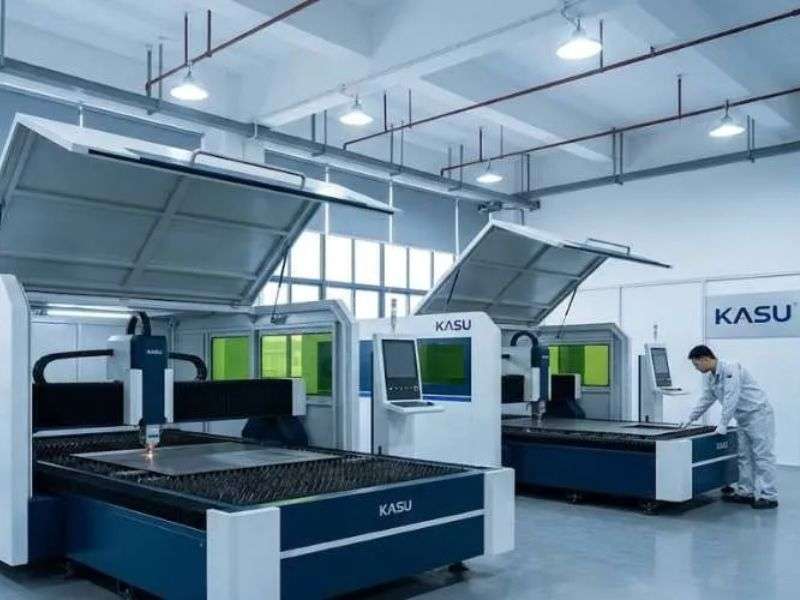
The Factory That Builds Your Airbag Cutting Machine
- Founded 2009 · Shanghai R&D · 8,000+ m² Suzhou plant, 15 minutes from the R&D centre.
- 100+ models across 9 series, 70+ owned patents and software copyrights, China High-Tech Enterprise.
- Machines are built in-house rather than traded, so a parameter question reaches the people who built the motion system and specified the extraction.
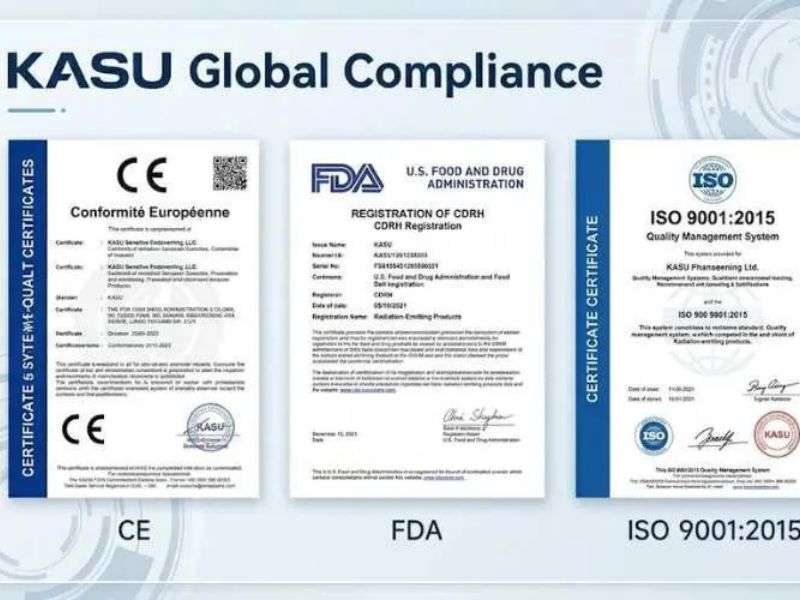
CE And FDA Certified — Validation Samples Cut On Your Own Stock
- CE and FDA certified; 5,000+ customers across 80+ countries.
- Installation guidance, operator training and spare parts supplied from the factory that built the machine.
- Class-1 enclosed configurations available where the destination market requires them.
Buyer Questions On Cutting Coated Nylon Restraint Fabric
Why Is Laser Cutting Standard For Airbag Cushion Panels?
Because the beam fuses nylon filament ends as it parts them, so the panel edge arrives at the sewing station already stabilised. A blade leaves torn filaments, and a loose filament at a seam edge is a crack initiator under the gas load of a deployment. This is a structural requirement, not an edge-quality preference.
Will The Beam Damage The Silicone Coating?
Excess power will locally degrade it, which is why parameter selection matters more here than in any other soft-material application. We run your actual coated stock at the lowest workable power and return cut panels so your lab can perform leak-down and coating-adhesion testing before you commit to a machine.
Does Buying This Machine Make Our Process Automotive-qualified?
No. The machine is one step inside a process you validate. We supply cutting parameters, sample evidence, maintenance documentation and operator training that feed into your qualification file, but IATF 16949 qualification of the process is the converter’s responsibility. Any supplier who says otherwise is overselling.
Can It Cut One-piece-woven Cushion Stock?
Yes, using camera registration that reads the woven panel boundary rather than assuming a nominal position. This matters because the cut line on OPW stock runs close to the integral seam, and a path that wanders into that seam scraps a panel that already carries most of its value.
What Does An Airbag Cutting Machine Cost?
Price depends on working area, head count, camera type and feeding method rather than on a list figure, so we quote against a specification. Send fabric dtex, coating weight, roll width, panel mix and daily output and we return a configuration and price. Sample cutting is free.
Can You Handle Aramid Reinforcement Parts On The Same Machine?
Thin aramid weave for heat shields cuts on the same bed at different parameters, but it chars rather than fusing, so the edge behaves differently from nylon. Thick para-aramid ballistic-grade stock is inefficient under a CO2 beam and we will recommend a knife system for it.
Related KASU Cutting Solutions
Three neighbouring pages covering the base materials most often quoted alongside restraint fabric.

Technical Support for Airbag Fabric Cutting
Background on material screening, edge behaviour and the process comparison behind the industry’s move to non-contact cutting for restraint fabric.

Get An Airbag Cutting Machine Quotation
Send your fabric dtex, coating type and weight, roll width, panel mix and daily output target. We run a free sample cut, return panels for your leak-down testing and supply the parameter record with the machine configuration.
Address: No. 105, Nanzhangjing Road, Taicang, Suzhou, Jiangsu, China
Email: [email protected]
WhatsApp: +86-18601718317