

What An Acoustic Panel Cutting Machine Handles
Quick answer: An acoustic panel cutting machine cuts PET felt, mineral-faced and foam absorber stock into architectural panels, baffles and shaped patterns, sealing the cut face on thermoplastic material so panels can be installed without edge finishing.
Architectural acoustics turned into a design product rather than a technical one, and that changed the cutting requirement completely. Ten years ago an absorber was a rectangle behind a fabric wrap; now it is a visible, shaped, often perforated element that the architect specified by drawing. Rectangles can be cut on a saw or a slitter. Shapes, hex patterns, gradient perforation fields and custom profiles cannot, and hand-cutting them in 9 mm PET felt leaves a fuzzy edge that shows from across the room. A laser suits this material particularly well because PET felt is thermoplastic: the beam fuses the cut face instead of tearing the fibres, so the panel edge is clean and does not shed onto a finished ceiling. The limits are real. Mineral wool and glass wool absorbers do not fuse and produce a dusty cut that belongs on a saw or hot wire. Melamine foam cuts but the dust load is high. And above roughly 12 mm the PET felt cut face starts to draft visibly. Acoustic material test methods are published by ASTM International.
Acoustic Materials And How Each Behaves
Four absorber families cover most architectural enquiries. The middle bullet decides whether it belongs on this machine at all.

PET Felt Panel Stock
- Formats: 9 mm and 12 mm recycled-PET felt panels in 1200×2400 mm sheets, plus 3–6 mm facing stock.
- Watch out: mechanically cut PET felt fuzzes at the edge, and on a shaped visible panel that fuzz is the first thing anyone notices when the ceiling is lit from the side.
- How we cut it: the beam fuses the cut face rather than tearing it. Above about 12 mm the face begins to draft, so thicker builds are usually laminated after cutting rather than cut as one.

Acoustic Foam And Melamine
- Formats: polyurethane acoustic foam and melamine foam 10–50 mm, plain and profiled.
- Watch out: melamine cuts but produces a heavy dust load, and profiled foam is usually moulded rather than cut — so laser only earns its place on flat stock and custom outlines.
- How we cut it: flat foam outlines and apertures at moderate thickness with extraction sized for the dust load; profiled wedge and pyramid stock stays a moulding job.

Textile-Faced Absorber Board
- Formats: fabric-wrapped or textile-faced absorber board 15–50 mm with a mineral or polyester core.
- Watch out: the face and the core behave differently. A parameter that gets through a mineral core will scorch the visible facing, and the facing is the product.
- How we cut it: we cut the facing and thin polyester-core boards; mineral-core board is a saw job and we will say so rather than deliver a scorched face.

Slat Backing Felt And Trim
- Formats: 9 mm PET felt backers for timber slat panels, edge trims, junction and service cut-outs.
- Watch out: slat panels get site-modified for downlights and sprinklers, and a hand-cut aperture in felt is visible through the slat gap for the life of the building.
- How we cut it: apertures cut to the services drawing before the slats are applied, so the modification is a factory operation instead of a site one.
Acoustic Products Cut To The Architect's Drawing
Each case below exists because the specification is a drawing rather than a standard size.

Shaped Wall And Ceiling Panels
- Parts: hexagon, chevron and custom-profile absorber panels, gradient wall installations.
- The hard part: a shaped installation is often dozens of unique outlines that exist only in the architect’s file, and cutting them by hand puts a visible wobble on a feature wall.
- What you get: every unique outline cut from the same file the architect issued, with a fused face on every edge.

Baffles, Fins And Suspended Elements
- Parts: vertical baffles, suspended fins, cloud panels, hanging profiles.
- The hard part: baffles are seen edge-on from below, which makes the cut face the most visible surface of the whole product — the opposite of a wrapped panel.
- What you get: a fused, consistent face on the surface the room actually sees.

Perforated And Patterned Absorbers
- Parts: perforation fields, decorative cut-outs, engraved surface texture, logo and wayfinding panels.
- The hard part: perforation as a separate operation needs its own tooling and registration, so pattern designs get reduced to whatever the tool can do.
- What you get: pattern, outline and engraving in one setup, so design complexity stops being a tooling limit.

Slat Panel Backers And Service Cut-Outs
- Parts: felt backers for timber slat systems, downlight and sprinkler apertures, edge and junction trims.
- The hard part: service apertures are usually cut on site with a knife, and the result is visible between the slats permanently.
- What you get: apertures cut to the services drawing in the factory, where the tolerance and the edge quality are controlled.
Recommended KASU Machines For Architectural Felt
Choose by panel sheet size and by whether decorative patterning is part of the product. All three run the same control software. The full range is on the KASU machine category page.

K1325-F1 High Precision Flatbed Laser Cutter
- Cuts: full-sheet PET felt panels, baffles, large shaped outlines.
- Specs: 1300×2500 mm flatbed, high-precision drive, single head.
- Best for: architectural sheet sizes cut in a single setup without indexing.

KD1816-SY Large Flatbed Top Vision Laser Cutting Machine
- Cuts: printed and patterned felt, textile-faced board, decorative absorber panels.
- Specs: 1800×1600 mm class bed, top camera registration.
- Best for: panels with printed or applied facings that must be cut in register.

K1610-F4 Four Head Laser Cutting Machine With Honeycomb Table
- Cuts: repeated baffle profiles, standard panel shapes, trim components.
- Specs: 1600×1000 mm honeycomb bed, four synchronised heads.
- Best for: repeat-shape production where one profile runs in high volume.
PET Felt Shows Everything, Because The Cut Face Is The Finished Face
An acoustic panel is installed with its cut edge visible at eye level across a whole wall. There is no trim, no hem and nowhere to hide a ragged or melted edge — which makes this one of the few materials where edge appearance, not tolerance, is the specification.
Distributors and OEM partners: KASU offers free OEM/ODM — custom models, your brand colours and logo, multilingual labelling, with no extra service charge. Details on About KASU.

Send Your Own Panel Stock For A Free Sample Cut
- Send your PET felt, acoustic foam or textile-faced board at the thickness you install.
- Ask for a shaped part, not a rectangle. Curves and internal cut-outs are where the face quality shows.
- Parameters recorded per stock and shipped with the machine.
- For distributors: acoustic panel work arrives through architects and fit-out contractors, and it is specification-led. A shaped sample in the right felt does more in a specification meeting than any datasheet.

Mineral Wool And Glass Wool Are A Different Process
- Mineral wool and glass wool absorbers are not suitable for this machine. They do not melt-cut, and the dust is its own handling problem. Those need mechanical cutting with the appropriate extraction.
- PET felt, melamine foam and textile-faced board all cut with a clean face, confirmed on your own stock.
- Perforation patterns and outline run in the same operation, so patterned absorbers do not need a second setup.
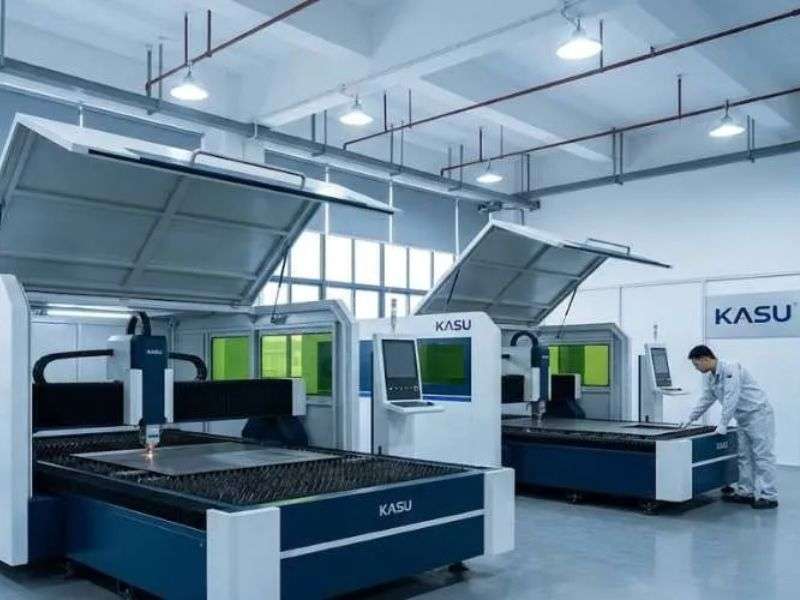
The Factory That Builds Your Acoustic Panel Cutter
- Founded 2009 · Shanghai R&D · 8,000+ m² Suzhou plant, 15 minutes from the R&D centre.
- 100+ models across 9 series, 70+ owned patents and software copyrights, China High-Tech Enterprise.
- Machines are built in-house rather than traded, so a parameter question reaches the people who built the motion system and specified the extraction.
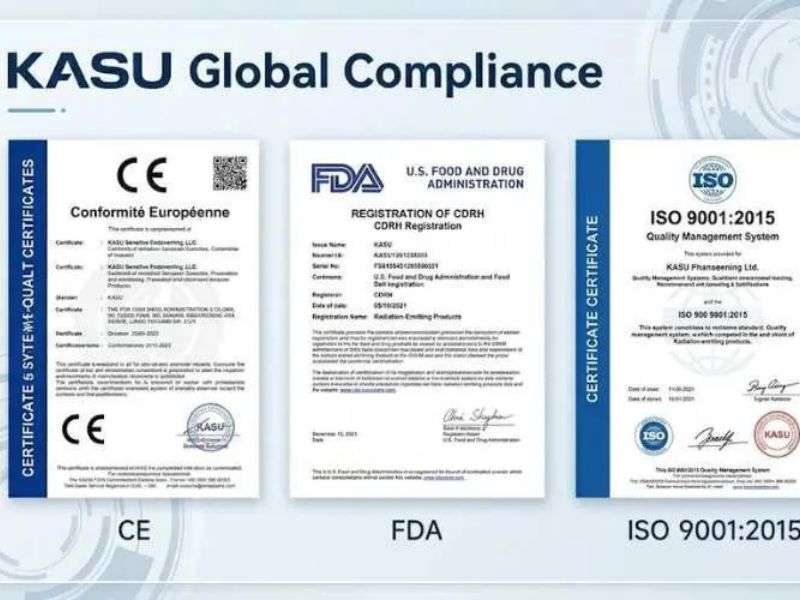
CE And FDA Certified — Send Your Panel Stock For A Free Sample Cut
- CE and FDA certified; 5,000+ customers across 80+ countries.
- Installation guidance, operator training and spare parts supplied from the factory that built the machine.
- Class-1 enclosed configurations available where the destination market requires them.
Buyer Questions On Cutting Architectural Absorbers
Does Laser Cutting Leave A Clean Face On PET Felt?
Because PET felt is thermoplastic, the beam fuses the cut face rather than tearing the fibres, so the face is consistent and does not shed onto a finished ceiling. How that face looks against your own quality standard depends on felt density and colour, so we cut your material and photograph the face before you decide.
How Thick A Felt Panel Can It Cut?
9 mm and 12 mm architectural PET felt cut well. Above roughly 12 mm the cut face starts to draft visibly, so thicker builds are normally cut as single layers and laminated afterwards rather than cut as one block.
Can It Cut Mineral Wool Or Glass Wool Absorbers?
No, and we will not configure a machine for it. Mineral fibre does not fuse, the cut is dusty, and on textile-faced board the visible facing scorches before the core is through. Those materials belong on a saw or hot-wire system.
Can Perforation Patterns Be Cut In The Same Operation?
Yes. Perforation fields, decorative cut-outs and engraved texture run in the same setup as the outline, with no tool change and no second registration. This is usually why acoustic manufacturers choose laser over a router for decorative work.
What Does An Acoustic Panel Cutting Machine Cost?
Price depends on bed size, head count, whether camera registration is needed and on extraction specification rather than on a list figure. Send panel sizes, felt thickness, pattern complexity and weekly panel output and we return a configuration with pricing. Sample cutting is free.
Is This The Same Machine Used For Furniture Upholstery?
The machine family overlaps but the configuration and the buyer do not. Architectural acoustic work needs large flat sheet capacity and decorative patterning; upholstery work needs roll feeding and pattern registration on covering fabric. Our upholstery page covers that side.
Related KASU Cutting Solutions
Three neighbouring pages covering the felt, non-woven and foam materials most often quoted alongside acoustic work.


Technical Support for Acoustic Panel Cutting
Background on felt and foam behaviour under a beam, thickness limits and how to size a machine against an architectural panel mix.


Get An Acoustic Panel Cutting Machine Quotation
Send your felt thickness and density, panel sizes, pattern complexity and weekly output. We cut your own material, photograph the cut face at your thickness and return the parameter record with the machine configuration.
Address: No. 105, Nanzhangjing Road, Taicang, Suzhou, Jiangsu, China
Email: [email protected]
WhatsApp: +86-18601718317